 EN

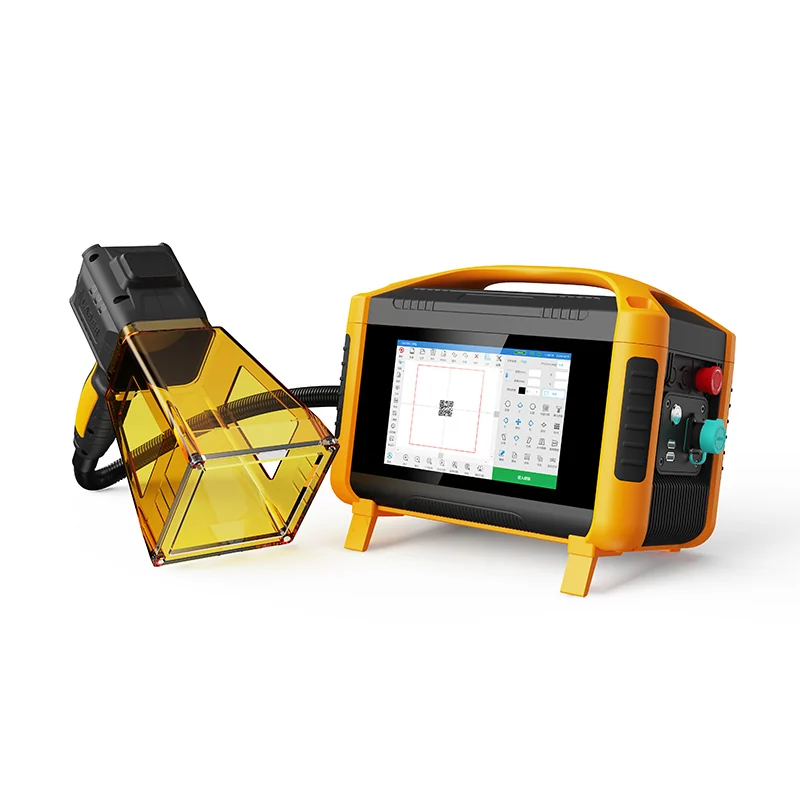
On-Site Repairs and Remote Fabrication with Handheld Laser Welding
Real-time structural repairs in infrastructure, energy, and oil & gas facilities
Infrastructure, energy, and oil & gas facilities often cannot afford workshop-based delays. Cracks in pipe supports, tank shells, structural steel, and valve bodies demand immediate intervention to prevent cascading failures. Handheld laser welding enables real-time structural repair thanks to its lightweight, air-cooled design and all-position capability. Technicians deploy the system directly into congested pipe racks, vessel skirts, and cable tray supports—without cranes or scaffolding. Its focused heat input produces a narrow heat-affected zone (HAZ), minimizing distortion and eliminating the need for post-weld straightening or machining in most cases. Unlike conventional arc welding—which typically requires preheat, interpass temperature control, and extended cool-down cycles—handheld laser welding delivers full-penetration welds rapidly and consistently. In oil & gas piping, it seals pinholes and restores eroded elbows without cutting out large sections, significantly reducing downtime and material waste. Minimal spatter further cuts inspection and cleanup time. A two-person crew can move efficiently between repair points, keeping rotating equipment and load-bearing structures online through scheduled maintenance windows.
Mobile maintenance of railcars, maritime vessels, and aerospace components
Mobile maintenance teams operate under tight turnaround constraints—whether for railcars, ship hulls, or aircraft components. Handheld laser welding meets these demands: it’s transportable, rapidly deployable, and effective in confined or awkward spaces. Railcar side sheets, hopper chutes, and door frames can be repaired in-situ on a siding; maritime crews weld deck fittings, handrails, and thin hull stiffeners while vessels are docked—using low heat input to avoid oil-canning distortion; and aerospace personnel repair non-structural brackets, ducting, and fuel system supports directly in hangars or field locations. Compared to tungsten inert gas (TIG) welding, handheld laser welding requires less joint preparation, fewer filler passes, and virtually no post-weld grinding. Logistically, it replaces multiple machines, gas cylinders, and preheat systems with a single compact power source. Operators seamlessly adapt to varying material thicknesses and complex geometries—such as curved railcar roofs, ship bulkheads, or aircraft frame elements—enabling predictable scheduling and measurable reductions in asset downtime.
Handheld Laser Welding in Confined or Complex Geometries
Accessing internal contours, tight lap joints, and multi-axis assemblies
Fixed optics and bulky torches often fail in recessed or geometrically complex areas—but a handheld laser excels where access is limited. Its slim welding head reaches into internal contours, tube-to-tubesheet joints, recessed flanges, and box corners with minimal clearance. Compact optics support real-time visual monitoring of the weld pool, enhancing control during travel along curved or irregular profiles. Because the concentrated beam delivers precise energy, adjacent machined surfaces and thin walls remain undistorted. For tight lap joints, the narrow fusion zone achieves full penetration without melt-through. In multi-axis assemblies, operators complete root, hot, and cap passes in one continuous sequence—reducing repositioning, crane lifts, and rework. Local shielding gas and wire feed make the process ideal for field fitting, maintenance bays, and low-volume production where automated cells are impractical. The result is repeatable, high-integrity fusion in areas previously reserved for manual arc welding—or prohibitively expensive automation.
High-Precision Handheld Laser Welding for Micro-Components
Sub-millimeter seam control for hermetic sealing of medical implants and electronic sensors
Handheld laser welding delivers sub-millimeter seam control essential for hermetic sealing of medical implants and electronic sensors. Its focused beam generates narrow fusion zones with exceptionally low heat input—preserving surrounding microelectronics, biocompatible coatings, and delicate substrates. Fiber-optic beam delivery allows precise positioning inside small housings, narrow channels, and tight enclosures. Operators fine-tune pulse duration, spot size, and travel speed to produce consistent welds under 1 mm wide. For implantable devices—including pacemaker housings and neurostimulator enclosures—this precision ensures clean, smooth weld surfaces that reduce contamination risk and meet stringent regulatory requirements. It also enables reliable lid sealing for MEMS sensors and microfluidic cartridges, where leak paths may be smaller than 50 µm. In sensor manufacturing, portable units join internal components without damaging adjacent circuitry—supporting electromagnetic shielding and moisture-resistance specifications. With minimal oxidation and localized energy delivery, handheld laser welding maintains part integrity while meeting the exacting standards of regulated medical and electronics production environments.
Minimizing Thermal Impact: Handheld Laser Welding of Heat-Sensitive and Dissimilar Materials
Joining copper–stainless steel and aluminum–nickel alloys without intermetallic embrittlement
Handheld laser welding’s ultra-low, localized heat input is critical for joining dissimilar metals prone to intermetallic embrittlement—such as copper–stainless steel and aluminum–nickel alloys. Conventional arc processes sustain elevated interface temperatures long enough to form thick, brittle intermetallic layers, which compromise joint strength and fatigue resistance. In contrast, the focused laser beam delivers energy in milliseconds, creating a small molten pool and enabling rapid solidification. By adjusting pulse shape, spot size, and travel speed, operators precisely control cooling rate and dilution—suppressing brittle phase formation at the interface. This yields narrower HAZs, reduced distortion, and improved joint toughness. Base metal properties adjacent to the weld remain intact, making the process suitable for heat-sensitive assemblies like thin-walled battery tabs, sensor housings, and medical device enclosures—where post-weld straightening and rework are cost-prohibitive. It also unlocks reliable fusion of material combinations historically deemed incompatible with traditional fusion welding. The beam’s precision supports fillet and lap joints in tight spaces without thermal spreading, and operators can dynamically adapt the weld path to local fit-up variations—all while maintaining low thermal stress across the assembly.
Frequently Asked Questions (FAQ)
What industries benefit the most from handheld laser welding?
Industries like infrastructure, energy, oil & gas, rail, maritime, aerospace, medical device manufacturing, and electronics benefit significantly from handheld laser welding due to its precision, portability, and efficiency.
How does handheld laser welding minimize distortion?
The focused heat input produces a narrow heat-affected zone (HAZ), which minimizes distortion. This eliminates the need for post-weld straightening or machining in most cases.
Is handheld laser welding suitable for confined or awkward spaces?
Yes, handheld laser welding is highly effective in confined or awkward spaces, such as internal contours, tube-to-tubesheet joints, recessed flanges, and box corners, thanks to its slim welding head and compact size.
Can handheld laser welding handle dissimilar metals?
Yes, handheld laser welding is ideal for joining dissimilar metals prone to intermetallic embrittlement, like copper–stainless steel and aluminum–nickel alloys, due to its ultra-low, localized heat input.
What are some specific applications of handheld laser welding?
Examples include repairing oil & gas pipelines, sealing medical implants, joining non-structural aerospace brackets, and welding ship hulls, railcars, and fuel system components in situ.
Does handheld laser welding require post-weld treatment?
In most cases, there’s no need for post-weld straightening or extensive finishing, as this process minimizes spatter and distortion.
Table of Contents
- On-Site Repairs and Remote Fabrication with Handheld Laser Welding
- Handheld Laser Welding in Confined or Complex Geometries
- High-Precision Handheld Laser Welding for Micro-Components
- Minimizing Thermal Impact: Handheld Laser Welding of Heat-Sensitive and Dissimilar Materials
-
Frequently Asked Questions (FAQ)
- What industries benefit the most from handheld laser welding?
- How does handheld laser welding minimize distortion?
- Is handheld laser welding suitable for confined or awkward spaces?
- Can handheld laser welding handle dissimilar metals?
- What are some specific applications of handheld laser welding?
- Does handheld laser welding require post-weld treatment?