In the modern industrial production system, laser marking technology has become an indispensable core link in the fields of product identification, anti-counterfeiting traceability, and quality control. As the key equipment of this technology, laser marking machines have been widely used in electronics, automobiles, food packaging, aerospace, medical devices, and many other industries due to their high precision, high efficiency, and environmental protection characteristics. Currently, the mainstream laser marking machines in the market are mainly divided into three categories based on the type of laser source: carbon dioxide (CO₂) laser marking machines, fiber laser marking machines, and ultraviolet (UV) laser marking machines. Each type has unique wavelength characteristics and material adaptation capabilities, which can form permanent, clear marks on the surface of different materials. These marks not only have excellent resistance to external influences such as wear, chemical corrosion, and high temperature but also meet the strict requirements of industrial production for traceability and aesthetics. Unlike traditional marking methods such as inkjet printing and mechanical engraving, laser marking machines rely on the core principle of laser engraving, which uses high-energy laser beams to interact with material surfaces to achieve marking effects without the need for daily replacement of consumables such as ink, needles, or templates. This core advantage not only significantly reduces the operating costs of enterprises but also minimizes production line downtime caused by consumable replacement, supporting 24/7 uninterrupted stable operation and effectively improving production efficiency and capacity utilization.
One of the most prominent advantages of laser marking machines is their ability to create permanent marks on material surfaces. Unlike inkjet marks that are easy to fade, blur, or fall off due to friction, moisture, or chemical erosion, laser marking achieves marking by changing the physical or chemical properties of the material surface—such as ablation, melting, or color change of the material. This marking method ensures that the marks can maintain clear and complete characteristics for a long time even in harsh working environments. For example, in the automotive industry, the VIN code marked by fiber laser on the engine block can still be clearly identified after years of use, resisting the erosion of engine oil, high temperature, and external impact. In the medical device field, the identification marks on surgical instruments marked by laser can remain intact after repeated high-temperature sterilization, ensuring the traceability of medical devices. This permanent marking feature is crucial for product anti-counterfeiting, quality traceability, and after-sales service, helping enterprises establish a reliable product quality management system.
Compared with traditional marking equipment, laser marking machines have significant advantages in operating costs. Traditional inkjet printers need to regularly replace ink, solvents, and nozzles, and mechanical engraving machines need to replace engraving needles and templates, which not only increases material costs but also consumes a lot of time and labor costs for replacement and maintenance. In contrast, laser marking machines have a simple structure and rely on laser sources for marking without daily consumable replacement. The laser source has a long service life—for example, the service life of fiber laser sources can reach 100,000 hours, and CO₂ laser sources can reach 20,000 to 50,000 hours—greatly reducing the frequency of equipment maintenance and replacement of core components. In addition, the energy consumption of laser marking machines is relatively low. A medium-power fiber laser marking machine consumes only about 500W of power per hour, which is much lower than that of traditional mechanical processing equipment. For enterprises with large-scale and continuous production needs, the low operating cost and high stability of laser marking machines can save a lot of costs in the long run and improve the overall profitability of the enterprise.
Laser marking machines have extremely high marking precision, which can reach the micron level, and can easily complete complex marking tasks such as fine text, patterns, barcodes, QR codes, and serial numbers. With the support of advanced numerical control systems, laser marking machines can achieve automatic positioning and marking, ensuring consistent marking accuracy and quality even for batch production of small-sized workpieces. For example, in the electronics industry, ultraviolet laser marking machines can mark tiny QR codes and component numbers on the surface of PCB boards and electronic components without damaging the delicate circuits and components. In the jewelry industry, fiber laser marking machines can carve intricate patterns and text on the surface of gold, silver, and other precious metals with a precision of up to 0.01mm, meeting the personalized customization needs of customers. In addition, laser marking machines have strong adaptability to workpiece shapes and can perform marking on flat, curved, irregular, and other complex-shaped workpieces by matching different scanning galvanometers and fixtures, which is difficult to achieve with traditional marking methods.
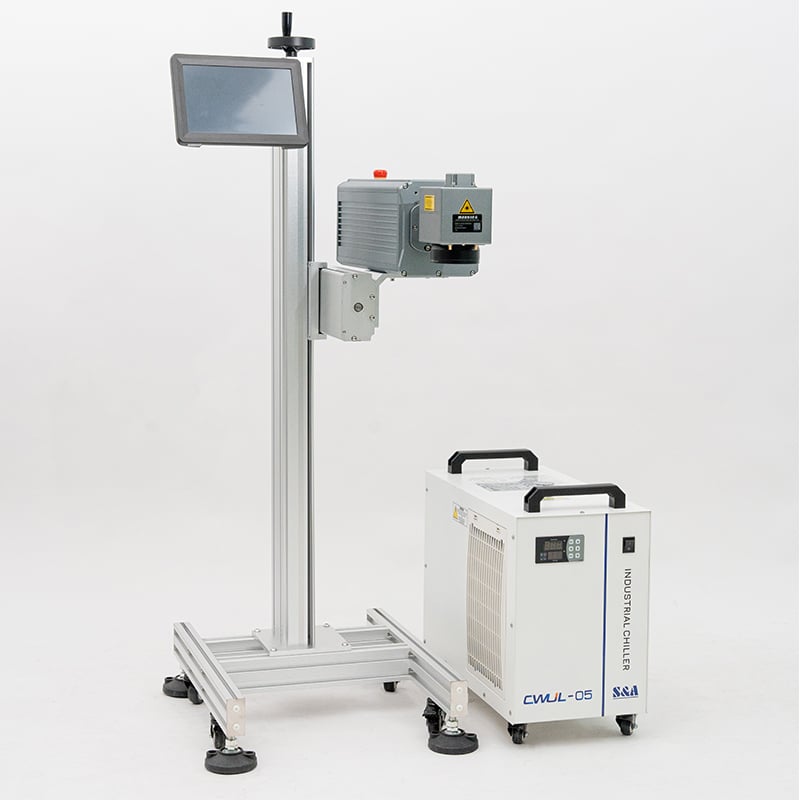
In the context of increasing global emphasis on environmental protection and safety production, laser marking machines have obvious environmental protection advantages compared with traditional marking equipment. Traditional inkjet printing will produce a large amount of waste ink, solvent waste, and volatile organic compounds (VOCs), which will pollute the environment and endanger the health of operators. Mechanical engraving will produce a lot of dust and noise, which will also cause certain damage to the working environment and operators. Laser marking machines do not produce any waste during the marking process, no harmful gas or dust is emitted, and the noise is extremely low, which can create a clean and safe working environment for enterprises. At the same time, laser marking machines comply with international and domestic industrial safety standards, and are equipped with complete safety protection devices such as laser safety covers, emergency stop buttons, and beam shut-off devices to effectively prevent laser radiation from harming operators. For enterprises that need to pass environmental protection audits and safety production certifications, laser marking machines are the ideal choice to meet relevant standards and requirements.
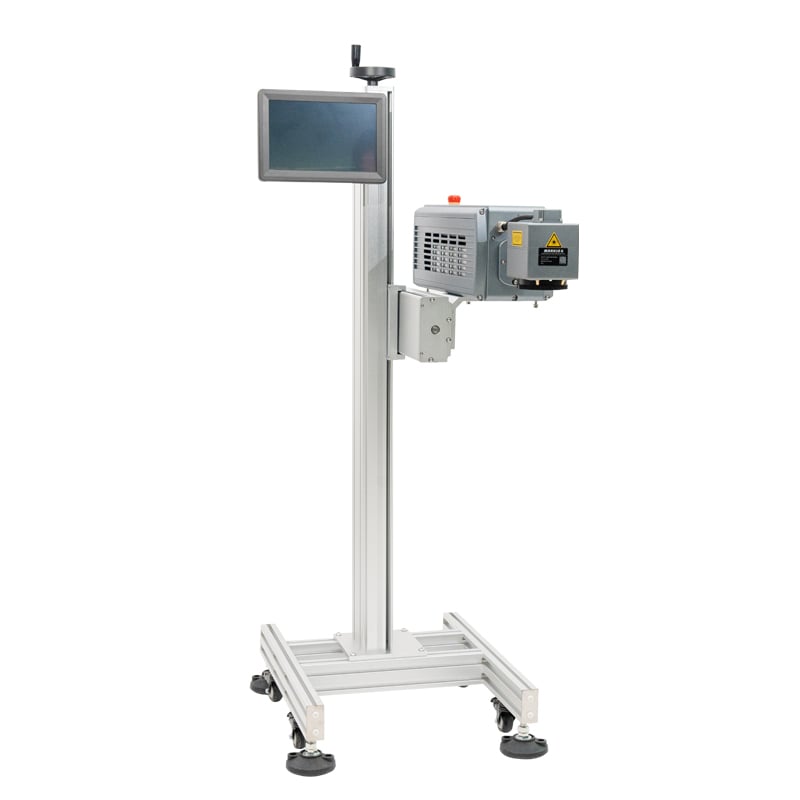
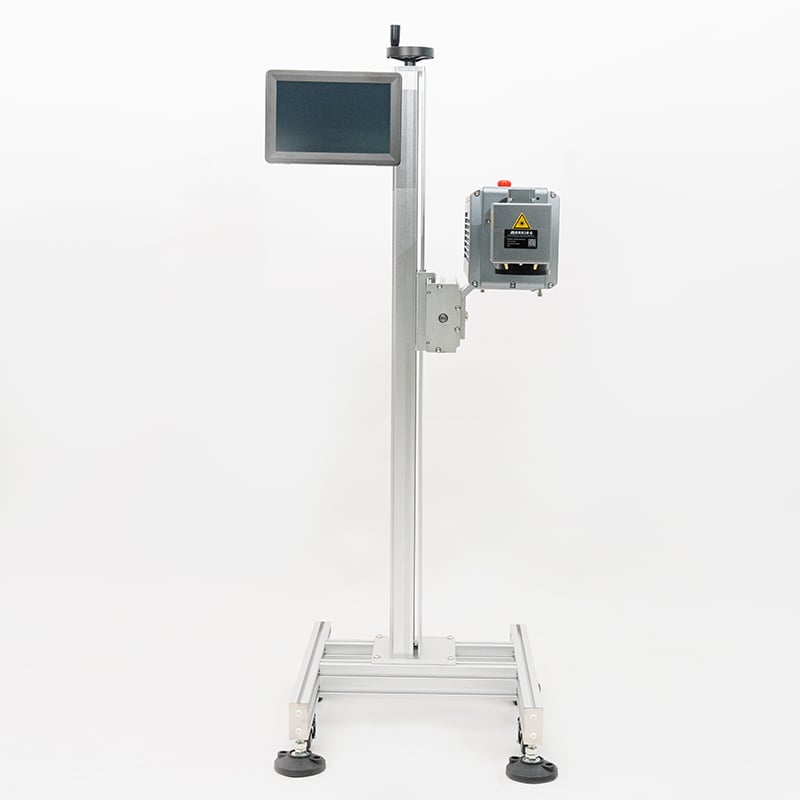
Laser marking technology has the characteristics of fast marking speed, which can complete the marking of a single workpiece in a few seconds, and can be easily integrated into the automatic production line to achieve continuous and efficient marking operations. The laser marking machine adopts a modular design and has high stability and reliability, which can support 24/7 uninterrupted operation without frequent failures. This is particularly important for large-scale manufacturing enterprises that pursue high production efficiency. For example, in the food packaging industry, CO₂ laser marking machines can mark production dates, batch numbers, and anti-counterfeiting codes on food packaging bags at a speed of hundreds of pieces per minute, perfectly matching the high-speed operation of the packaging production line. In addition, the laser marking machine can be connected with the enterprise's MES system to realize automatic data synchronization and traceability, reducing manual intervention and improving the automation level of the production line. Compared with traditional marking methods that require manual loading and unloading and parameter adjustment, laser marking machines can greatly save labor costs and improve production line efficiency.
The CO₂ laser marking machine uses a carbon dioxide gas mixture as the laser medium, with a wavelength of approximately 10.6μm, which belongs to mid-infrared light. This wavelength of laser has strong absorption capacity for non-metallic materials, and the marking process is mainly based on the thermal ablation effect—using high-energy laser beams to ablate the surface of non-metallic materials to form clear marks. In terms of applicable materials, the CO₂ laser marking machine has a wide range of adaptations, including paper, cartons, plastic films (such as PE, PP, PVC), glass, wood, rubber, leather, textiles, and various composite materials. It is widely used in food packaging, beverage bottles, cigarette packs, paper products, wooden crafts, and other industries.
The core selling points of the CO₂ laser marking machine lie in its fast marking speed and high cost-effectiveness. For non-metallic materials with large marking areas and low precision requirements, such as carton outer packaging and plastic film packaging, the CO₂ laser marking machine can achieve high-speed marking while ensuring marking clarity. In addition, the manufacturing cost and sales price of CO₂ laser marking machines are relatively low compared with fiber and UV laser marking machines, and the maintenance is simple—only regular cleaning of the laser tube and optical components is required. For small and medium-sized enterprises that focus on non-metallic marking and have limited budget, the CO₂ laser marking machine is the most cost-effective choice. For example, in the catering industry, many takeout packaging manufacturers use CO₂ laser marking machines to mark brand logos, production dates, and hygiene labels on paper or plastic takeout boxes, which not only improves the brand image but also meets the food safety traceability requirements at a low cost.
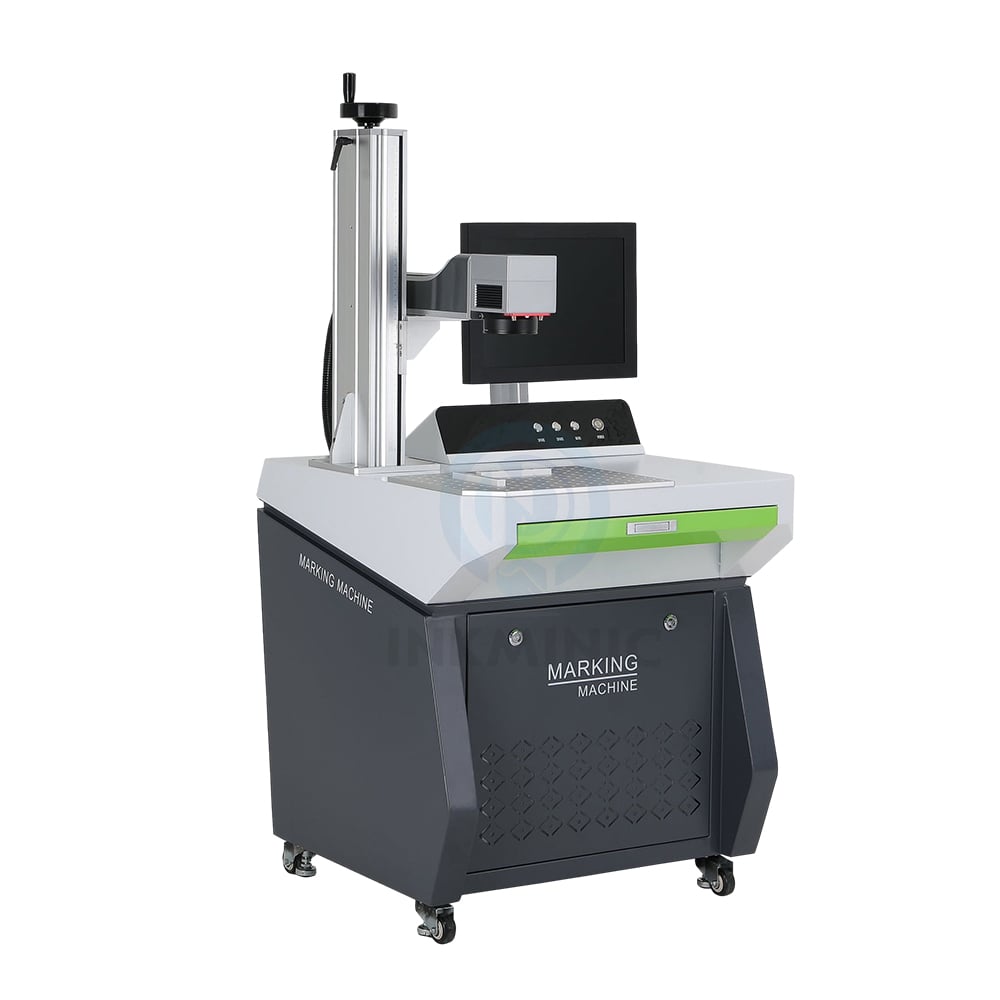
The fiber laser marking machine uses a rare-earth-doped fiber as the laser medium, with a wavelength of about 1064nm, which is near-infrared light. This type of laser has extremely strong focusing ability, and the focused laser spot is extremely small, which can generate high energy density on the material surface, making it especially suitable for marking metals and some high-hardness non-metallic materials. The applicable materials of fiber laser marking machines include various metals such as stainless steel, aluminum, copper, iron, and alloys (such as aluminum alloy, titanium alloy), as well as hard plastics such as ABS, PC, POM, and engineering plastics. It is widely used in automotive parts, hardware tools, electronic components, jewelry, precision instruments, and other industries.
The core selling points of fiber laser marking machines are high marking quality, durability, and low maintenance costs. It adopts an "etching" marking method—using high-energy laser beams to etch the material surface to form concave-convex marks, which have excellent wear resistance and corrosion resistance. The marks made by fiber laser are not only clear and delicate but also have strong three-dimensional sense, which can significantly improve the appearance quality and grade of products. For example, in the hardware industry, the scales and logos marked by fiber laser on stainless steel tools can remain clear even after long-term use and friction. In the automotive industry, the engine numbers, chassis numbers, and part codes marked by fiber laser on auto parts can resist the erosion of engine oil and high temperature, ensuring the traceability of auto parts throughout their life cycle. In addition, the fiber laser source has a long service life (up to 100,000 hours) and does not require regular replacement of the laser medium, and the optical path system is sealed, which is not easily affected by the external environment, so the maintenance cost is extremely low. For enterprises that focus on metal marking and have high requirements for marking durability and quality, fiber laser marking machines are the preferred equipment that balances performance and cost.
The UV laser marking machine uses a third-harmonic generation technology to convert the infrared laser into ultraviolet light, with a wavelength of approximately 355nm. This wavelength of laser has high photon energy and can break the chemical bonds of material molecules without generating a lot of heat during the marking process, which is called "cold processing". This unique processing method makes the UV laser marking machine especially suitable for marking sensitive materials and precision components that are easily damaged by heat.
The applicable materials of UV laser marking machines include flexible plastics (such as TPU, silicone), thin films (such as PET, PI), PCB boards, electronic components (such as chips, resistors, capacitors), medical devices, food packaging (especially sensitive food packaging that cannot withstand high temperature), and other materials. It is widely used in the electronics industry, medical device industry, precision manufacturing industry, and other fields that require high-precision and non-damaging marking. The core selling points of UV laser marking machines are extremely small heat-affected zone, no damage to the material surface, and ultra-fine marking effect. During the marking process, the UV laser only acts on the very thin surface layer of the material, without causing deformation, discoloration, or damage to the internal structure of the material. For example, in the electronic industry, when marking QR codes and serial numbers on the surface of PCB boards, the UV laser can avoid damaging the delicate circuits and solder joints on the board; in the food packaging industry, when marking production dates on plastic film packaging, the UV laser can ensure that the film's sealing performance is not affected, avoiding food contamination caused by packaging damage. In addition, the UV laser marking machine can achieve ultra-fine marking with a minimum line width of 0.001mm, which can meet the marking requirements of micro-components and high-precision products. Although the price of UV laser marking machines is relatively high, their unique "cold processing" technology and high-precision marking capabilities make them irreplaceable in the field of high-end precision manufacturing.
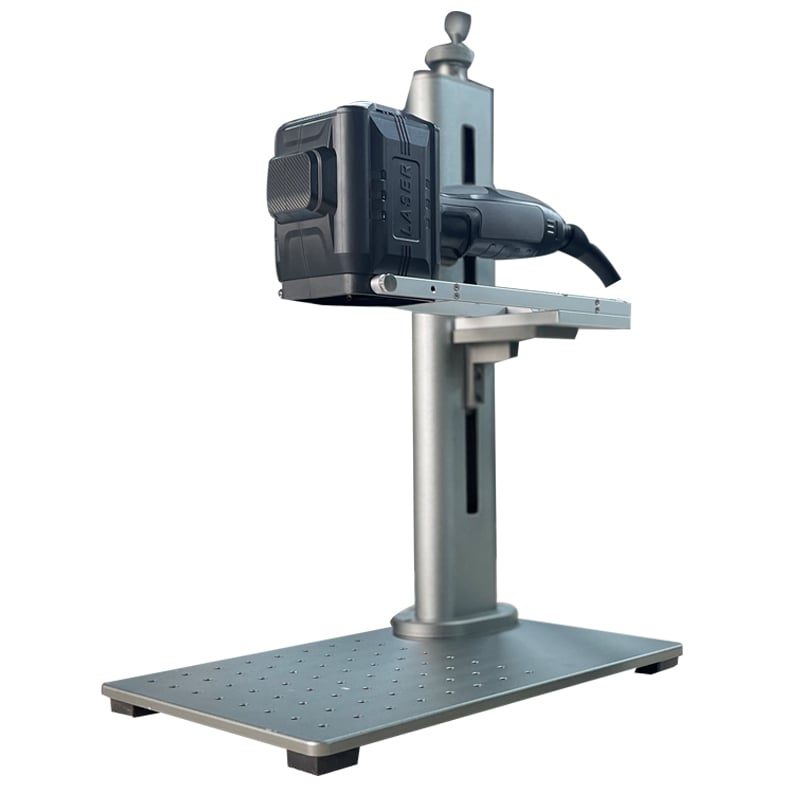
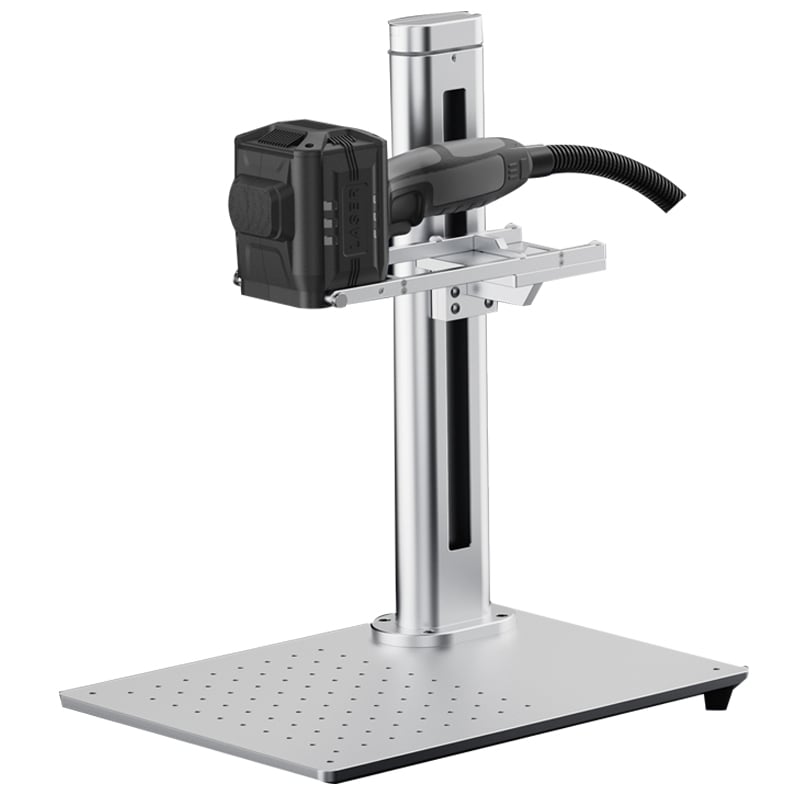
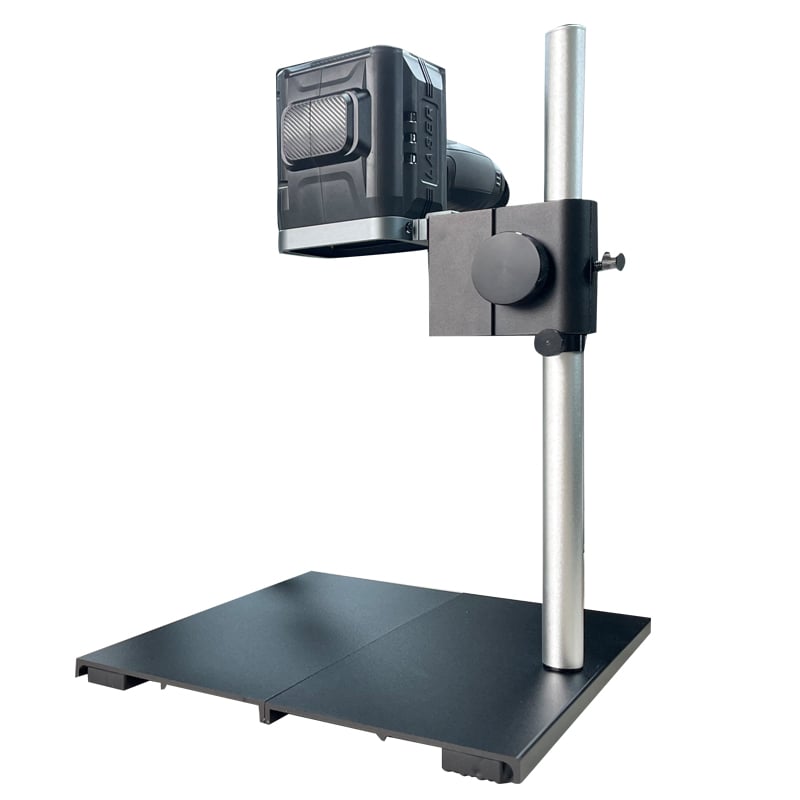
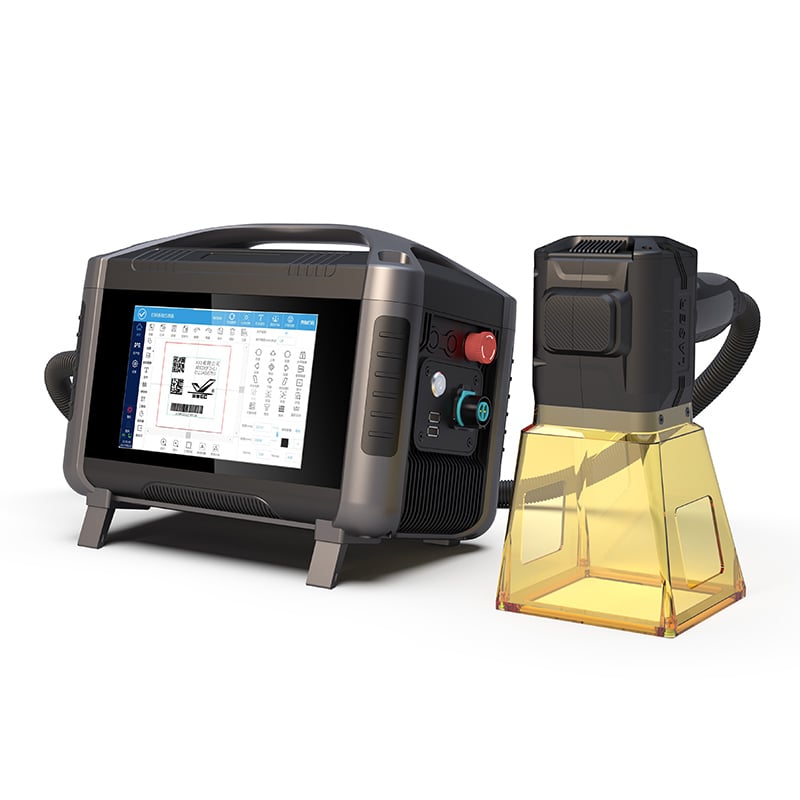
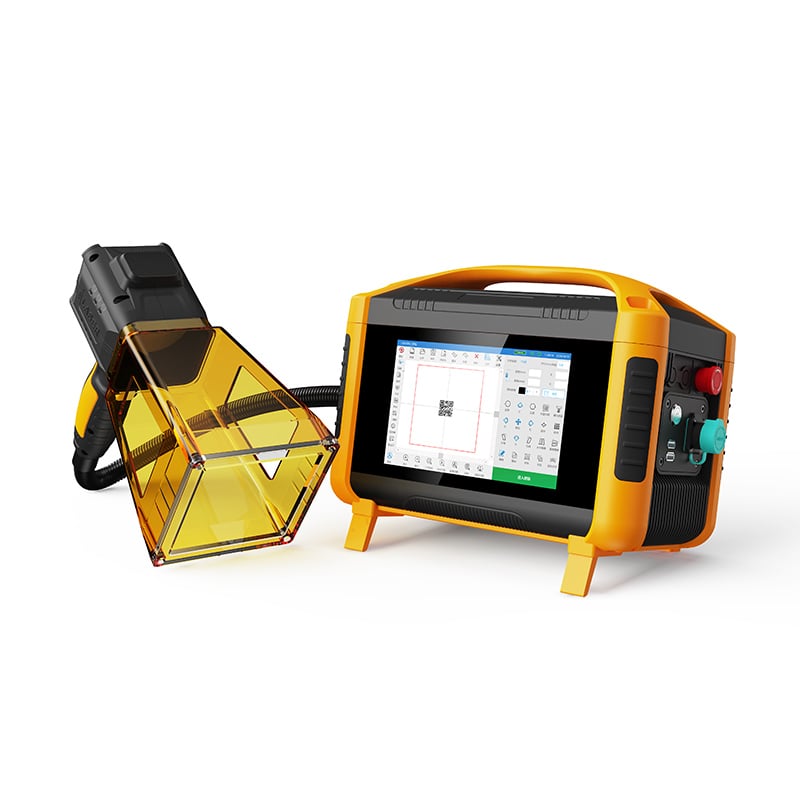
In addition to standard fixed laser systems, many manufacturers also need a portable laser engraving machine for flexible on-site marking tasks. This type of solution is especially useful for oversized workpieces, fixed equipment, heavy metal parts, and components that are difficult to move to a standard marking station.
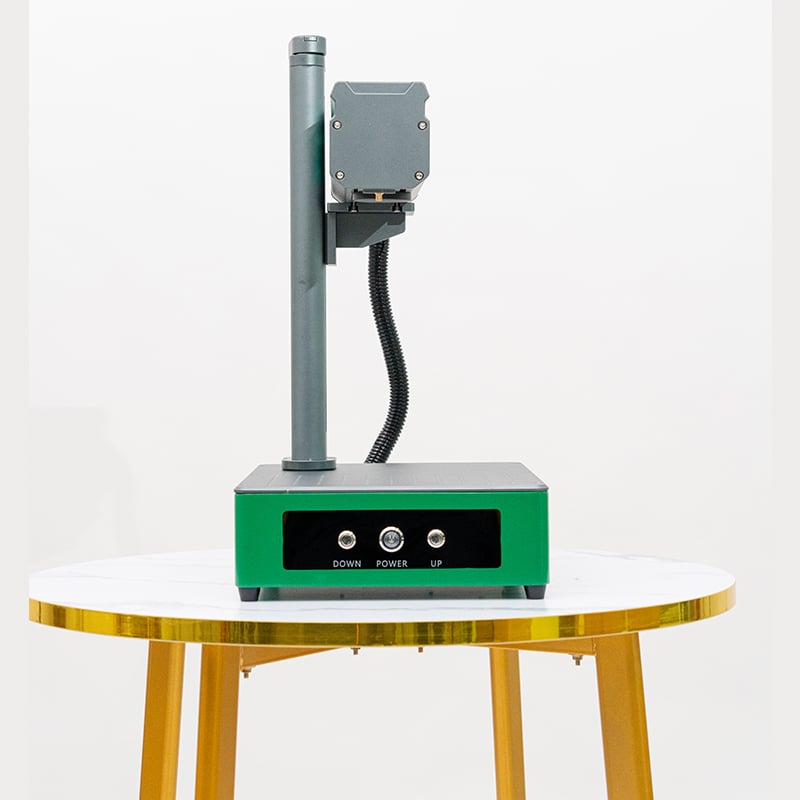
A portable laser engraving machine allows operators to complete permanent marking directly on the surface of the product while reducing unnecessary handling steps. In industrial environments, it is often used for metal nameplates, pipes, automotive parts, machine components, hardware products, and traceability coding on large or irregular workpieces.
For enterprises that need mobility, flexible workstation use, and permanent industrial coding, portable laser engraving solutions provide a practical extension of traditional fiber laser marking applications.
Handheld fiber laser marking has become increasingly important for industrial users who need permanent coding in multiple work areas or on products that cannot be easily placed under a bench-top machine. Compared with fixed marking setups, handheld fiber laser marking provides greater operational flexibility while still maintaining the core advantages of fiber laser technology, including permanent marks, high contrast, low consumable cost, and reliable long-term performance.
This type of marking is commonly used on stainless steel, aluminum, coated metal parts, tools, equipment tags, automotive components, and industrial hardware. It is suitable for marking serial numbers, production codes, logos, batch numbers, and other traceability information in manufacturing environments.
For factories handling large metal parts, multi-station production, equipment maintenance identification, or irregularly shaped components, handheld fiber laser marking can improve efficiency and make industrial coding more practical.
When selecting a laser marking machine, enterprises should focus on their own marking materials, production requirements, and budget to choose the most suitable type of equipment. For enterprises that mainly mark metals or hard plastics and have requirements for marking durability and cost-effectiveness, fiber laser marking machines are the first choice, which can balance marking quality, service life, and operating costs. For enterprises that focus on non-metallic materials such as paper, plastic films, and glass and pursue high cost-effectiveness and high-speed marking, CO₂ laser marking machines can meet their production needs at a lower cost. For enterprises engaged in high-end precision manufacturing, such as marking sensitive materials (flexible films, electronic components) or requiring ultra-fine marking, UV laser marking machines are the professional solution to avoid material damage and ensure marking precision. With the continuous development of laser technology, laser marking machines will be more intelligent, efficient, and multi-functional, bringing more possibilities to the industrial marking field.

Based In China
Serving The World
Room401, Building B, Xulong Industrial Park, Road Xinye No.76, Huangpu District, Guangzhou, Guangdong, China
Copyright © 2025 by Inkminic Logo Technology (Guangzhou) Co., Ltd. Privacy Policy
 EN
EN