
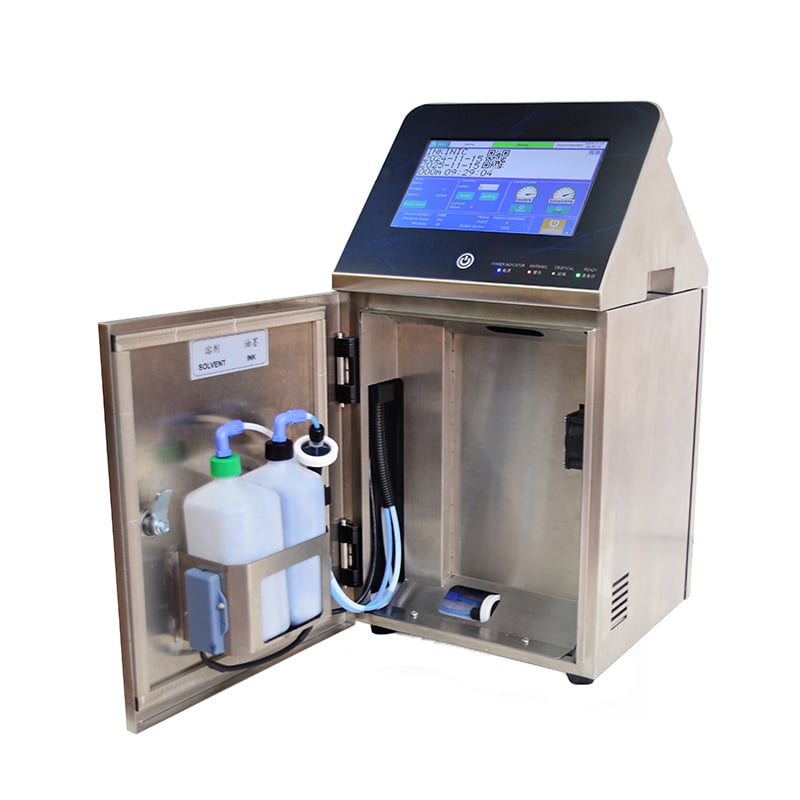
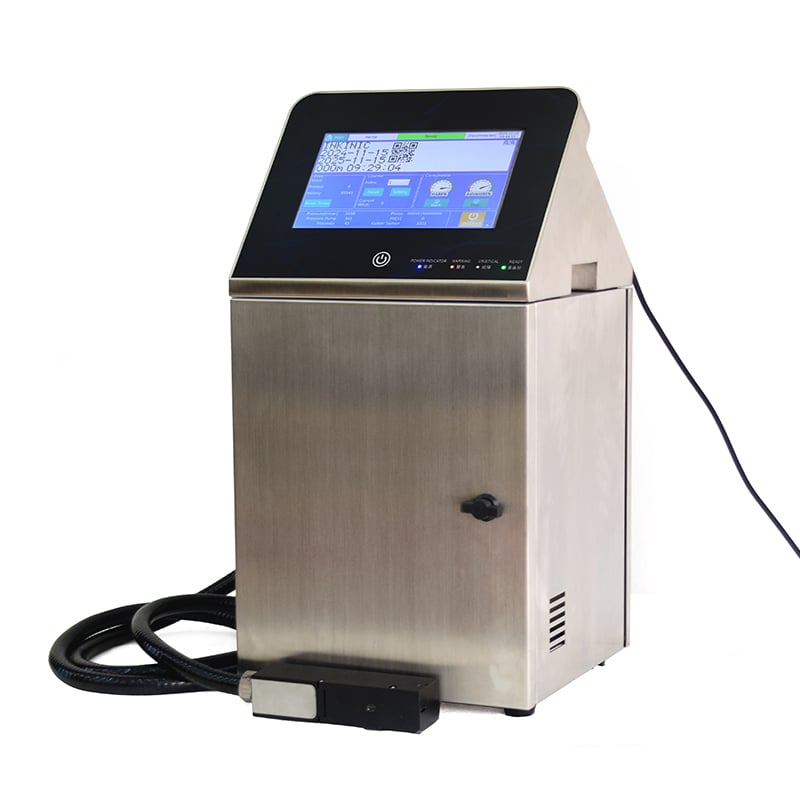
In the fast-evolving landscape of modern manufacturing and logistics, accurate, efficient, and reliable product identification has become indispensable. Among various coding technologies, continuous inkjet (CIJ) printers stand out as essential tools powering production lines across global industries. Designed for high-speed, non-contact marking, CIJ printers work on diverse substrates—plastics, metals, glass, paper, and even uneven or curved surfaces. Unlike contact-based or substrate-limited alternatives, CIJs generate a continuous stream of tiny ink droplets, precisely controlled to form text, logos, barcodes, QR codes, and other critical information on products, packaging, or components. This unique mechanism makes them the top choice for sectors like food and beverage, pharmaceuticals, cosmetics, electronics, automotive, and logistics, where speed, versatility, and durability are non-negotiable. From printing expiration dates on beverage cans to serial numbers on electronic components, CIJs ensure clear, compliant identification throughout a product’s lifecycle. As industrial processes grow more automated and regulated, CIJs play an increasingly vital role in traceability, brand protection, and regulatory compliance, solidifying their position as the backbone of industrial coding systems.
Core Advantages of Continuous Inkjet Printers
CIJ printers offer distinct advantages that address manufacturers’ key pain points and enable seamless integration into existing workflows. Below are their most prominent benefits:
1. Exceptional Speed and High Throughput
A defining strength of CIJs is their ability to operate at extremely high speeds, ideal for high-volume production lines. Capable of marking hundreds to thousands of products per minute (depending on application), CIJs achieve this throughput via a continuous ink droplet stream, eliminating the mechanical movement or contact required by thermal transfer or direct thermal printers. For 24/7 operations like food and beverage production—handling millions of units daily—CIJs prevent coding from becoming a bottleneck. They maintain consistent speed and accuracy even in demanding conditions, boosting production efficiency, reducing downtime, and lowering operational costs.
2. Versatile Substrate Compatibility
CIJs excel in substrate versatility, marking almost any surface—porous materials (paper, cardboard), non-porous materials (plastics, metals, glass, ceramics), and even uneven or curved surfaces. This is made possible by non-contact printing, which requires no flat or rigid substrate. In pharmaceuticals, CIJs mark glass vials, plastic syringes, and blister packs with equal precision; in automotive, they handle metal components, plastic parts, and rubber hoses. This flexibility lets manufacturers use one CIJ for multiple products, reducing the need for multiple coding systems and simplifying inventory management. Supported ink types—solvent-based, water-based, UV-curable—can be tailored to specific substrates and environmental needs (moisture, heat, or chemical resistance).
3. Non-Contact Printing for Damage-Free Marking
Non-contact printing is critical for fragile products (e.g., electronic components) or delicate packaging (e.g., thin plastic films, foam trays). It ensures products remain intact, eliminating wear on both the printer and the product. Unlike contact-based technologies that scratch, smudge, or deform items, CIJs deliver clean, precise marks from a distance, preserving product quality and aesthetics—vital for brand-conscious industries where appearance influences consumer perception. This also reduces maintenance costs and product waste.
4. Superior Traceability and Regulatory Compliance
In today’s regulated environment, traceability is a top priority. CIJs enable robust traceability by printing unique identifiers (batch codes, lot numbers, expiration dates, serial numbers, barcodes/QR codes) on each product, facilitating tracking from production to distribution. This supports recall management, quality control, and compliance with standards like FDA (food/pharmaceuticals) and ISO (manufacturing). CIJs integrate with ERP systems for real-time data synchronization and automatic coding updates, ensuring accurate, up-to-date information and reducing non-compliance risks. For example, in pharmaceuticals, serial numbers prevent counterfeiting; in food production, expiration dates enhance safety and reduce waste.
5. Low Maintenance and High Reliability
Built for industrial use, CIJs are durable, reliable, and low-maintenance. Modern models feature advanced self-cleaning systems that prevent nozzle clogging during long runs by flushing ink residues and debris. User-friendly interfaces reduce training needs, while remote monitoring and diagnostics enable quick issue resolution without production disruption. High reliability translates to reduced downtime, lower maintenance costs, and higher overall equipment effectiveness (OEE). CIJs perform consistently in harsh environments (extreme temperatures, humidity, dust), making them suitable for diverse industrial settings.
Key Process Selling Points of CIJs
Beyond core advantages, CIJs offer process-specific benefits rooted in their unique technology, addressing needs for precision, flexibility, and efficiency:
1. Precise Droplet Control for High-Quality Marks
CIJs use piezoelectric crystals or thermal actuators to vibrate nozzles, breaking ink streams into uniform droplets (10–100 microns). Electrostatic charging and deflection form sharp, legible marks—even at high speeds. This precision is ideal for small font sizes (electronic components, pharmaceutical vials) or complex graphics (logos, QR codes). Adjustable droplet size and density let manufacturers balance speed and clarity for optimal results.
2. Flexible Coding for Dynamic Production
CIJs offer unmatched flexibility in coding content/format, suiting dynamic environments where requirements change frequently. Advanced software enables quick programming of variable data (date stamps, batch codes, serial numbers, multilingual text) without stopping production. For example, food plants producing multiple lines can switch templates in seconds. Support for automatic data serialization aids traceability and anti-counterfeiting. This eliminates pre-printed packaging, reducing inventory costs and enabling on-demand coding for custom/short-run products.
3. Ink Efficiency and Cost-Effective Operation
CIJs are highly ink-efficient, with closed-loop systems that recirculate unused droplets, minimizing waste. High-quality inks ensure durable marks (resistant to fading, smudging, chemicals) throughout a product’s lifecycle. While initial costs may be higher than alternatives, low ink consumption, minimal maintenance, and high throughput result in lower total cost of ownership (TCO) and strong return on investment (ROI) for cost-conscious manufacturers.
4. Seamless Integration with Automated Lines
Designed for modern automation, CIJs mount easily on conveyors or filling machines and synchronize with sensors for precise marking timing/positioning. This enables fully automated coding, reducing manual intervention and human error. Support for industry-standard protocols (Ethernet/IP, Modbus) allows connection to ERP/MES systems, enabling real-time monitoring, automatic data updates, and remote control—enhancing efficiency and visibility. For example, in automotive assembly lines, CIJs integrate with robots to mark components accurately as they move along the line.
5. Adaptability to Harsh Environments
CIJs withstand harsh industrial conditions (extreme temperatures, humidity, dust, vibration, chemicals) with rugged enclosures and sealed ink systems that prevent contamination. Rated for -10°C to 40°C operation, they suit cold storage (food/pharmaceutical warehouses) and high-temperature environments (automotive foundries). This adaptability ensures reliable performance regardless of conditions, reducing downtime and maintaining consistent coding quality.
In conclusion, CIJs are versatile, reliable, and efficient coding solutions critical to modern industrial operations. Their speed, substrate compatibility, non-contact printing, traceability, and low maintenance make them preferred across industries. With precise droplet control, flexible coding, ink efficiency, automation integration, and harsh-environment adaptability, CIJs deliver significant value—helping manufacturers meet regulations, enhance traceability, improve efficiency, and reduce costs. As industrial technologies evolve, CIJs will remain at the forefront of coding solutions, enabling manufacturers to stay competitive in the global marketplace.

Based In China
Serving The World
Room401, Building B, Xulong Industrial Park, Road Xinye No.76, Huangpu District, Guangzhou, Guangdong, China
Copyright © 2025 by Inkminic Logo Technology (Guangzhou) Co., Ltd. Privacy Policy
 EN
EN