By the INKMINIC Team | December 2025
Here's a thing we've learned after years in the coding and marking business: you can send all the brochures and spec sheets you want, but nothing beats a customer standing in your showroom, seeing the machines up close and watching your team work.
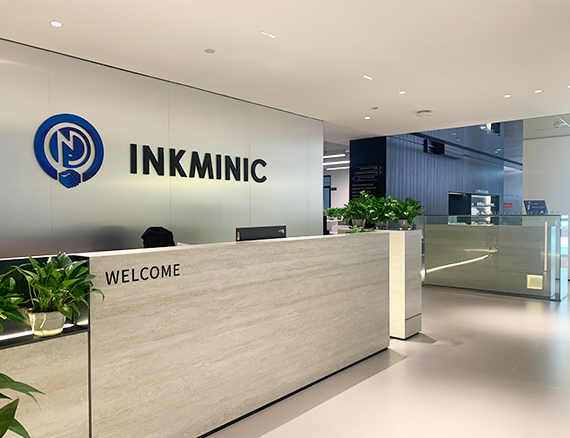
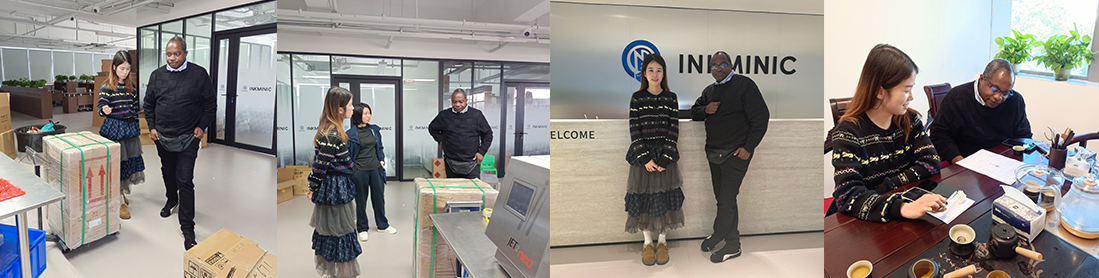
On December 1st, 2025, we had the pleasure of hosting a customer from South Africa at our INKMINIC showroom. He came in with questions. He left with confidence. And honestly, his visit reminded us why we do what we do.
Let us tell you what happened—and more importantly, what it means for you if you're in the market for a coding machine.
If you're running a packaging line in South Africa right now, you already know the pressure. Regulations are tightening. Traceability is no longer a "nice to have"—it's the law. South Africa's health authority has been rolling out strict serialization requirements for pharmaceuticals, and food and beverage producers are facing similar demands for clear, scannable batch codes and expiry dates.
The South African coding and marking market reflects that. Imports of coding equipment grew nearly 6% between 2023 and 2024, and the compound annual growth rate over the past few years sits at around 6.3%. Manufacturers are upgrading. They need machines that don't quit at 3 a.m., inks that actually stick to the substrate, and a supplier who answers the phone when something goes sideways.
That's exactly the conversation we had with our South African visitor.
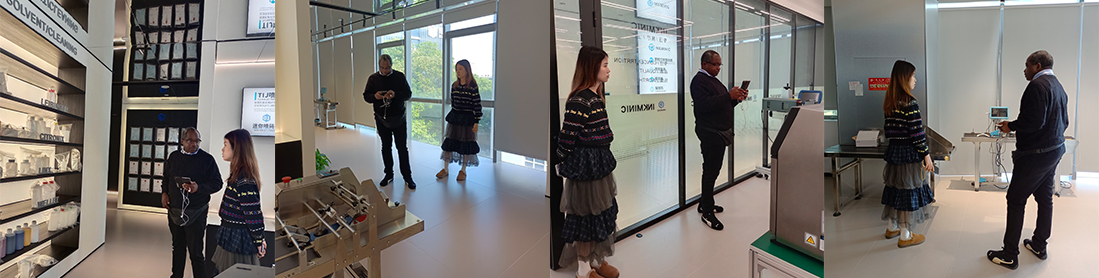
Our guest didn't come for a sales pitch. He came to understand. So we did what we always do: we put the machines side by side in our showroom and explained the trade-offs honestly.
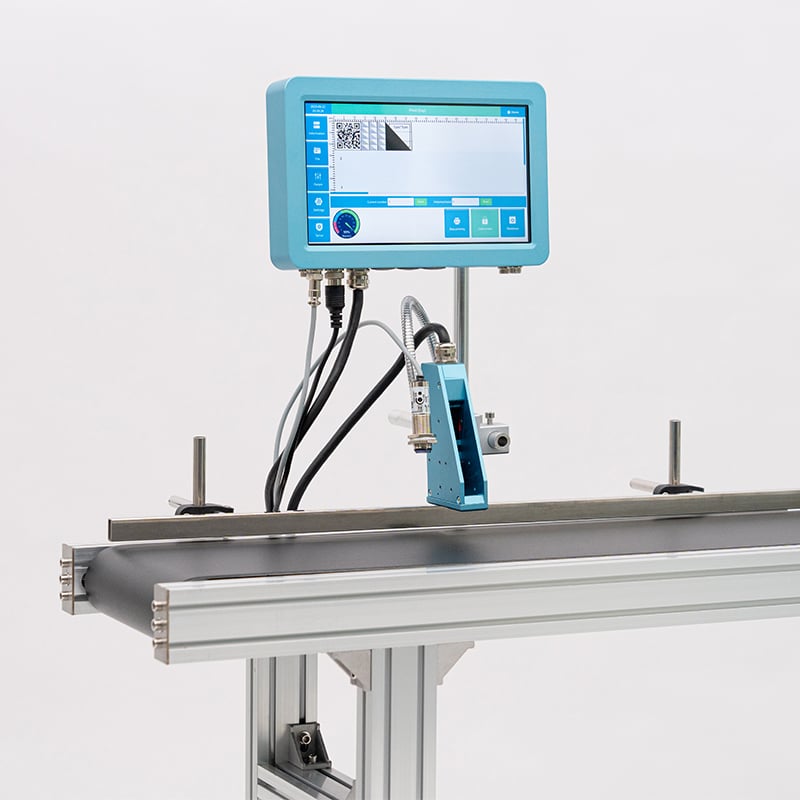
We started with our CIJ line. If you've ever looked at the bottom of a PET bottle or the side of a cable and seen a crisp date code, there's a good chance a CIJ printer put it there.
Here's the simple version: CIJ printers shoot a continuous stream of ink droplets, charging and deflecting them to form characters. The big advantage? Speed and distance. The printhead can sit several centimeters away from the product, which means you can code curved surfaces, irregular shapes, and fast-moving lines without the head crashing into anything. It's the go-to technology for high-speed beverage lines, cable extrusion, and anywhere you need a date code that dries fast and stays put.
The trade-off? CIJ uses solvent-based inks, so you need to stay on top of consumables and nozzle maintenance. We told him that straight. No sugarcoating.
Then we moved to TIJ. If CIJ is the rugged workhorse, TIJ is the precision instrument.
TIJ works more like the printer on your desk—heat creates a bubble that pushes a droplet out of the nozzle, but only when needed. That "on-demand" approach means high resolution and low maintenance. No messy solvent recovery. No complex deflection plates. Just clean, sharp text and barcodes, especially on porous surfaces like cartons and labels.
We showed him where TIJ shines: small-to-medium production runs, secondary packaging, cases and boxes where you need a readable QR code or a crisp lot number. The caveat is speed—TIJ isn't built for the blistering pace of a high-speed bottling line—and on non-porous surfaces you need the right ink formulation to make sure it adheres. He nodded. He'd seen that problem before with another supplier.
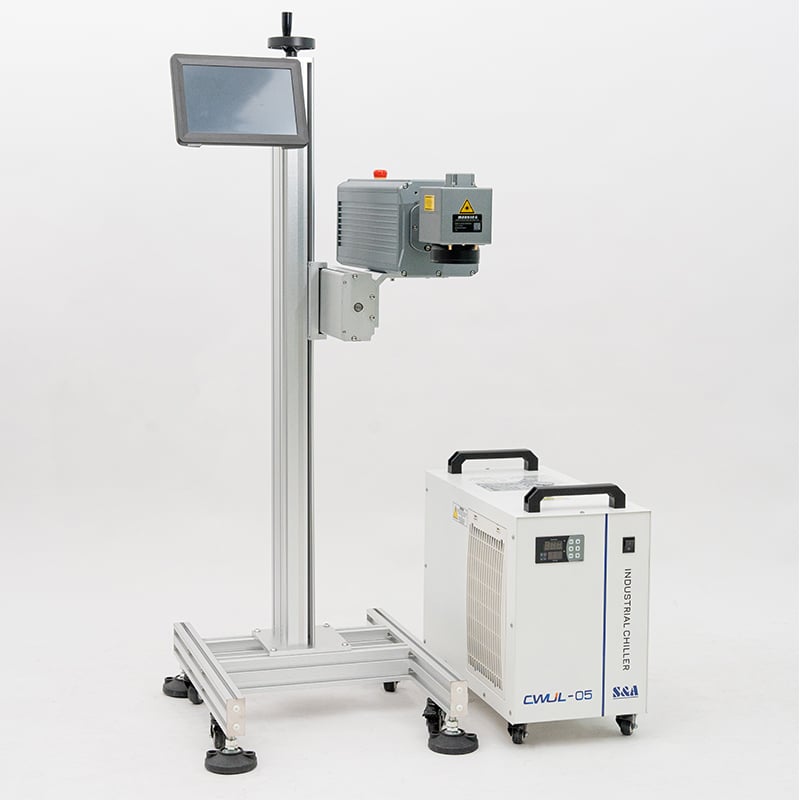
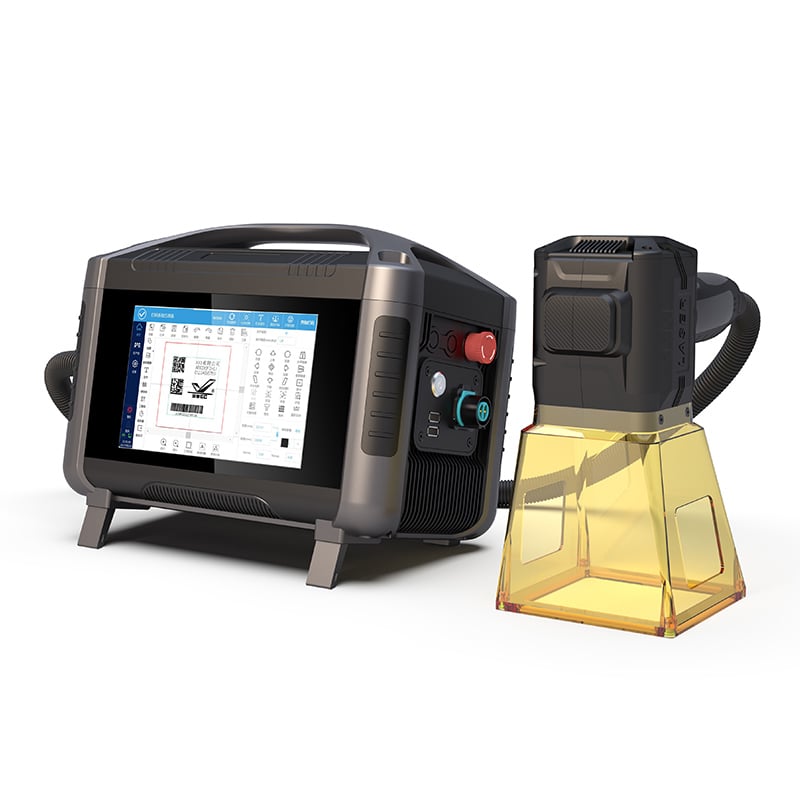
Finally, we fired up the laser. No ink. No solvents. Just a focused beam of light that permanently changes the surface of the material.
For our South African guest, this was the "aha" moment. He represents a market where anti-counterfeiting and permanent traceability are becoming non-negotiable, especially in pharmaceuticals and high-value consumer goods. Laser marking doesn't rub off. It doesn't fade. It survives sterilization, shipping, and a decade on a shelf.
We explained the nuance: different materials need different laser wavelengths. Fiber lasers for metals. CO₂ for organics and some plastics. UV for cold marking on heat-sensitive materials. It's not a one-size-fits-all tool, and anyone who tells you otherwise is trying to sell you something you don't need.
Here's a part of the visit that we think matters.
We're proud of our own INKMINIC-branded machines. We design them, we build them, and we stand behind them. But we're not so arrogant as to pretend we're the only game in town. Our showroom also carries market-leading brands and consumables—the names our customers already know and trust.
Why? Because sometimes a customer has an existing fleet and needs compatible parts. Sometimes they want to test our machines against a familiar benchmark. And sometimes they just need someone who can supply genuine consumables without a six-week lead time from overseas.
Our guest appreciated that. He said something like: "You're not just selling me your box. You're selling me the whole picture." That's exactly the point.
The big machines get the attention. But the details in our showroom are where you see the truth.
We walked him through our display area. Machines set up and running, not just sitting pretty. Sample codes on real substrates—PET, carton, cable, metal—so he could touch them and see how they hold up. Consumables arranged clearly, with labels and batch numbers visible. Spare parts organized so you can see exactly what you'd be getting.
He stopped and took photos. Not just of the machines—of the sample displays and the organized shelves.
"This," he said, pointing at a row of labeled sample codes, "tells me more than any certificate."
He's right. A company that takes ten extra minutes to prepare real sample codes is a company that will take your service call seriously. A company that labels every spare part is a company that won't send you the wrong one six months down the line. It's not glamorous. It's just how you do things when you actually care.
By the end of the visit, our South African friend had a notebook full of scribbles and a phone full of photos. He summed it up better than we could:
"I've been to suppliers where the machines look great but the place feels empty. Here, I see people working. I see machines being tested. I see samples prepared like they're going to my own factory. That's what I needed to see."
He's now back in South Africa, and we're working on a configuration that fits his specific production line—a mix of CIJ for his high-speed date coding and a laser unit for his permanent batch codes. We won't pretend it's a done deal until the ink is dry on the paperwork. But the foundation is there.
If you're in the market for a coding or marking machine—whether you're in Johannesburg, Jakarta, or Jacksonville—here's our honest advice:
Don't just compare spec sheets. A spec sheet won't tell you whether the printhead survives a dusty warehouse or whether the local agent answers WhatsApp on a Sunday. Ask to see the showroom. Not just the brochure. The showroom. The sample codes. The demo machines. If a supplier hesitates, that tells you something.
Match the technology to the job, not the other way around. CIJ for speed and curved surfaces. TIJ for clean codes on cartons and labels. Laser for permanent, tamper-proof marking. Anyone who says one technology does everything is either confused or lying.
And finally: buy from someone who stocks what they sell. A supplier who only pushes their own brand is a supplier who might not be around when you need a replacement part in a hurry. A supplier who carries the market leaders and their own line is a supplier who understands that your uptime matters more than their margin.
Our showroom is open. If you're in the region—or if you're willing to make the trip—we'll put the machines through their paces, show you the sample codes, and answer every question you throw at us. No pressure. No script. Just coffee and coding machines.
Because the best customer relationships don't start with a contract. They start with a visit.
 Hot News
2026-05-29
2026-02-13
2026-01-06
2026-01-05
2026-06-23
2026-06-22

Based In China
Serving The World
Room401, Building B, Xulong Industrial Park, Road Xinye No.76, Huangpu District, Guangzhou, Guangdong, China
Copyright © 2025 by Inkminic Logo Technology (Guangzhou) Co., Ltd. Privacy Policy
 EN