By INKMINIC Team | December 2025
On December 11, 2025, we had a customer visit that we won’t forget anytime soon. A customer from an Indian company walked through the doors of INKMINIC in Guangzhou. They didn’t come for a quick hello. They came to look, touch, ask hard questions, and eventually sit down at the meeting table to talk business. And honestly, that’s exactly the kind of visit we like.
This wasn’t a tour where we hide behind polished slides and big words. We opened the showroom, turned on the machines, and let the engineers do the talking. The goal was simple: show them what we actually do, how we do it, and whether it fits what they need back home in India.
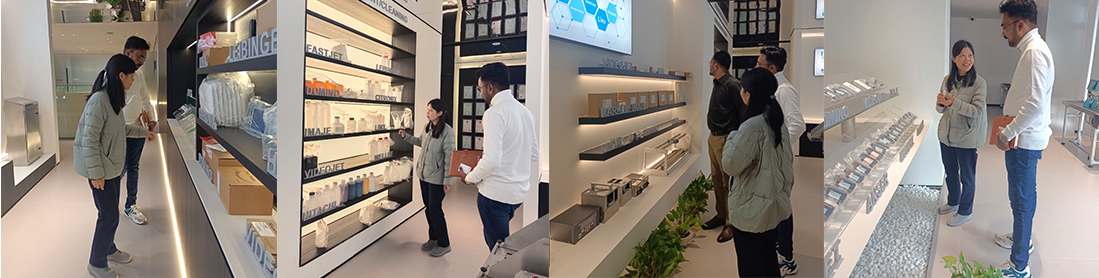
The first stop was our showroom. If you’ve never been to INKMINIC before, the first thing you notice is the sheer number of brands on display. We don’t just sell our own label. We work with Videojet, Linx, Domino, Citronix, Markem-Imaje, Leibinger, Hitachi, Fastjet, Langde, Anser, Loogle, Sojet, Meetjet, Dongning, Docod, HP, and Dakai . That’s not a typo. It’s a wall of options.
For the Indian customer, this mattered. They walked along the display and kept asking, “You carry this too?” It’s a common reaction. Most factories specialize in one or two brands. We’ve built our business around being a one-stop procurement center, which means a customer can compare a Videojet CIJ next to a Linx CIJ, or look at a Citronix TIJ beside a Sojet TIJ, without visiting five different suppliers .
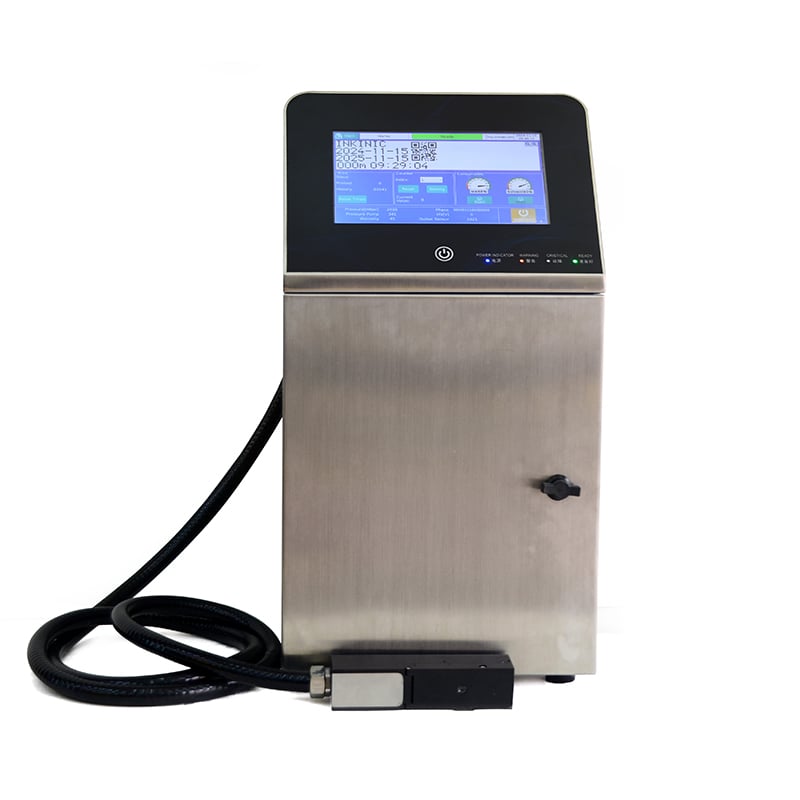
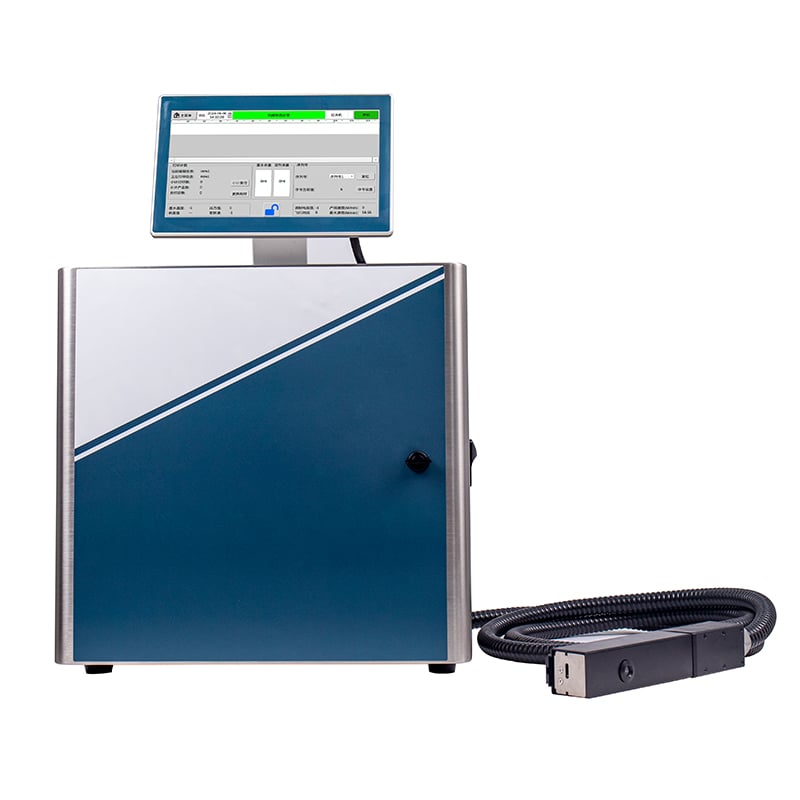
But the brands are only half the story. The real question is what kind of machine fits the job. We walked them through the four main categories we stock: TIJ (thermal inkjet), CIJ (continuous inkjet), TTO (thermal transfer overprinter), and Laser Machines. Each one solves a different problem.
CIJ is the workhorse for date codes and batch numbers on curved or uneven surfaces. It’s non-contact, fast, and handles everything from cables to beverage bottles .
TIJ is the high-resolution guy. If you need crisp barcodes, QR codes, or logos on cartons or labels, TIJ does that without the solvent mess .
TTO is for flexible packaging. Think snack bags, pouch films, and labels that get squeezed and shipped.
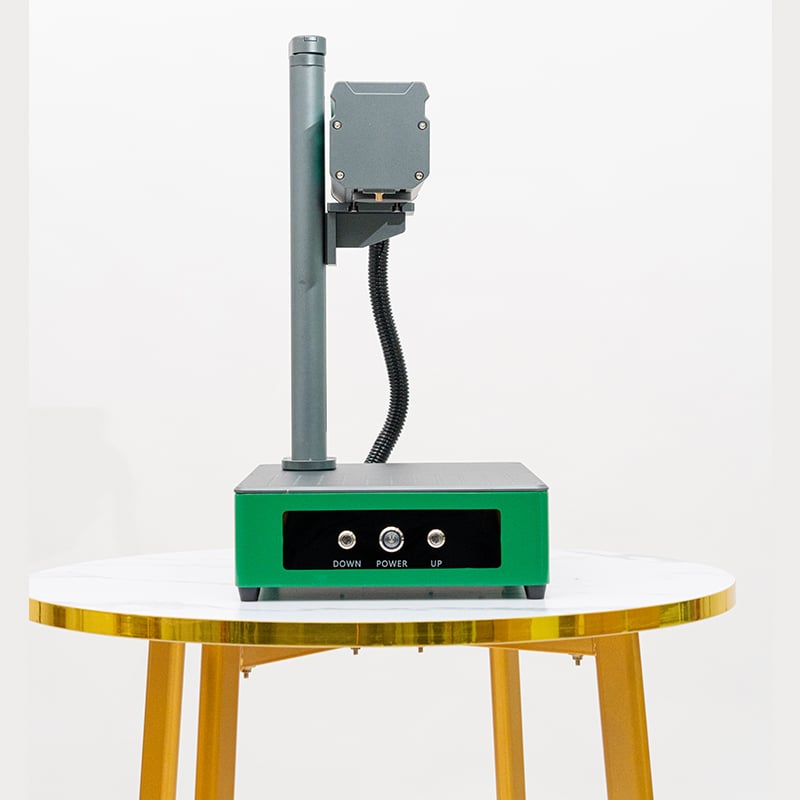
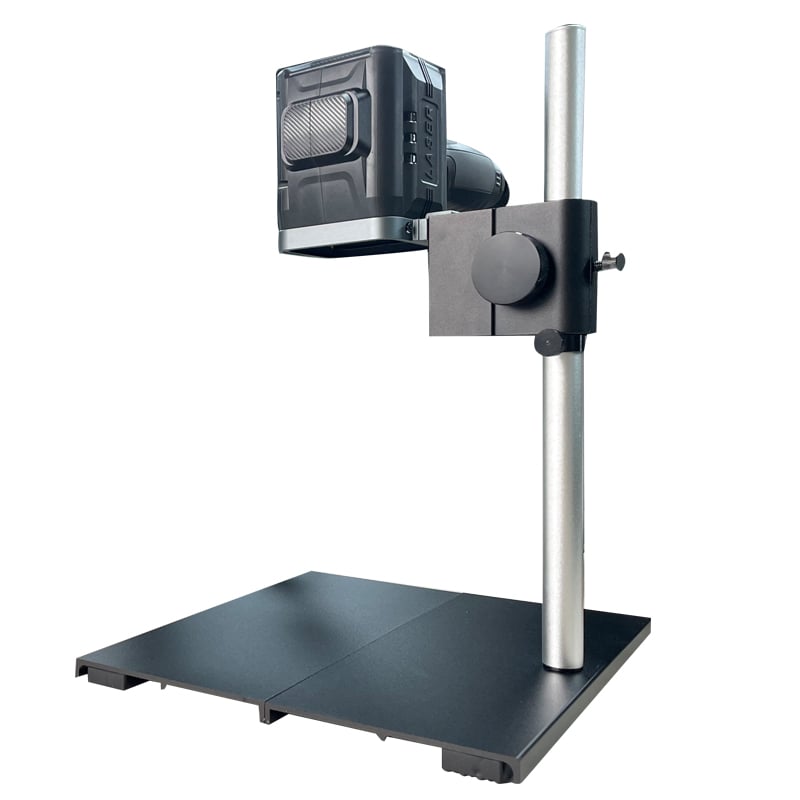
Laser is the permanent mark. No ink, no consumables, no smudging. It’s the choice when the code has to survive the entire life of the product.
The customer from India nodded along. They already knew the theory. What they wanted was to see the machines run.
Here’s where the visit got interesting. Out of everything in the showroom, the Indian customer kept circling back to one thing: the INKMINIC laser marking machine. They had seen laser systems before, but they wanted to see ours in action. Not a video. Not a brochure. A real demo, on real material, with a real engineer at the controls.
Our engineer didn’t waste time. He pulled up a sample—a plastic component similar to what the customer might mark in their own production—and set up the job. The laser fired, the head moved, and within seconds a clean, permanent code appeared on the surface. No ink. No drying time. No smudge test needed.
The customer leaned in. They asked about speed. They asked about the software interface. They asked what happens when you need to change a date code at 2 a.m. and the line operator doesn’t read English. Our engineer showed them the touchscreen, walked through the message creation, and explained how the settings are saved so a shift change doesn’t mean a production stoppage.
One thing we’ve learned over the years: customers don’t care how many patents you have. They care whether the machine will run tomorrow morning when the production manager is under pressure to hit output targets. So the demo wasn’t about showing off. It was about showing that the INKMINIC laser is simple enough for daily use and sturdy enough for a factory floor.
The Indian customer asked a few more questions about maintenance intervals and spare parts. Our engineer answered straight. No vague promises. Just what the schedule looks like and what we keep in stock. That seemed to land well.
After the laser demo, we walked them over to the consumables section. This is the part of the showroom that doesn’t photograph well but matters more than almost anything else. Machines are a one-time purchase. Consumables are forever.
We showed them the racks: chips, inks, thinners, cartridges, ribbons, printheads, filters. For a factory running CIJ printers, these are the things that eat into the budget month after month. If the ink is overpriced or the chips are unreliable, the machine becomes a headache no matter how good the hardware is.
The customer picked up a few items and asked about compatibility. We explained our approach: we supply both original consumables for brands like Videojet and Domino, and cost-effective alternatives that we’ve tested in-house . For a business watching its margins, that flexibility matters. You don’t have to choose between “genuine only” and “cheap but risky.” You can mix and match based on what the job actually requires.
We also talked about lead times. India to China is not a short boat ride, and the last thing a factory needs is to run out of ink because a shipment got stuck. We showed them our inventory system and the stock levels we keep on the shelf. It’s not glamorous, but it’s the difference between a supplier and a partner.
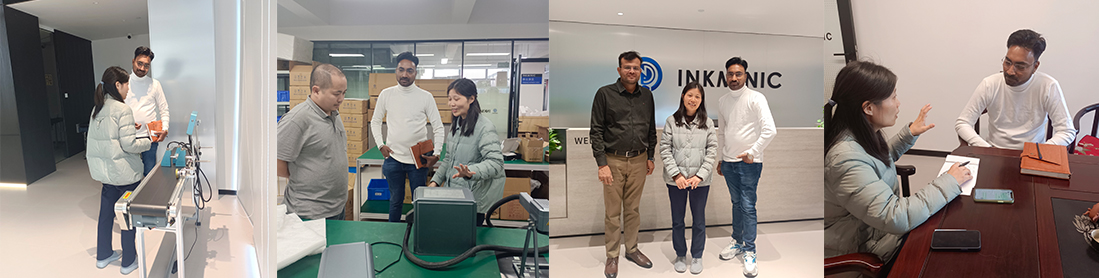
After the showroom and the demos, we moved to the meeting room. This is where the visit shifted from “looking” to “planning.”
The Indian customer had come prepared. They had a list of models they were interested in, quantities they wanted to discuss, and a timeline in mind. We pulled out the spec sheets, the price sheets, and the delivery schedules. The conversation wasn’t dramatic. It was practical.
We talked about which laser model made sense for their primary application. We discussed whether they needed a CIJ backup for their existing line. We went through the consumables bundle and figured out a starting order that wouldn’t overwhelm their warehouse but would keep them running for the first few months.
There were a few back-and-forth moments. They wanted a better price on the laser. We explained where we could move and where we couldn’t. They asked about training for their operators. We explained that we include remote guidance and a setup manual, and that our engineers are available for video calls when something isn’t clear. That’s not the same as an on-site visit, but for a first order, it’s a realistic starting point.
By the end of the meeting, we had the outline of a purchase agreement. It wasn’t a massive order. It was a sensible one. A laser machine, a starter set of consumables, and a commitment to talk again after the first shipment lands and their team has had a chance to run the equipment in their own factory.
That’s how most of our long-term relationships start. Not with a giant contract signed on day one, but with a first order that proves the machine works, the consumables arrive on time, and the support is there when a question comes up.
We could have just posted a photo of a handshake and a gift exchange. That’s what most company news pages do. But that wouldn’t tell you anything useful.
What actually happened on December 11 was a reminder of what INKMINIC is trying to be. We’re not the biggest brand in the world. We don’t have the flashiest booth at the trade show. What we have is a warehouse full of options, a team that knows the difference between a CIJ and a TIJ, and a willingness to let customers test the equipment before they commit.
The Indian customer said something at the end of the visit that stuck with us. They said, “You have more brands than we expected, but you also explained them in a way that made sense.” That’s the balance we’re aiming for. A comprehensive catalog is useless if nobody can help you navigate it. A cheap price is meaningless if the machine breaks down in month three.
For anyone reading this who is in the market for a coding or marking solution, here’s what we’d say: come visit us the way this Indian customer did. Walk the showroom. Ask for a demo on your own sample material. Sit at the table and talk about what you actually need, not what a catalog says you should buy. We’ll tell you what we have, what we don’t have, and what we’d recommend even if it’s not the most expensive option on the shelf.
That’s not a sales pitch. It’s just how we do business.
The customer flew back to India with a folder of spec sheets, a few sample pieces they had marked in our showroom, and a draft agreement. We’re now preparing the first shipment and finalizing the consumables list. If everything goes smoothly—and we’re working to make sure it does—their production line will have an INKMINIC laser running by early next year.
We’ll follow up after the installation. Not with a big announcement, but with a quiet check-in to make sure the machine is doing what it’s supposed to do. That’s the part that matters. The showroom demo is exciting. The signed agreement is satisfying. But the real test is whether the machine is still running cleanly six months from now, and whether the customer picks up the phone when they need the next order.
If you’re in Guangzhou and want to see the showroom for yourself, the door is open. Bring your samples.
 Hot News
2026-05-29
2026-02-13
2026-01-06
2026-01-05
2026-06-23
2026-06-22

Based In China
Serving The World
Room401, Building B, Xulong Industrial Park, Road Xinye No.76, Huangpu District, Guangzhou, Guangdong, China
Copyright © 2025 by Inkminic Logo Technology (Guangzhou) Co., Ltd. Privacy Policy
 EN