By INKMINIC Team | February 2026
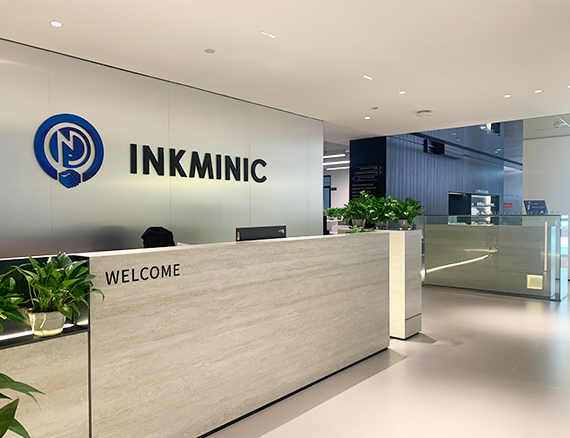
Some customer visits are all handshakes and photo ops. This one wasn't. A customer from an Indonesian company walked into our Guangzhou facility on a February morning with a simple attitude: show me what you've got, and don't waste my time. We respect that. So we did exactly that.
What follows is a plain, no-frills account of how the day went — what we showed, what he asked, what surprised him, and what we agreed on before he headed back to the airport. No buzzwords. No "synergy." Just a real visit.
The first thing he told us was that he'd already visited two other suppliers in Guangdong that week. He'd seen the brochures. He'd heard the sales pitches. What he hadn't seen was a place where he could put a Videojet next to a Linx, a Domino next to a Citronix, and actually compare them side by side without someone steering him toward whatever brand paid the biggest commission.
That's when we walked him to the showroom wall.
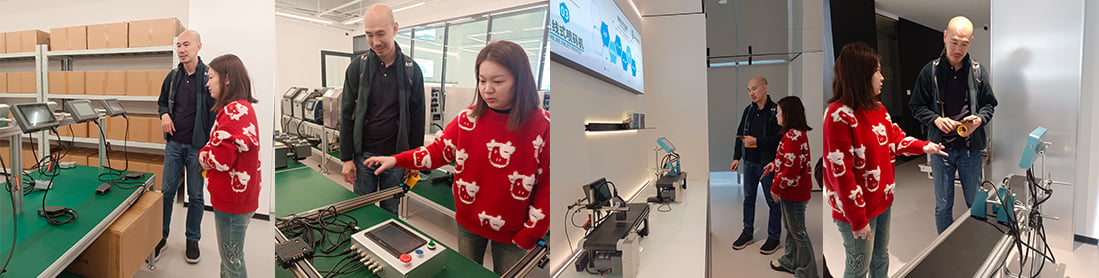
Our showroom has a long display of brand names. Videojet. Linx. Domino. Citronix. Markem-Imaje. Leibinger. Hitachi. Fastjet. Langde. Anser. Loogle. Sojet. Meetjet. Dongning. Docod. HP. Dakai. And our own INKMINIC line sitting right there with the rest.
The customer walked along the wall slowly. He'd stop, point at a name, and ask, "You actually have this in stock? Or is it just a logo on the wall?" Fair question. Plenty of trading companies plaster brand names on their website and then scramble to source one unit when an order comes in.
We opened the warehouse door and let him look at the shelves. Rows of machines, boxes of consumables, spare parts in labeled bins. He took a few photos. He didn't say much, but he stopped asking whether we actually stocked things after that.
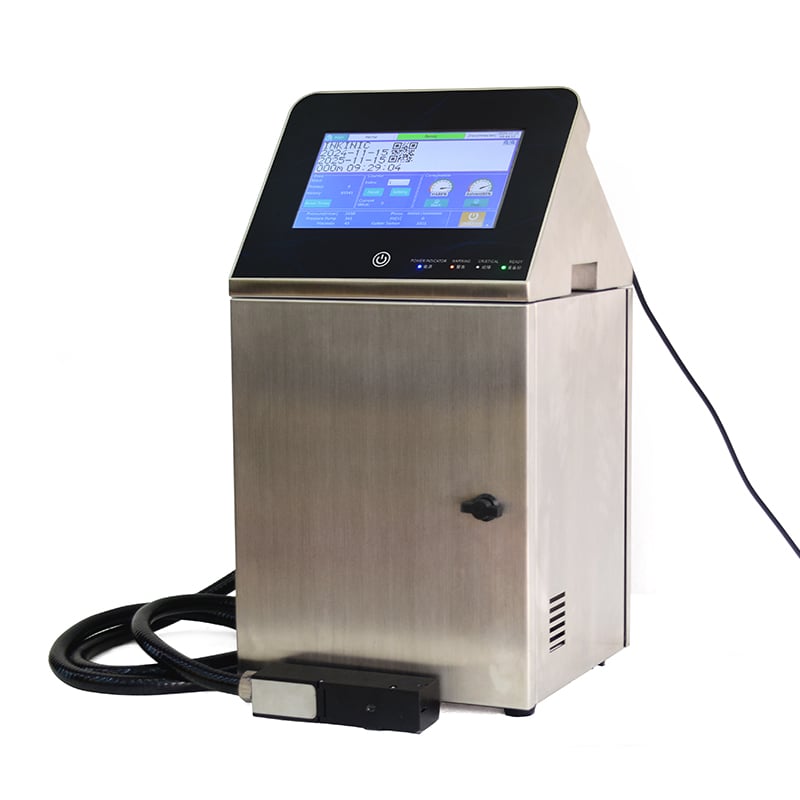
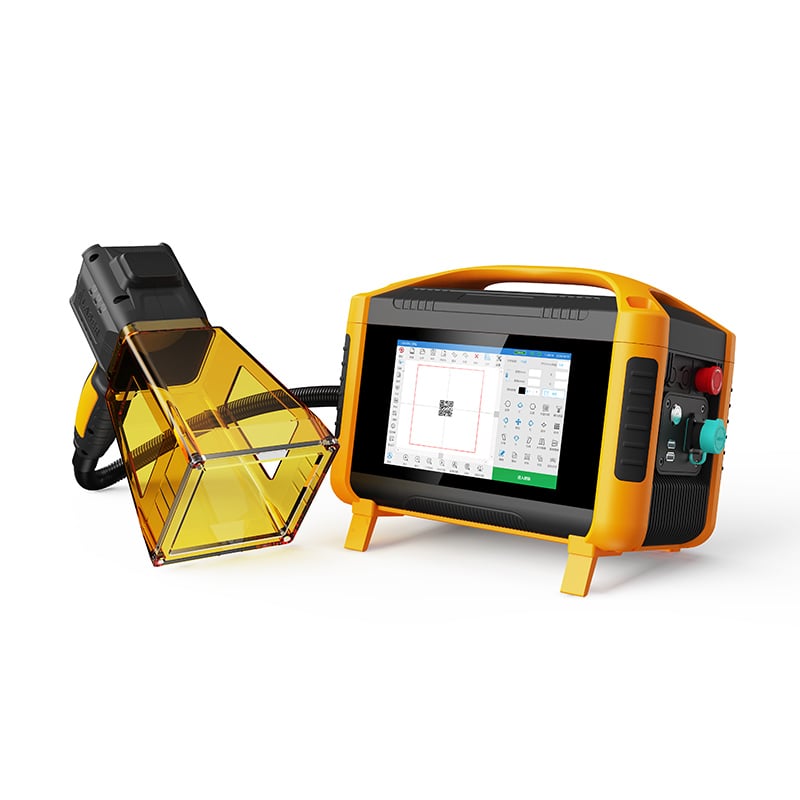
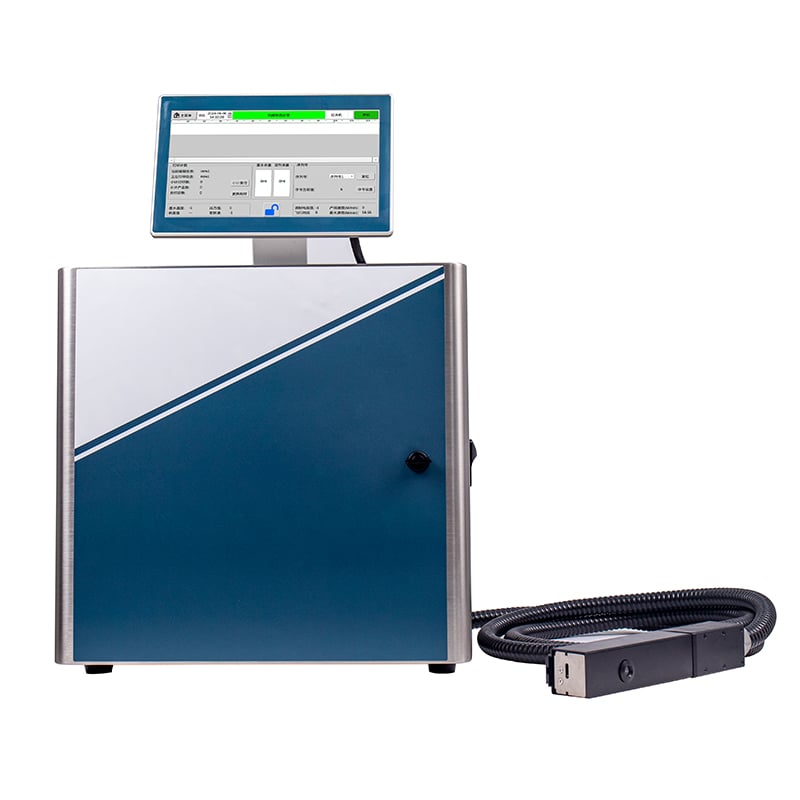
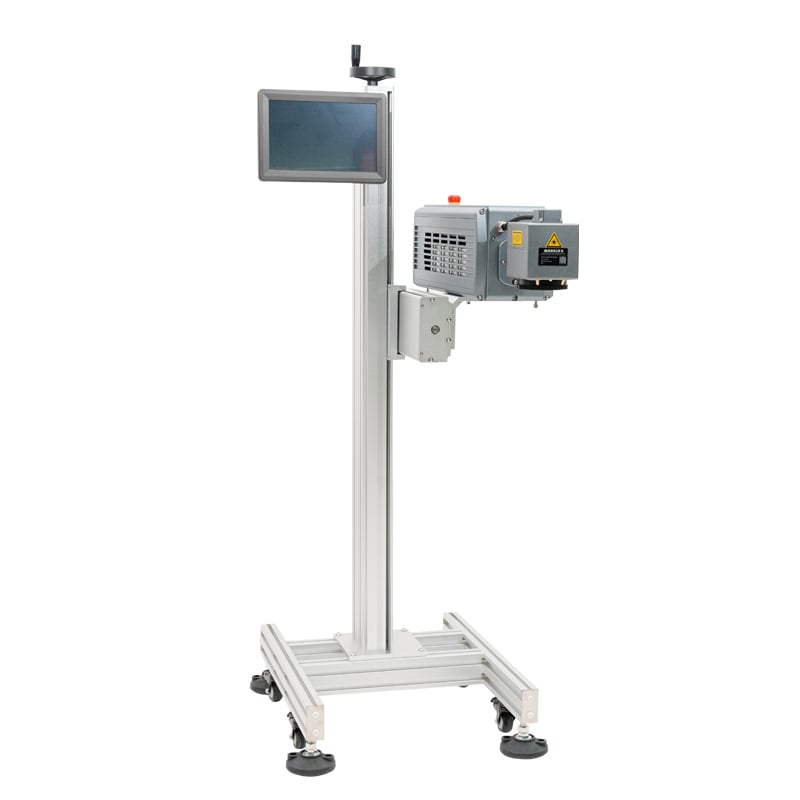
A wall of brands is meaningless if you can't tell the difference between them. So we sat him down with four machines on the floor and walked through what each one does. Not in marketing language. In factory language.
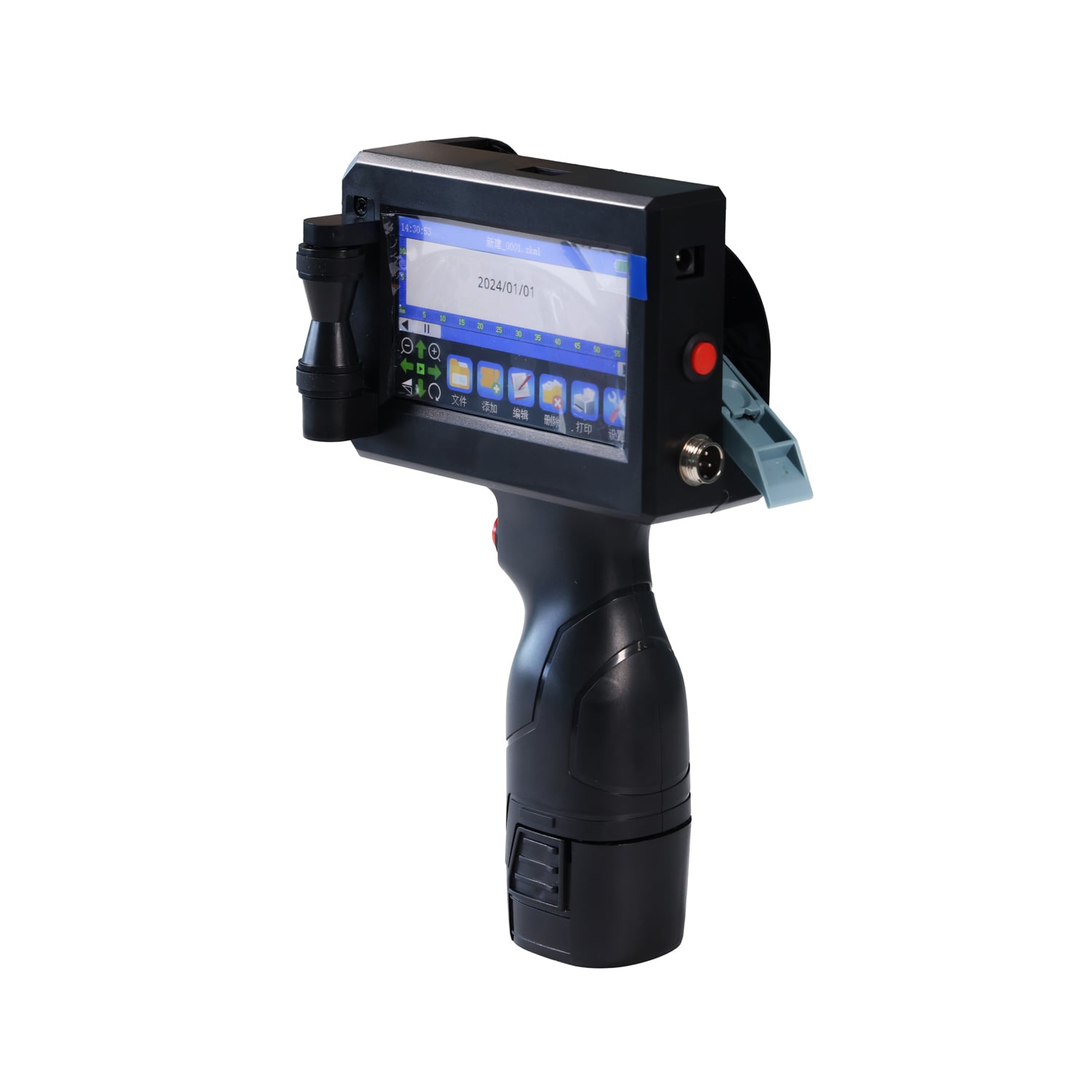
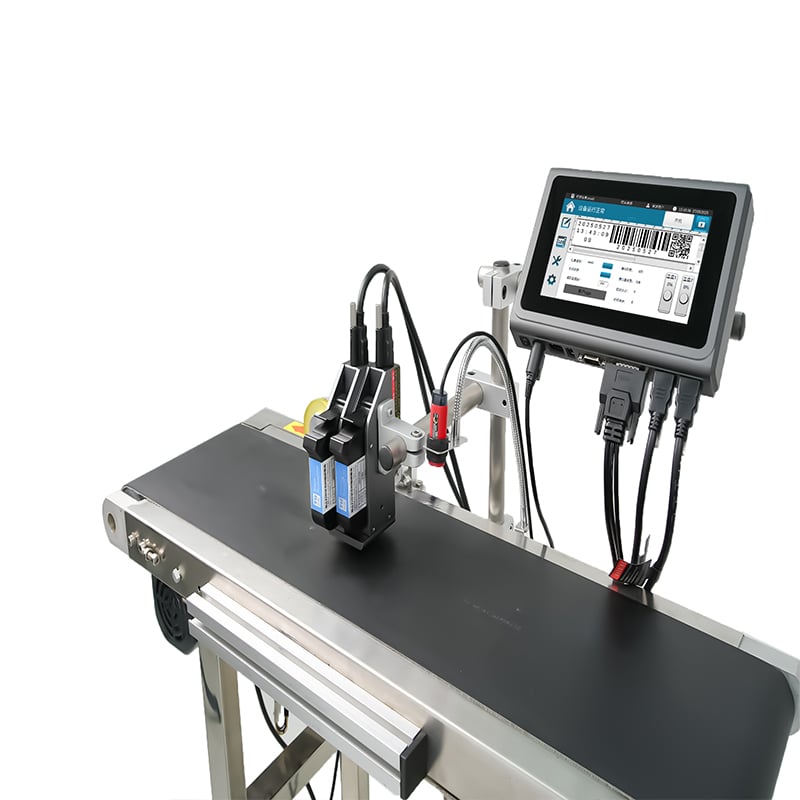
TIJ (thermal inkjet). The high-resolution option. If you need a barcode or QR code that a scanner reads on the first try, this is the machine. It's clean, it's simple, and it doesn't leave solvent fumes hanging around the production line.
CIJ (continuous inkjet). The everyday workhorse. Date codes on bottles, batch numbers on cables, printing on curved or uneven surfaces. It's non-contact, so it works on things you can't press a printhead against.
TTO (thermal transfer overprinter). For flexible packaging. The snack bag, the pouch film, the label that gets squeezed and shipped and still needs a legible date on it.
Laser. No ink. No consumables. A permanent mark that doesn't fade, smudge, or rub off. It costs more upfront, but the running cost is basically electricity and the occasional lens cleaning.
He listened, asked a few sharp questions about speed and substrate compatibility, and then pointed at the laser machine. "This one. Show me this one."
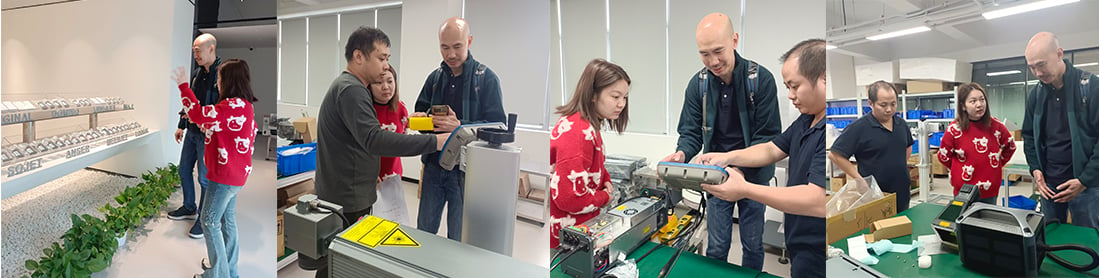
Our engineer rolled the INKMINIC laser marking machine to the center of the floor and grabbed a sample — a plastic part similar to what the customer's factory produces. He asked the customer to pick the text. The customer wrote down a date code and a batch number on a piece of paper. The engineer typed it in, adjusted the focus, and hit start.
The laser fired. The head moved. The mark appeared. Clean, dark, permanent. You could rub your thumb across it and it wouldn't come off.
The customer picked up the sample and turned it over in his hands. He asked how long the mark took. About two seconds. He asked if the machine could handle different materials. The engineer switched to a metal sample and ran another mark. Different settings, same clean result.
Then came the question that told us he was serious: "What happens when my operator needs to change the date and he's never touched a laser before?"
Our engineer didn't answer with words. He handed the customer the touchscreen stylus and said, "You try."
The customer hesitated, then tapped the screen. The interface was simple — a message list, a date field, a save button. He changed the date, saved it, and ran another mark. It worked. He laughed. "That's easier than my phone."
That moment mattered more than any spec sheet. A machine is only as good as the person running it at 2 a.m. on a night shift. If the interface confuses the operator, the machine sits idle. Our engineer knew that. The customer knew that. Twenty minutes of hands-on time settled it.
After the laser demo, we walked him to the consumables area. This is the part of the showroom that doesn't photograph well but decides whether a factory's monthly budget holds up or falls apart.
We showed him the shelves: chips, inks, thinners, cartridges, ribbons, printheads, filters. For a CIJ printer, these are the recurring costs that never go away. The machine is a one-time purchase. The ink is forever.
He picked up a chip and asked about compatibility. We explained our approach: we carry original consumables for the major brands, and we also carry tested alternatives that cost less. He didn't need to choose between "genuine only" and "cheap but risky." He could mix and match based on what each job actually needed.
He asked about shipping times to Indonesia. We showed him our stock levels and explained how we pack orders for sea freight. He nodded. "The last supplier I used ran out of ink and didn't tell me until my line stopped." We told him that wouldn't happen here — not because we're perfect, but because we keep enough stock on the shelf to cover the gap while a shipment is in transit.
By the afternoon, we moved to the meeting room. The conversation shifted from "what does this machine do" to "what would an actual order look like."
He had a list. Models, quantities, a rough timeline. We had spec sheets, price sheets, and delivery schedules. The discussion was practical, not dramatic.
We talked about which laser model fit his primary application. We discussed whether he needed a CIJ backup for his existing line. We went through the consumables bundle and figured out a starting order that wouldn't overwhelm his warehouse but would keep him running for the first few months.
There were a few back-and-forth moments. He wanted a better price on the laser. We explained where we could move and where we couldn't. He asked about training for his operators. We explained that we include remote guidance and a setup manual, and that our engineers are available for video calls when something isn't clear. That's not the same as an on-site visit, but for a first order, it's a realistic starting point.
By the end of the meeting, we had the outline of a purchase agreement. It wasn't a massive order. It was a sensible one. A laser machine, a starter set of consumables, and a commitment to talk again after the first shipment lands and his team has had a chance to run the equipment in their own factory.
That's how most of our long-term relationships start. Not with a giant contract signed on day one, but with a first order that proves the machine works, the consumables arrive on time, and the support is there when a question comes up.
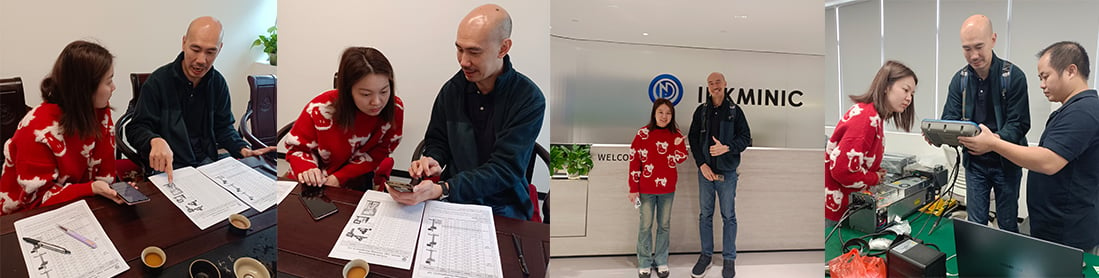
As he packed up his bag, the customer said something we've heard before but never get tired of hearing: "You have more brands than I expected, but you also explained them in a way that made sense."
That's the balance we're aiming for. A comprehensive catalog is useless if nobody can help you navigate it. A cheap price is meaningless if the machine breaks down in month three.
He also said he appreciated that we didn't try to upsell him on the most expensive model. We showed him what fit his application and let him decide. That's not a sales tactic. It's just how we prefer to do business. A customer who buys the right machine comes back. A customer who buys the wrong machine tells everyone he knows.
 Hot News
2026-05-29
2026-02-13
2026-01-06
2026-01-05
2026-06-23
2026-06-22

Based In China
Serving The World
Room401, Building B, Xulong Industrial Park, Road Xinye No.76, Huangpu District, Guangzhou, Guangdong, China
Copyright © 2025 by Inkminic Logo Technology (Guangzhou) Co., Ltd. Privacy Policy
 EN