 EN

Assess Core Production Requirements Before Evaluating Marking Equipment
Selecting the right marking equipment begins with a clear-eyed analysis of what your factory actually produces—not a comparison of machine specifications. This foundational step prevents costly mismatches between a machine’s capabilities and the physical demands of your parts. An incorrect early choice often forces a complete system replacement within 18 months.
Matching material type, surface hardness, and permanence needs to marking method
A part’s material and surface hardness dictate the viable marking method before evaluating any other factor. Dot peen systems physically deform the surface, making them effective on hard steel (up to 63 HRC), while laser systems can anneal a surface without material removal for delicate medical instruments. The required permanence—resistance to abrasion, chemicals, and high temperatures—directly influences this choice. For instance, an annealing mark on a stainless-steel surgical tray survives thousands of autoclave sterilization cycles that would destroy an ink-printed code. A thorough analysis, as outlined in a general technology selection framework, ensures the method aligns with the material’s physical tolerances.
Aligning marking throughput with batch size, cycle time, and line integration goals
Throughput is not merely about a machine’s cycle time; it is about the entire workflow. A system marking one 50-pound forging every three minutes has vastly different integration needs than one marking a thousand small connectors per hour. For high-mix, low-volume shops, flexibility and quick changeovers are more critical than absolute speed, whereas a dedicated, high-speed line justifies automated part handling. A mismatch here often manifests as a highly capable marker sitting idle while an operator manually loads awkward parts—creating a bottleneck that negates the technology’s inherent speed advantage.
Ensuring traceability compliance: Data capture, UDI/2D code standards, and MES/ERP connectivity
For many small and medium-sized enterprises, the primary driver for new marking equipment is a customer-driven traceability mandate—not an internal efficiency goal. This makes compliance the critical functional requirement. The system must reliably generate and verify machine-readable codes like high-contrast 2D Data Matrix to standards such as ISO/IEC 16022. More importantly, the marking station must function as a node on the network, capable of bidirectional communication with a central Manufacturing Execution System (MES). A system that cannot receive a unique serial number from an enterprise system and report back a successful mark introduces a fatal data gap in any regulated production record.
Compare Key Permanent Marking Equipment Technologies for SME Applications
Dot peen, laser, and scribing: Speed, durability, and surface compatibility trade-offs
Selecting the right permanent marking equipment for a small or medium-sized factory hinges on understanding how the three dominant technologies balance throughput, mark longevity, and material versatility. Dot peen marking uses a carbide or tungsten alloy stylus to pneumatically or electromechanically indent the surface, producing deep, wear-resistant marks ideal for metals and hard plastics. It operates at typical speeds of 20–50 characters per second and requires no consumables beyond the stylus, which can last over a year in heavy use. Laser marking—commonly fiber, UV, or CO₂—offers non-contact, high-speed processing at up to 7,000 mm/s, creating high-contrast, permanent marks on metals, plastics, glass, and ceramics with sub-millimeter precision. In contrast, scribing (or scratch marking) employs a diamond or carbide tip to physically scratch the surface, delivering deep, tamper-proof marks at low cost but with slower throughput and limited ability to produce complex 2D codes. The following table highlights the core trade-offs SME buyers should weigh when matching technology to their part materials and production pace.
| Technology | Typical Surface Compatibility | Mark Speed & Throughput | Mark Permanence & Depth | Capital Cost Range (2024) |
|---|---|---|---|---|
| Dot peen | Most metals, hard plastics | 20–50 chars/sec; suitable for batch marking | Deep (0.1–0.3 mm), permanent, high wear resistance | $3,000 – $12,000 |
| Laser (fiber/UV) | Metals, plastics, glass, ceramics, coated surfaces (with constraints) | Up to 7,000 mm/s; high-volume automation | High contrast, permanent, minimal depth (1–50 µm) | $8,000 – $50,000+ |
| Scribing | Metals, rigid plastics | 5–15 mm/s; suited for low-volume, simple alphanumeric marks | Deep, permanent, can roughen surface | $2,000 – $8,000 |
While dot peen remains the most economical for deep metal marking, laser technologies deliver unmatched speed and flexibility for high-mix production. Scribing fills a niche for simple, rugged marks on rigid substrates where cost is paramount and code complexity is low.
When laser marking equipment falls short: Challenges with reflective, coated, or thermally sensitive parts
Despite its versatility, laser marking encounters specific limitations that can make mechanical alternatives more pragmatic for certain SME applications. Highly reflective metals such as copper, brass, and polished aluminum can deflect the beam, reducing absorption and mark consistency—though newer fiber lasers with optimized pulse profiles mitigate this. Components with thin or thermally sensitive coatings (e.g., anodized layers, paint, or conformal coatings) may suffer discoloration, delamination, or substrate damage from the laser’s heat-affected zone. For these parts, dot peen or scribing often provides a safer, stress-free mark. Additionally, low-melting-point plastics or laminates can warp or burn under laser energy, making a non-thermal method like scribing—or even label-based marking—more suitable. SMEs producing mixed batches of such materials should validate process windows carefully; in many cases, pairing a laser for standard jobs with a simple dot peen station for troublesome substrates yields the best overall reliability.
Evaluate Real-World Operational Fit for Limited-Footprint Factories
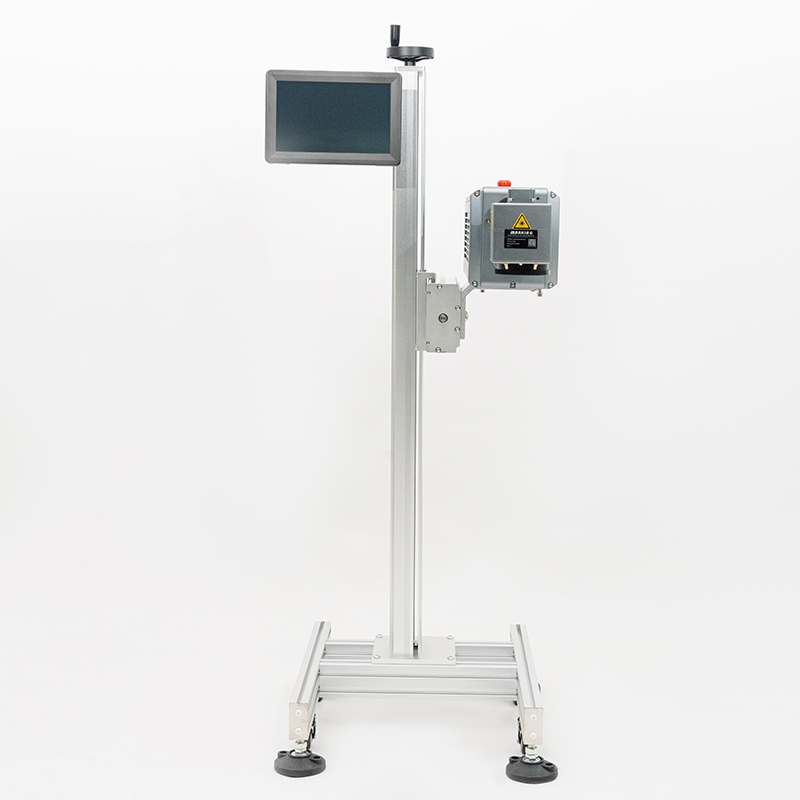
Small and medium processing factories rarely have surplus floor area, making the physical footprint of marking equipment a decisive factor. Compact, benchtop systems that occupy less than 0.5 m² can be placed alongside existing conveyors without requiring costly facility modifications. Many modern units are designed as mobile carts or modular stations, enabling operators to reposition the equipment between production cells in under 10 minutes. This agility supports high-mix, low-volume scheduling where changeover speed directly affects overall equipment effectiveness. Look for marking equipment that integrates with standard data interfaces like Ethernet/IP or Profinet, avoiding the need for additional cabinets or proprietary controllers. Direct part marking on complex geometries often demands adaptable fixturing; systems with quick-release chucks and programmable Z-axis allow diverse part sizes without time-consuming mechanical adjustments. Factories processing parts with varying surface finishes benefit from software-controlled parameter recipes, which eliminate manual recalibration between batches. Quiet operation (below 70 dB) and minimal heat output are also critical when equipment operates near manual assembly stations. A well-chosen system does more than save space—it reduces installation costs by 30–50% compared to larger inline machines and keeps upstream and downstream processes flowing without bottlenecks.
Calculate True Total Cost of Ownership for Marking Equipment
Consumables, calibration, maintenance intervals, and unplanned downtime impact
The true cost of marking equipment goes well beyond its purchase price. Consumables—such as ink, ribbons, styli, or laser tubes—recur steadily, while regular calibration ensures legible, compliant marks. Skipping scheduled maintenance invites breakdowns; a single hour of unplanned downtime can cost a small plant $2,000 in lost output (IndustryWeek, 2024). TCO formula captures all these: initial cost + operational expenses + maintenance + downtime – resale value. For SME factories, ignoring consumable wear, calibration drift, or reactive repair service can silently inflate lifecycle costs by 20–30%. Factoring in these variables from the start prevents budget overruns and confirms the chosen marking equipment remains economically sound over its full service life.
Prioritize Partner Capabilities: Support, Validation, and Long-Term Service for Marking Equipment
Choosing marking equipment isn't just about specifications—it's about the partner who will stand behind it. For small and medium-sized factories, responsive support, thorough validation, and extended service turn a capital purchase into a reliable, long-term asset.
Onsite application testing, operator training, and responsive technical service access
Onsite application testing confirms that the proposed marking equipment will produce durable, legible marks on the actual substrates and geometries used in production, avoiding post-purchase surprises. Testing should replicate post-processing conditions like cleaning, coating, or sterilization to confirm mark permanence. This pre-validation prevents expensive rework and regulatory nonconformances. Once the system is in place, hands-on operator training moves beyond the manual—it should cover daily start-up routines, consumable changes, and common fault recovery so that your team can sustain throughput without constant vendor calls. Well-trained operators also reduce human error, the root cause of many coding defects. Responsive technical service rounds out the picture: a supplier that guarantees remote diagnostics and a rapid on-site response keeps downtime to a minimum. These post-sale capabilities transform a one-time purchase into a resilient, compliant marking operation that grows with your factory.
FAQs: Selecting the Right Marking Equipment
Why should I prioritize production requirements over machine specifications? Assessing your factory’s production requirements ensures the right fit between the equipment’s capabilities and your operation needs, preventing costly mismatches.
What factors influence the choice of marking method? Material type, surface hardness, and permanence needs are critical factors in choosing between methods like dot peen, laser, or scribing.
How do I ensure traceability compliance? Choose equipment that generates machine-readable codes like 2D Data Matrix to ISO standards and integrates seamlessly with MES and ERP systems.
What are the trade-offs between dot peen, laser, and scribing? Dot peen offers cost efficiency and deep marks; laser provides high speed and flexibility; scribing excels in tamper-proof, rugged marks.
What challenges do laser systems face? Lasers can struggle with highly reflective or thermally sensitive materials, which may cause mark variability or substrate damage.
How can I manage space constraints in my factory? Opt for compact and mobile marking systems designed for small footprints and flexible integration with existing workflows.
What factors affect the total cost of ownership (TCO) for marking equipment? TCO depends on consumables, calibration, maintenance schedules, downtime, and resale value. Factoring these upfront avoids unexpected costs.
Why is selecting the right partner important? A reliable partner provides not only durable equipment but also support, validation, training, and responsive service for long-term success.
Table of Contents
- Assess Core Production Requirements Before Evaluating Marking Equipment
- Compare Key Permanent Marking Equipment Technologies for SME Applications
- Evaluate Real-World Operational Fit for Limited-Footprint Factories
- Calculate True Total Cost of Ownership for Marking Equipment
- Prioritize Partner Capabilities: Support, Validation, and Long-Term Service for Marking Equipment
- FAQs: Selecting the Right Marking Equipment