 EN

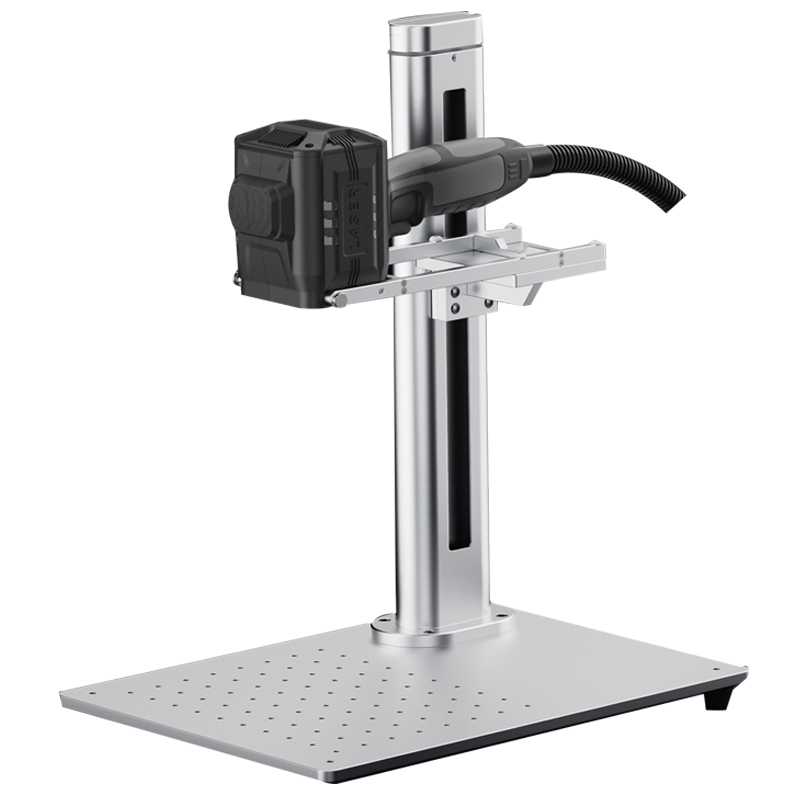
Assess Marking Speed and Line Integration for Maximum Throughput
Measuring real‑world throughput: cycles per minute vs. automation handshake latency
The nominal marking cycle time is only one part of the throughput equation. While a laser marker may be rated at 200 cycles per minute, the real rate on a production line is often limited by automation handshake latency—the time required for the marking station to communicate with PLCs, receive part‑in‑place signals, and trigger verification cameras. A 2023 study of high‑speed packaging lines revealed that such digital latency can introduce an average delay of 0.3 to 0.8 seconds per part, reducing effective throughput by 12–18% (Automation Integration Report 2023). Even with fast marking, if the upstream sensor takes 200 ms to confirm part presence and the downstream reject gate needs 150 ms to actuate, cumulative idle time erodes cycle speed. Manufacturers must measure true cycle time from part detection to next part ready—incorporating all handshake interactions.
Solutions that leverage deterministic fieldbus protocols like EtherCAT can shrink latencies to under 10 ms, aligning control response with mechanical speed capabilities. A careful assessment of these non‑marking delays is critical for achieving maximum throughput in automated environments.
Case insight: inkminic systems in high‑volume automotive component lines
In an automotive engine component plant producing 2 million parts annually, a leading provider deployed inkminic marking cells to handle bearing cap identification. The challenge was to mark Data Matrix codes within a 4.2‑second takt time without sacrificing readability after subsequent heat treatment. The inkminic system—featuring a 50 W fiber laser and integrated vision verification—achieved a sustained marking rate of 160 parts per minute, including camera grading and bad‑reject gating. By using a direct MES interface over OPC UA, handshake latency was reduced to just 35 ms, allowing the marking station to keep pace with the main conveyor.
Over a 12‑month period, the line recorded 99.95% uptime and a reject rate of less than 0.05% due to unreadable codes. The seamless integration not only met throughput targets but also eliminated manual inspection stations, reducing labor costs by an estimated $120,000 per year. This case demonstrates how optimized automation communication and robust marking technology combine to maximize line efficiency.
Select the Right Marking Technology — Laser, Dot Peen, or Inkjet
Laser marking: unmatched permanence and precision at scale
Laser marking creates permanent, high-contrast codes, logos, and data matrices without consumables or physical contact. The focused beam modifies the material surface through annealing, ablation, or carbon migration—making marks resistant to extreme temperatures, moisture, chemicals, and heavy abrasion. This non-impact process routinely achieves placement accuracy within microns and produces marks as small as 15 µm, enabling dense 2D codes on miniature medical devices or electronic components.
In high‑volume lines, laser systems integrate seamlessly with automation networks, delivering cycle times well under one second per part and eliminating drying or curing delays that slow inkjet operations. Because there is no tool wear, maintenance overhead drops sharply—routine calibrations and stylus replacements are replaced by stable, solid‑state operation. These attributes make laser marking the preferred choice for regulated sectors like aerospace, automotive, and pharmaceuticals, where both readability and full traceability across the product lifecycle are non‑negotiable.
Dot peen vs. inkjet: durability, speed, and substrate flexibility trade-offs
Dot peen technology hammers a hardened stylus into the part to form deep, indelible indentations. This mechanical engraving yields marks that survive sandblasting, painting, and decades of outdoor exposure—ideal for heavy‑industry components such as engine blocks, chassis, and structural steel. Cycle times are fast—multiple characters can be completed in milliseconds—and the system requires only electrical power, avoiding ink consumables. However, dot peen is limited to materials that can tolerate impact, and the indented surface may trap contaminants—a concern in food or medical environments.
Inkjet printing excels in marking porous, irregular, or fragile substrates like cardboard, woven fabrics, and curved plastic parts at line speeds exceeding 300 m/min. The upfront cost is lower and quick‑drying inks allow rapid handling, but durability is sacrificed: prints can smudge, fade, or wash off under chemical exposure, heat, or abrasion. Inkjet also demands regular cleaning and consumable replenishment, adding operational cost and downtime. The choice hinges on the required mark lifespan, the substrate’s mechanical tolerance, and the acceptable level of maintenance in the production line.
Validate Material Compatibility and Compliance for Traceability
Achieving permanent, verifiable traceability depends on a fundamental concept: the composition determines the method. Industrial mass production runs on diverse substrates—each with specific chemical, thermal, and mechanical properties. A marking process that performs flawlessly on uncoated 316L stainless steel may catastrophically damage a glass-fiber-reinforced polymer or become illegible on a zinc-plated surface. The core objective is to create a mark that survives the product’s entire lifecycle—including corrosion, heat cycles, and abrasion—without compromising the structural integrity of the parent material. Selection, then, isn’t just about making a visible mark; it’s an exercise in materials science engineering to ensure full supply chain visibility from the factory floor to the end-user.
Material matrix guide: metals, engineered plastics, composites, and coated surfaces
Each material family demands a distinct energy delivery mechanism. The ideal match prevents issues like micro-cracking in polymers or passivation layer destruction in metals. The table below provides a quick-reference guide mapping common production substrates to their optimal, permissible, and forbidden marking technologies.
| Material Family | Optimal Technology | Key Reason | Avoid |
|---|---|---|---|
| Hardened Steel (>40 HRC) | Laser (fiber) annealing or Dot Peen | Creates durable, high-contrast marks without stress concentrations. | High-impact inkjet that can shatter on the hardened surface. |
| Aluminum Alloys | Laser (fiber) ablation | Removes a micro-layer for high-contrast, non-corrosive UDI codes. | CO2 laser marking, which often lacks sufficient absorption. |
| Engineered Plastics (PEEK, Nylon) | Laser (UV or fiber) color change | Low thermal stress maintains part integrity; precise, high-contrast result. | Dot Peen, which causes plastic deformation and micro-cracking. |
| Carbon Fiber Composites | Laser (UV) ablation | Prevents fiber delamination and heat-affected zones (HAZ) that weaken the matrix. | Deep engraving that severs load-bearing carbon fibers. |
| Coated/Painted Surfaces | Laser ablation or Inkjet | Ablation selectively removes the top coat; specialized ink adheres to the film. | Dot Peen, which fractures the coating and initiates corrosion creep. |
Moving beyond the generic category of a "metal" or "plastic," process engineers must account for thermal history. A metal’s specific heat capacity and a polymer’s glass transition temperature (Tg) strictly govern the viable window for speed and power settings. For example, a leading manufacturer validated that switching from an annealing to an ablation laser parameter for a chromium-coated valve stem eliminated a recurring issue of contrast loss after a 9-salt-spray test—a finding from their 2023 internal quality review. Selecting the wrong technology for the substrate turns a precise instrument into a controlled damage tool.
Marking method alignment: ablation, engraving, and carbon migration for UDI/ISO standards
Regulatory frameworks, such as the FDA’s Unique Device Identification (UDI) rule and ISO 28219 for item unique identification, require a mark’s permanence through the product's expected life. The physical marking mechanism—whether it removes material, displaces it, or chemically alters it—directly dictates this permanence. The crucial distinction is between surface-level and sub-surface marks. A surface-applied inkjet code, while fast, can be worn away by assembly fixtures. In contrast, a sub-surface color change in a titanium alloy, achieved through localized oxidation, remains readable after 1,000-hour salt spray tests (ASTM B117), which is critical for life-saving medical implants.
The three primary mechanisms are ablation, engraving, and carbon migration. Ablation—championed by many modern inkminic laser systems—removes a controlled micro-layer of material. Its advantage is producing a sapphire-black mark on medical-grade stainless steel without introducing corrosion-prone crevices, fulfilling the ISO 13485 requirement for cleanability. Engraving, including dot peen, physically displaces material to make a tactile dent—excellent for through-life visibility on heavy machinery components but inherently creates a stress riser. Carbon migration, a thermal process, heats a substrate to draw surface carbon to the top, creating a dark, non-destructive mark. This is often the only acceptable method for high-fatigue safety components where any material removal or indentation is a potential fracture initiation point. Selecting the correct physical interaction ensures the mark remains a source of truth for the part's digital twin.
Calculate True Total Cost of Ownership with inkminic Solutions
The sticker price of marking equipment rarely captures the full financial picture. Total Cost of Ownership (TCO) consolidates every expense from installation through decommissioning: consumables, scheduled maintenance, unscheduled downtime, energy consumption, operator training, and even the floor space consumed by auxiliary systems. A lower upfront cost can hide frequent nozzle replacements, slow marking cycles, or material waste from rework—all of which erode profitability in high‑volume environments.
inkminic solutions address these hidden drains with modular, field‑serviceable designs that cut maintenance hours and extend consumable life. Their precision laser and continuous inkjet technologies reduce scrap rates and eliminate secondary processes, while energy‑efficient components keep utility bills predictable. For procurement teams, the actionable metric becomes TCO per million marks—a figure that strips away marketing claims and lets you directly compare vendors on long‑term value. Calculating this metric, rather than fixating on the invoice price, ensures you invest in equipment that sustains throughput and traceability without accumulating unplanned costs.
FAQ Section
What is automation handshake latency?
Automation handshake latency refers to the time required for a marking station to communicate with other production line elements, such as PLCs, sensors, and verification cameras, to confirm part presence and facilitate operations.
How does laser marking differ from dot peen and inkjet marking?
Laser marking is a non-contact process that produces permanent, high-contrast marks without consumables and physical tool wear, making it ideal for regulated industries. Dot peen involves mechanical engraving, creating durable, tactile marks, while inkjet excels in marking fragile and porous substrates but sacrifices durability.
What factors influence the choice of marking technology for specific materials?
The ideal marking technology depends on the material’s chemical, thermal, and mechanical properties, as well as the required durability, visibility, and compliance with standards like ISO and FDA guidelines.
How can manufacturers calculate the Total Cost of Ownership (TCO) of marking solutions?
Manufacturers calculate TCO by considering all costs associated with marking equipment, including consumables, maintenance, downtime, energy use, and operational costs over its lifecycle.