 EN
EN

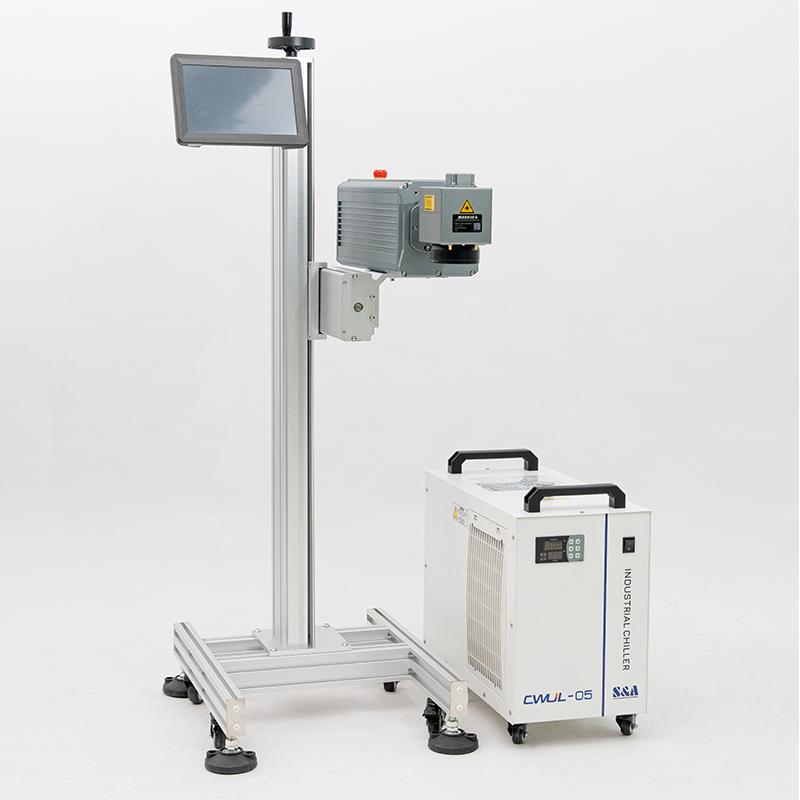
Understanding the Basics of CO2 Laser Technology and Wavelength Interaction
When exploring laser marking technologies for your manufacturing or creative workshop, understanding how different laser sources interact with materials is essential for achieving clean, permanent results. At Inkminic, through our hands-on experience working with diverse industrial setups and customer applications, we often encounter questions regarding which laser system handles non-metals and organic substances best. The answer consistently points to the CO2 laser. Operating typically at a far-infrared wavelength of 10.6 micrometers, a CO2 laser delivers a thermal beam that is readily absorbed by non-metallic materials. Unlike fiber lasers that pass right through plastics or reflect off certain bare metals, the specific wavelength of a CO2 laser targets the molecular structure of organic and synthetic substrates, causing rapid localized heating that vaporizes or alters the surface layer to create sharp, permanent high-contrast marks.
Marking Organic Materials Such as Wood, Paper, and Leather Safely
One of the most common everyday applications for a CO2 laser involves processing natural organic materials like wood, leather, paper, and cardboard. In our technical assessments and customer deployment evaluations, these substrates react exceptionally well to the thermal energy produced by a CO2 laser. When the beam contacts wood, it burns or carbonizes the cellulose fibers, leaving behind a rich, dark contrast that looks remarkably crisp without requiring any chemical additives or inks. Similarly, when engraving genuine or synthetic leather for fashion accessories, patches, or promotional items, the CO2 laser cleanly removes the top layer or alters its pigment to achieve a precise debossed or etched aesthetic. Paper and cardstock products benefit equally, as the non-contact nature of a CO2 laser prevents physical deformation or tearing, making it an industry favorite for custom packaging, greeting cards, and intricate paper-cutting art.
Processing Plastics, Acrylics, and Polymers with Precision
Plastics represent a massive category in modern manufacturing, yet not all lasers can mark them effectively. Based on our operational experience at Inkminic, selecting a CO2 laser is the optimal choice for a wide array of polymers, including acrylic, polycarbonate, polyester, and acetate. When a CO2 laser interacts with cast or extruded acrylic—often used for signage, point-of-purchase displays, and awards—it produces a stunning frosted white engraving that stands out brilliantly against clear or colored backgrounds. This happens because the intense localized heat of the CO2 laser creates micro-fractures on the plastic surface. However, users must always verify polymer compositions, as materials containing PVC (polyvinyl chloride) should be strictly avoided due to the release of hazardous chlorine gas during thermal processing, aligning with our commitment to operational safety and environmental compliance.
Engraving Glass, Ceramics, and Stone Through Controlled Thermal Shock
While glass, stone, and ceramics are notoriously hard and brittle, they can still be marked effectively using a properly calibrated CO2 laser. Through our technical testing and observations, the secret to marking glass with a CO2 laser lies in controlled thermal shock. When the infrared beam strikes the glass surface, the rapid localized expansion causes microscopic surface flaking, resulting in a smooth, frosted appearance rather than a deep cut. To prevent cracking the entire piece, operators often apply a thin layer of moisture or paper transfer tape before running the CO2 laser job. This same principle applies to coated metals, ceramic tiles, and natural stones like slate or marble, where the CO2 laser either removes a painted or anodized coating to reveal the base material or alters the mineral composition to create a permanent, legible inscription.
Optimizing Production Efficiency and Long-Term Value in Your Workflow
Integrating any marking solution into a production line requires balancing output speed, material versatility, and long-term maintenance costs. From our practical industry insights, incorporating a CO2 laser into your workshop or production facility offers remarkable operational reliability and versatility. Because the process is entirely digital, operators can instantly switch between engraving serial numbers on wooden blocks, cutting custom acrylic templates, and marking leather tags without changing physical tools or setup fixtures. Furthermore, the non-contact nature of CO2 laser processing means there are no mechanical bits wearing out or traditional ink cartridges to replace, reducing consumable costs significantly. By understanding these material compatibilities and leveraging the capabilities of a CO2 laser, manufacturers and creators can achieve consistent, high-quality, and permanent marking results across a broad spectrum of non-metal applications.
Table of Contents
- Understanding the Basics of CO2 Laser Technology and Wavelength Interaction
- Marking Organic Materials Such as Wood, Paper, and Leather Safely
- Processing Plastics, Acrylics, and Polymers with Precision
- Engraving Glass, Ceramics, and Stone Through Controlled Thermal Shock
- Optimizing Production Efficiency and Long-Term Value in Your Workflow