 EN
EN

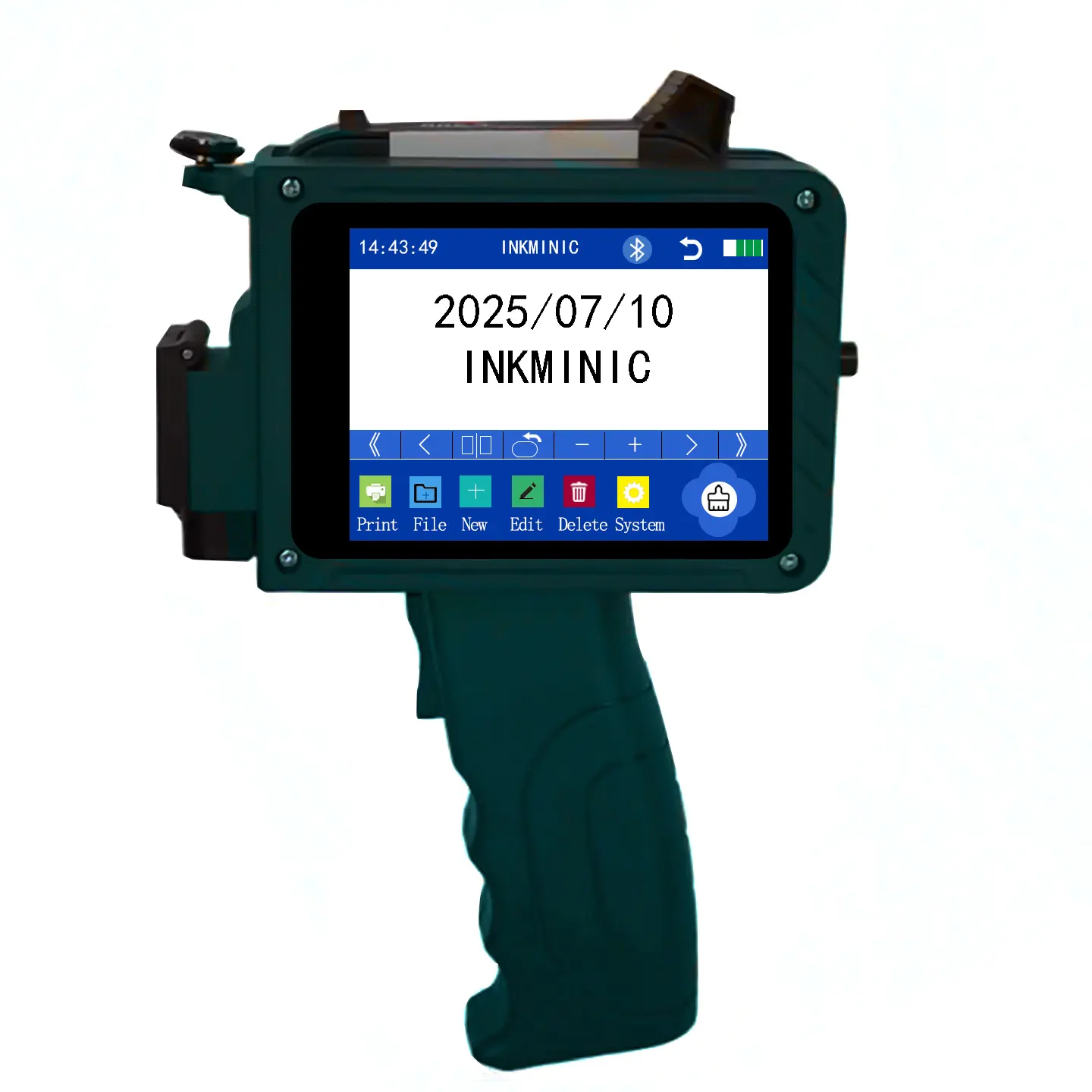
Handheld Inkjet Printer Charging and Nozzle Maintenance Tips
Let us talk honestly about what happens on a busy production floor when your portable coding tool suddenly acts up. I remember visiting a client’s electronics packaging line last winter where production screeched to a halt because a crew member plugged their portable coding device into a random high-power fast charger overnight. The battery swelled up, and the printhead clogged solid with dried fluid. It was a complete mess that cost them hours of downtime. If you manage warehouse labeling or product packaging, mastering handheld inkjet printer upkeep is not just a nice bonus; it is the absolute line between smooth daily output and steady operational workflows.
Mastering Power Management and Battery Longevity
Most folks do not realize that modern lithium-ion power cells inside a handheld inkjet printer are surprisingly sensitive to careless charging habits. When workers treat these devices like smartphones—plugging them in whenever convenient or leaving them hooked up to raw grid power all weekend—the internal voltage regulation suffers. Our engineering team always advises clients to let the battery drop down to around twenty percent before connecting it to the official power adapter. Furthermore, avoiding cheap third-party charging bricks prevents thermal runaways and unexpected circuit board failures. By treating the power system with proper respect, your handheld inkjet printer will maintain stable voltage output during peak stamping hours, ensuring every box leaves the warehouse with crisp, legible tracking codes.
Unlocking Printhead Anatomy and Avoiding Common Clogging Traps
To truly understand why nozzles act up, you have to look closely at how these compact fluid delivery systems operate. Unlike massive desktop continuous inkjet systems sitting safely in climate-controlled rooms, a handheld inkjet printer experiences constant physical movement, hand vibrations, and fluctuating ambient temperatures right on the factory floor. Dust particles and airborne debris love to cling to the wet nozzle plate, mixing with pigment to form microscopic blockages. According to leading industrial fluid dynamics research, maintaining a clean micro-channel interface prevents over ninety percent of erratic jetting issues. When operators inspect the nozzle matrix before every shift, they catch minor residue buildup long before it turns into a permanent, expensive printhead replacement disaster.
Field-Tested Cleaning Techniques That Actually Work
When a printhead starts spitting faint lines or missing dots, panic often sets in, leading workers to grab whatever is handy—sometimes even a pocket knife or a coarse rag. That is an absolute disaster for the delicate nozzle orifices. In our technical workshops, we always train operators to use specialized, manufacturer-approved cleaning solvents applied gently on lint-free microfiber wipes in a single, unidirectional motion. If you encounter stubborn pigment clogs within the handheld inkjet printer nozzle array, specialized purging cartridges or ultrasonic cleaning kits are the right tools for the job. Consistent adherence to these disciplined cleaning protocols guarantees that your handheld inkjet printer delivers sharp, high-resolution alphanumeric text, barcodes, 2D QR codes, and company logos smoothly across porous cartons, rigid plastics, and coated metals.
Environmental Controls and Smart Storage Strategies
Environmental factors play a massive role in preserving the functional integrity of portable coding equipment during extended downtime and non-operational hours. When work shifts conclude, storing your handheld inkjet printer in a dedicated protective case shields the sensitive internal electronics and printhead from airborne dust, ambient moisture, and extreme workshop temperature fluctuations. If the handheld inkjet printer is scheduled to remain idle for an extended period exceeding forty-eight hours, performing a complete ink cartridge purge and capping the nozzle securely is mandatory to prevent residual ink from solidifying inside the tiny nozzle chambers. Additionally, maintaining a stable ambient storage temperature between fifteen and thirty degrees Celsius protects both the lithium-ion battery and the internal fluid delivery network. Proper environmental management directly reduces maintenance overhead and ensures your handheld inkjet printer performs reliably whenever new production demands arise across your facility.
Troubleshooting Field Anomalies and Leveraging Advanced Manufacturing Support
Even with meticulous routine care and preventive maintenance, operators may occasionally encounter minor operational anomalies related to power delivery or spray consistency in busy work environments. If a handheld inkjet printer fails to power on after being securely connected to the charger, technicians should first inspect the DC adapter connection points for debris, dust, or physical wear before testing the outlet voltage with a multimeter. In scenarios where the handheld inkjet printer produces streaked or interrupted prints despite a clean exterior nozzle plate, running an automated purge cycle through the device software usually clears trapped air bubbles and restores smooth ink flow. Documenting these recurring field issues in a structured maintenance log helps supervisory staff identify whether the problem stems from incorrect operator handling, expired ink consumables, or normal mechanical component wear. Behind every durable coding solution lies robust industrial craftsmanship; partnering with a premier manufacturing and supply chain leader like WEITAI ensures your operations are backed by world-class production capabilities, rigorous quality control, and reliable global distribution networks designed to keep your production lines moving forward without interruption.
Table of Contents
- Handheld Inkjet Printer Charging and Nozzle Maintenance Tips
- Mastering Power Management and Battery Longevity
- Unlocking Printhead Anatomy and Avoiding Common Clogging Traps
- Field-Tested Cleaning Techniques That Actually Work
- Environmental Controls and Smart Storage Strategies
- Troubleshooting Field Anomalies and Leveraging Advanced Manufacturing Support