 EN
EN

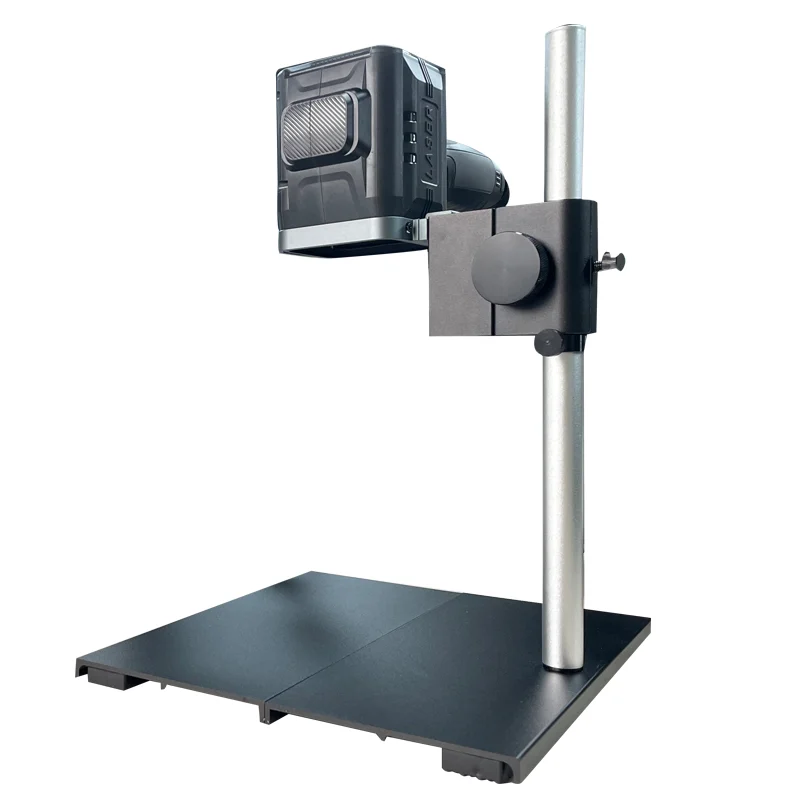
Fiber Laser Application in Hardware Product Batch Marking
The evolution of modern manufacturing has fundamentally transformed how hardware products are identified and tracked. In today’s competitive industrial landscape, the goal for manufacturers is no longer just to place a visible mark on a component; it is about delivering permanent identification, high-contrast readability, and stable traceability across demanding production schedules. This is precisely where fiber laser technology has emerged as the industry gold standard. Based on our extensive technical experience at Inkminic, we have observed that integrating a professional-grade fiber laser system into a production line is one of the most effective ways to balance high-speed throughput with the rigorous quality standards required for modern industrial hardware components, such as automotive parts, tools, and structural fasteners.
Understanding the Technical Precision of Fiber Laser Systems
At its core, a fiber laser marking machine utilizes a rare-earth-doped fiber as the laser medium to generate a highly focused beam at a wavelength of approximately 1064nm. This specific near-infrared light provides an incredible energy density that is ideal for etching a wide variety of metals—including stainless steel, aluminum, copper, brass, and iron—as well as select hard engineering plastics. In our professional analysis, the primary advantage for hardware batch marking is the nature of the "etching" or "annealing" process. Unlike traditional ink-based printing, which can fade, smear, or wear off due to mechanical friction, a fiber laser creates a permanent physical or chemical change on the material surface. This forms clear, high-contrast marks that are resistant to corrosion, abrasion, and extreme temperature fluctuations. For hardware products that face harsh field conditions, such as wrenches, drill bits, or construction fasteners, this ensures the identification remains perfectly legible throughout the entire life cycle of the product.
Enhancing Operational Efficiency in Batch Production
One of the most critical factors for any hardware manufacturer is maintaining high throughput without sacrificing quality or consistency. When applying a fiber laser to batch marking operations, businesses can achieve fully automated, high-speed production cycles that require virtually no secondary processing. Because these systems are specifically engineered for high-volume, multi-shift environments, they integrate seamlessly with modern factory infrastructure, including automated conveyors, high-speed sensors, and serialized data workflows. Our marking systems are designed to support ultra-high-precision requirements, with positioning accuracy down to 0.01 mm, which is absolutely essential when marking small, intricate components or dense 2D barcodes and QR codes. By utilizing a fiber laser for these tasks, manufacturers can effectively eliminate the downtime and costs associated with traditional consumables like ink cartridges, chemicals, or thermal ribbons, all while maintaining a crisp, professional, and uniform appearance on every single finished part that leaves the assembly line.
Achieving Superior Traceability and Compliance
In modern manufacturing, traceability is not just an operational goal; it is often a regulatory requirement. From automotive standards like IATF 16949 to medical device UDI compliance, the ability to track a product from raw material to end-user is paramount. A high-performance fiber laser excels in this arena by producing tamper-resistant 2D codes (such as DataMatrix) that remain readable even after heavy use or environmental exposure. Our systems provide the stability required for these critical applications, ensuring that every batch—whether it consists of hundreds or millions of pieces—adheres to the exact same quality specifications. The integration of digital logging ensures that every mark is recorded, providing a layer of transparency that significantly enhances a company’s reputation for quality and builds lasting trust with global clients.
Reliability and Long-Term Operational Value
Trustworthiness in industrial equipment is defined by its longevity and the predictability of its performance. A major benefit of our fiber laser configurations is their exceptional service life, which can frequently exceed 50,000 hours of continuous operation. Because the internal optical path system is fully sealed, it is shielded from the common contaminants found in metal processing workshops, such as fine dust, metallic shavings, and ambient vibrations. This inherent robustness translates directly into lower maintenance costs and a significantly higher return on investment for small-to-medium enterprises and large-scale factories alike. When you choose an Inkminic fiber laser for your hardware batch marking needs, you are not simply purchasing a machine; you are investing in a stable, permanent identification solution that helps you meet international standards and optimizes your overall production workflow.