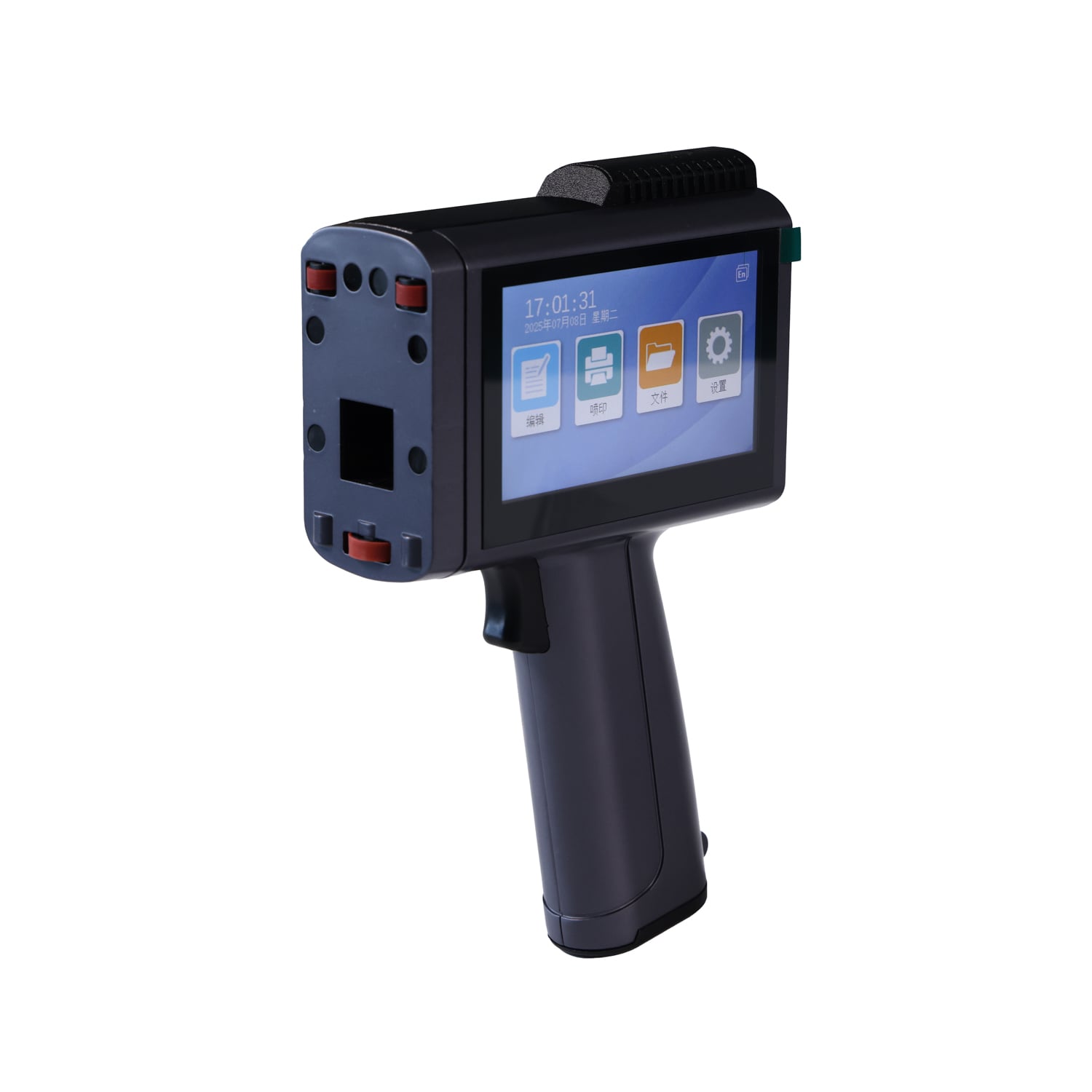
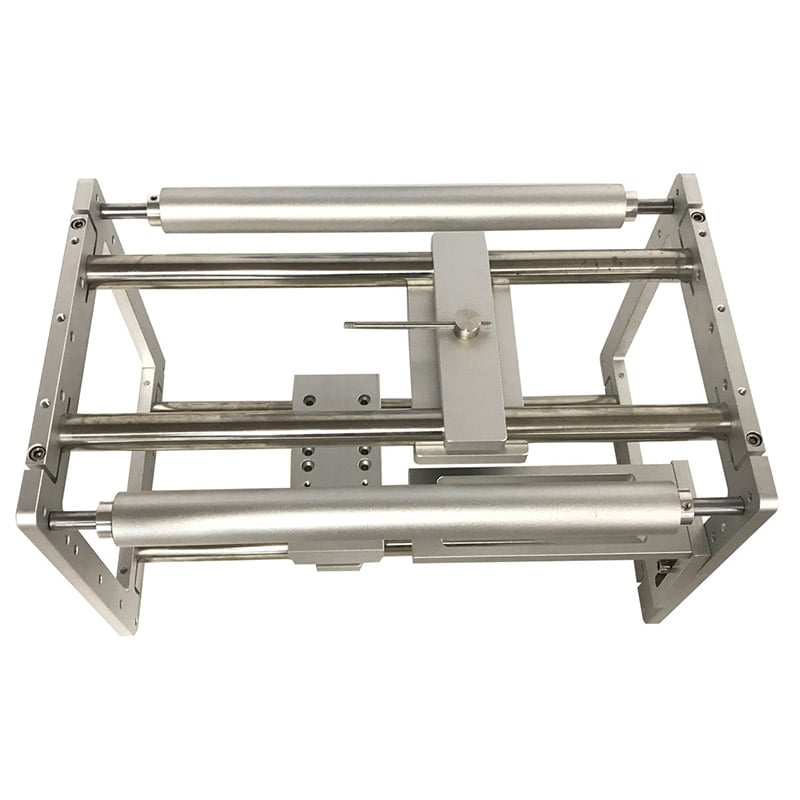
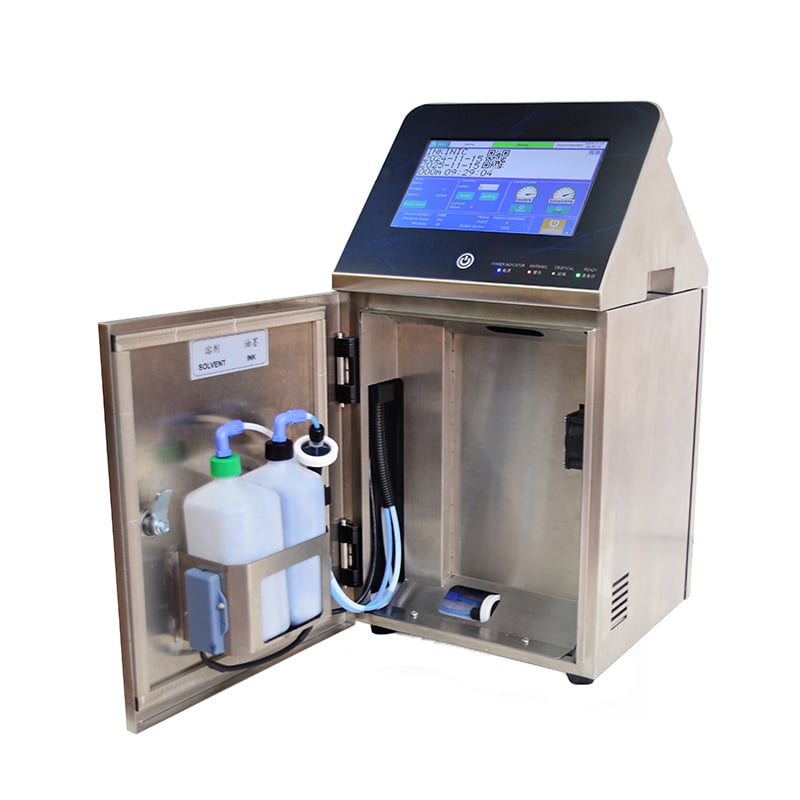
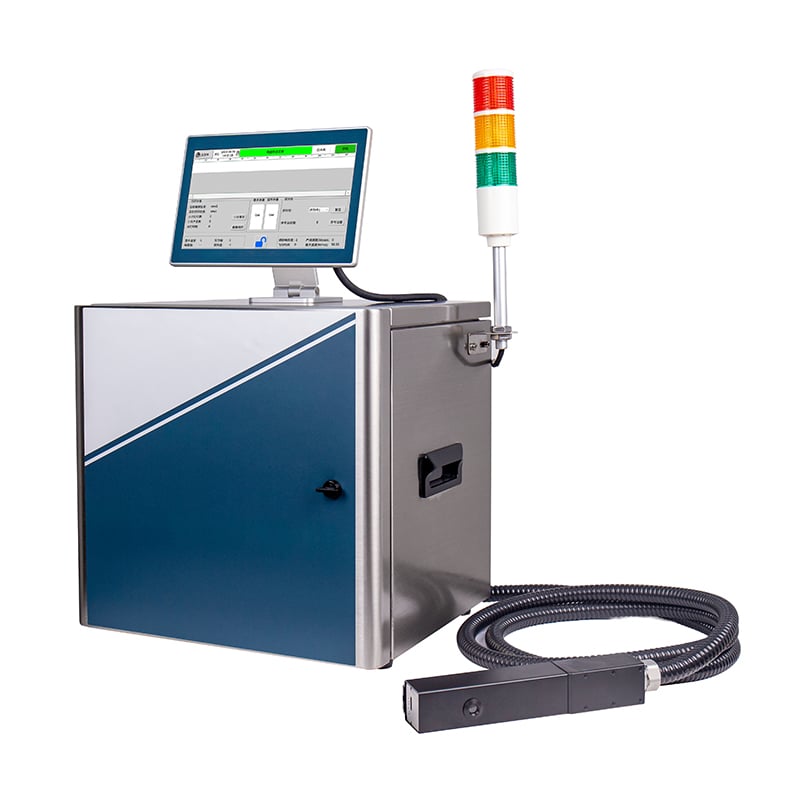
In today’s competitive global manufacturing landscape, product traceability, consistent coding quality and uninterrupted production flow have become core benchmarks for factory operation. Every production line requires reliable marking equipment to print production dates, batch numbers, expiry codes, serial numbers, QR codes and brand identifiers on finished goods. Among all available industrial marking technologies, Continuous Inkjet (CIJ) printers maintain dominant popularity across food & beverage, pharmaceuticals, cosmetics, electronic components, cable manufacturing and building materials industries. Thousands of factories worldwide choose CIJ inkjet printers over laser markers, thermal transfer overprinters (TTO) and large character inkjet printers, thanks to unique technical characteristics tailored to mass production demands. This article analyzes the core reasons why CIJ systems remain the preferred coding solution for modern manufacturing plants.
The most prominent advantage of CIJ inkjet printers lies in non-contact high-speed printing that matches continuous automated production lines. Modern assembly lines often run at fast speeds, requiring marking devices to finish coding without slowing down or halting manufacturing workflows. CIJ technology works by forming a continuous stream of micro ink droplets. After electrostatic charging and deflection control, selected droplets fly toward product surfaces to form texts, symbols and codes, while unused ink droplets are recycled back into the machine’s ink circuit. Unlike contact printers that must physically touch items, CIJ printheads stay separated from target products by a certain distance, usually 2 mm to 15 mm. This feature eliminates scratching, abrasion or deformation of fragile products such as glass bottles, soft plastic packaging and precision electronic parts.
In terms of operating speed, standard industrial CIJ printers can print hundreds of characters every second, easily adapting to production lines churning out hundreds or even thousands of items per minute. Beverage bottling lines, snack packaging pipelines and pharmaceutical packaging workshops rely heavily on this capability. Alternative marking equipment often has obvious limits here. Thermal transfer printers have lower maximum line speeds and cannot keep pace with ultra-high-volume production. Many low-cost large character inkjet devices struggle to deliver stable print quality at fast speeds. For factory managers, any pause on the assembly line translates directly into lost output and increased operating expenses. CIJ inkjet printers minimize production downtime, maximize line utilization and deliver clear, legible coding even under long-hour nonstop operation. This compatibility with high-speed automated production makes CIJ systems irreplaceable for mass-production factories.
Strong substrate compatibility is another critical factor driving factories to adopt CIJ inkjet printers. Factories handle raw materials and finished goods made from dozens of different materials, and universal marking ability greatly simplifies workshop equipment layout. CIJ ink can adhere firmly to nearly all common industrial surfaces: PET plastic, HDPE bottles, glass, aluminum foil, cardboard, rubber, metal wires, composite packaging films and plastic casings. Many production lines process mixed packaging materials within one shift, and a single CIJ unit can handle all marking tasks without equipment replacement.
Besides flat surfaces, CIJ performs excellently on curved, cylindrical, uneven and irregularly shaped products. Drink cans, plastic tubes, pharmaceutical ampoules and wiring cables are typical application scenarios. Users can further expand application ranges by selecting customized ink formulas. Fast-drying pigmented inks, food-safe inks, high-temperature resistant inks, alcohol-resistant inks and low-odor MEK-free inks are widely available. For regulated industries like food processing and drug manufacturing, compliant ink options help factories meet regional safety standards. No single marking technology matches CIJ’s flexibility across diverse materials and working conditions, reducing the need for factories to purchase multiple different coding machines for separate product lines.
Stable performance under harsh factory environments significantly lowers long-term operational risks. Workshop conditions are rarely ideal. Dust, temperature fluctuations, moderate humidity and occasional airborne chemical vapors constantly challenge precision industrial machinery. Premium CIJ inkjet printers adopt fully sealed industrial casing, dust-resistant printhead structures and automatic ink circulation systems. The built-in continuous solvent circulation design prevents printhead nozzle blockages, one of the most common failures in low-grade coding equipment. Automated self-cleaning cycles can be scheduled during shift changes, removing dried ink residue without manual disassembly.
Unplanned equipment breakdown creates heavy losses for manufacturers. If marking machines stop working unexpectedly, factories face delayed shipments, unmarked finished products and extra labor costs for rework. Well-maintained CIJ units can operate reliably for multiple years under daily continuous shifts. Compared with some laser marking machines that require strict temperature control and regular optical component calibration, CIJ equipment has fewer strict environmental restrictions. Small and medium-sized factories without constant-temperature clean workshops can still achieve stable daily operation. For plant operators, consistent equipment reliability directly cuts maintenance expenses and avoids costly production interruptions.
Cost efficiency throughout the entire equipment lifecycle is a decisive consideration for factory procurement teams. Many buyers only focus on upfront purchasing prices and overlook long-run running costs. Although entry-level marking devices may carry lower initial price tags, their high consumable waste and frequent failures push up total expenditure over time. CIJ inkjet printers feature an ink recovery circulation system. Most unused ink droplets flow back into the ink tank instead of being discarded, drastically cutting ink consumption. Solvent loss is controlled via sealed fluid circuits, reducing frequent solvent refills.
The modular design of mainstream CIJ models simplifies routine maintenance. Operators can replace ink cartridges, filter assemblies and service modules following basic guidelines without full professional engineering support. Factories do not need to arrange expensive on-site technical service visits for simple daily upkeep. Training requirements for new staff are also relatively low; intuitive touchscreen control panels support quick message editing, batch code modification and production data recording. When calculating total cost of ownership spanning three to five years, most manufacturers find CIJ inkjet printers deliver far better economic returns than many alternative marking solutions.
Modern supply chain supervision and global trade regulations raise strict requirements for product traceability, and high-definition CIJ printing helps factories satisfy compliance standards. Regulators across many regions demand clearly printed production dates, batch information, shelf-life deadlines and traceability codes to enable product recall if quality incidents emerge. Blurry, easily erased coding will lead to customs rejection, market recalls, fines and damage to brand reputation. CIJ printers support high-resolution tiny character printing. Characters as small as several millimeters remain sharp, suitable for compact components such as electronic resistors, miniature medical consumables and small cosmetic containers.
Selected ink types deliver scratch-resistant, water-resistant coding that maintains clarity during transportation and storage. Furthermore, updated CIJ models support variable data printing, including dynamic QR codes and unique serial numbers. Factories can connect printers with factory management systems to synchronize real-time production data, realizing intelligent digital traceability. For export-oriented manufacturers, consistent, standardised coding helps meet certification requirements in overseas markets and simplifies customs inspection procedures. This ability to satisfy industry compliance rules adds tremendous practical value for production plants.
Even so, factory operators should match CIJ models with actual production demands. Extremely high-temperature products or deep engraving requirements may require laser marking. Extra-thick dark surfaces might need high-contrast special pigment inks. Still, for over 70% of general industrial coding tasks covering packaging, consumer goods and electronic assembly, CIJ inkjet printers offer a balanced, mature solution.
As global manufacturing continues to develop toward automation and intelligent production, the demands for flexible, low-failure marking equipment keep rising. CIJ inkjet technology has undergone decades of technical iteration. Machine manufacturers continuously upgrade fluid control systems, user interfaces and connectivity functions to adapt to smart factory transformation. Modern CIJ printers support Ethernet connection, data upload to MES production management systems, remote status monitoring and fault alert notifications. These intelligent functions help factories realize unmanned workshop management, further lifting overall production efficiency.
To summarise, multiple practical advantages explain why factories consistently favour CIJ continuous inkjet printers. The non-contact, high-speed printing structure adapts seamlessly to automated assembly lines. Wide substrate compatibility supports diversified product manufacturing. Robust industrial construction guarantees stable performance in tough workshop environments. Controlled consumable waste and easy maintenance optimise long-term operating costs. High-definition variable data printing fulfils traceability and regulatory compliance demands.
For factories searching for reliable, cost-effective industrial coding solutions, CIJ inkjet printers strike an excellent balance between performance, flexibility and economy. It is no surprise that this proven marking technology will remain the primary choice for mass-production manufacturing facilities across global industries for many years ahead.
 Hot News
2026-08-04
2026-04-02
2025-12-17
2025-12-12
2025-12-09

Based In China
Serving The World
Room401, Building B, Xulong Industrial Park, Road Xinye No.76, Huangpu District, Guangzhou, Guangdong, China
Copyright © 2025 by Inkminic Logo Technology (Guangzhou) Co., Ltd. Privacy Policy
 EN
EN