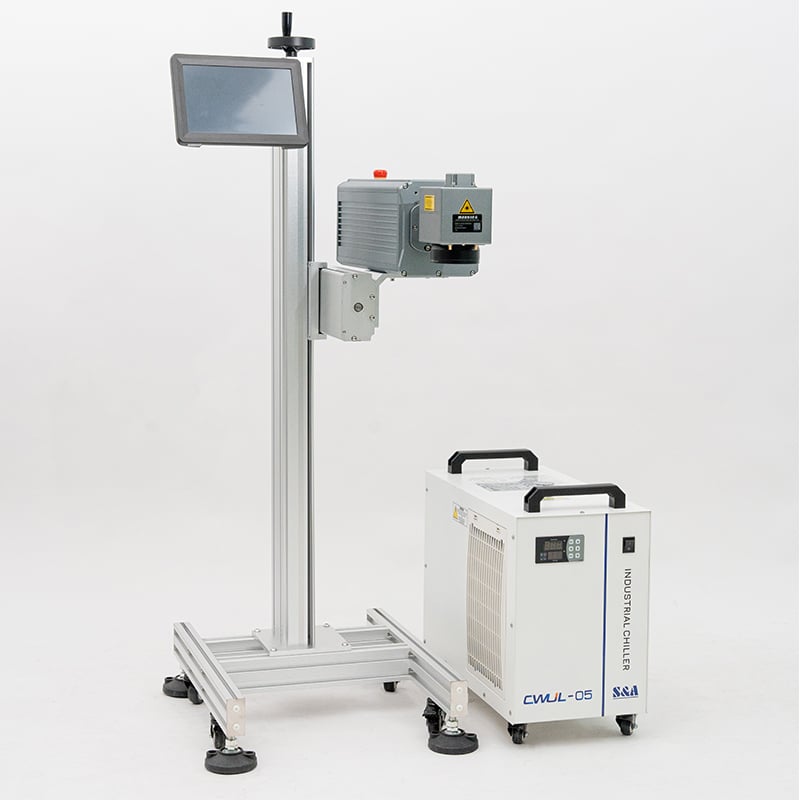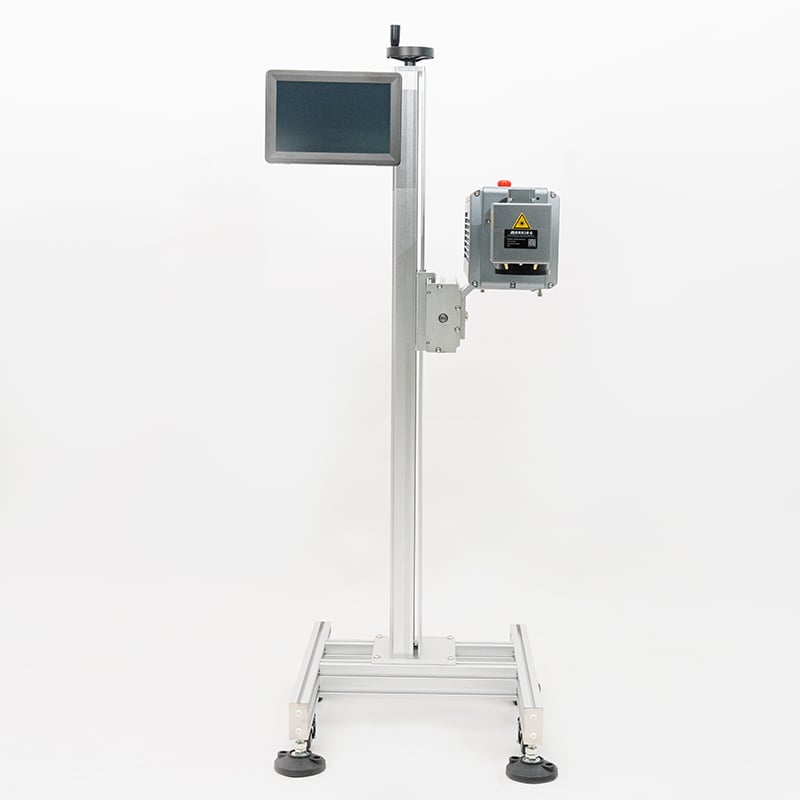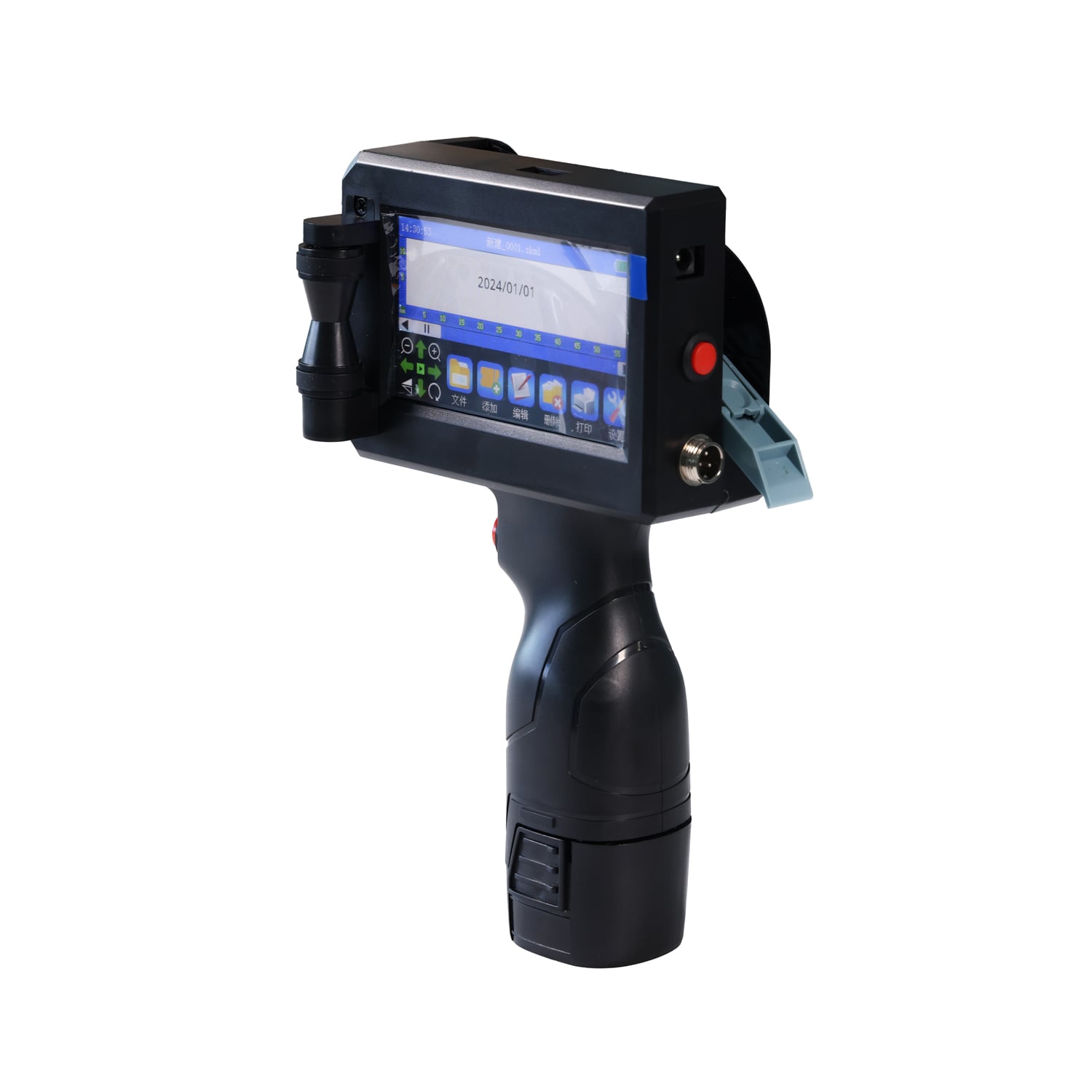
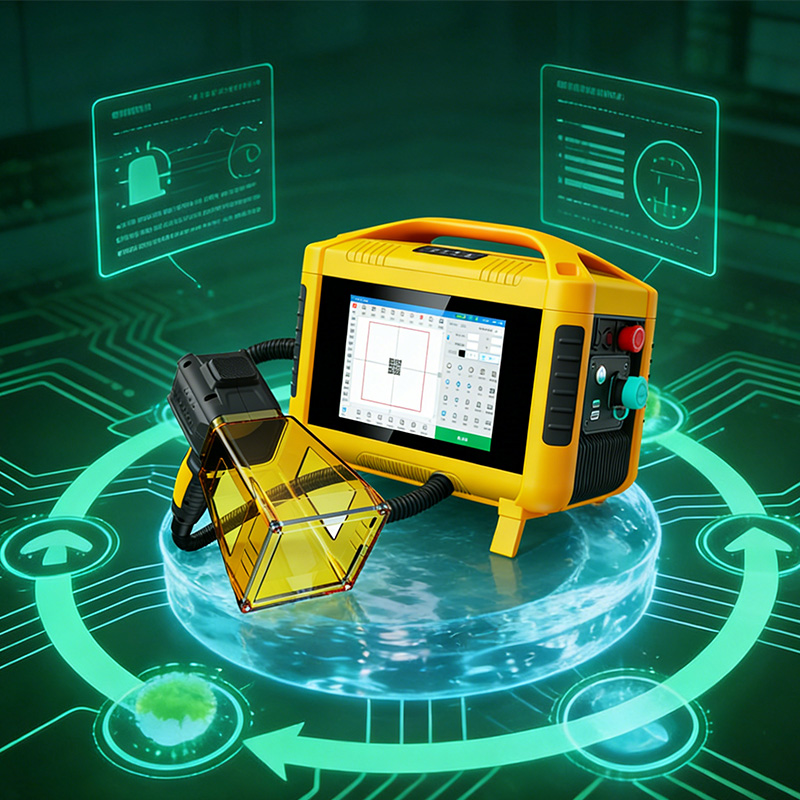
In 2025, the laser marking machine, known as the "industrial engraver", is undergoing a major upgrade. It can engrave marks as thin as 1/5 of a hair's diameter, with a speed nearly double that of last year. Even daily items like milk tea cups and jewelry boxes have become its "workbenches". Industry giants such as Domino and Bot Precision have launched new equipment one after another, combining ultra-fast lasers with AI intelligence, transforming machines that previously only worked in factories into "core assistants" for intelligent manufacturing. Simply put, it contributes to the personalized patterns on our phone cases, the traceability codes on medicine boxes, and the engravings on keychains.
Technological Revolution: Low Power Consumption with High Speed, Intelligent "Planner" Saves Time
In the past, people generally believed that the higher the power of a laser machine, the faster the marking speed—similar to how a car with a larger displacement runs faster. However, the new equipment in 2025 has completely broken this rule. For example, the Dx series laser machines launched by the international brand Domino rely on three key technologies: "intelligent scanning head + AI path planning + dual-chip power". This enables increased output even with reduced power consumption. It's analogous to upgrading from a conventional electric vehicle to an intelligent electric vehicle—lower power consumption yet faster acceleration.
A major domestic manufacturer of cold medicine conducted a test: when marking production dates, batch numbers, and other information on capsule packaging boxes, traditional 30W old machines could only process 3.3 boxes per second. In contrast, the Domino Dx260i, with only 20W power, can process 7 boxes per second, doubling the efficiency. This is similar to a courier delivering packages—previously taking detours, but now AI plans the optimal route, eliminating unnecessary trips and naturally increasing speed. The secret lies in its digital scanning head with extremely high positioning accuracy. AI can automatically identify marking patterns, eliminating redundant movement steps, while the dual-chip works in parallel, processing information five times faster than before.
In addition to speed, laser machines have become extremely "dexterous" now. The popularization of new laser technologies such as picosecond and femtosecond allows them to engrave thin lines of 0.01 mm—approximately 1/5 the diameter of a hair. In mobile phone factories, it can engrave dense serial numbers on camera metal rings smaller than a fingernail. Previously, 15 out of 100 engravings might be defective, but now there is at most 1 defective product per 100, increasing the yield rate from 85% to 99.6%. The tiny touch marks on the screen glass of our smartwatches are engraved using this high-precision technology.
Scenario Expansion: From Mobile Phone Components to Milk Tea Cups, Marking Everywhere
Today's laser marking machines are like "universal engraving pens", capable of working on an increasing variety of materials. Carbon fiber components in 5G base stations are hard and special; previously, marking them often caused damage. Now, by combining ultraviolet lasers and fiber lasers, model marks can be easily engraved without damaging the components themselves. The production codes on the 5G router antennas we use are created in this way. It can even accurately mark the new composite material casings of new energy vehicle batteries, ensuring traceability of each battery.
Its performance in the automotive and medical fields is even more impressive. Automotive engine blocks are large and heavy; previously, 3 machines were needed to complete full-body marking. Now, a single laser machine with multi-camera positioning can handle the task, engraving engine numbers without dead angles and helping car companies save 35% of costs. For curved medical tools such as surgical scissors and hemostats in hospitals, traceability codes were previously always blurred. Now, with 3D vision technology, lasers can engrave "closely following" the curved surfaces, and the engraved codes comply with international medical standards. In case of equipment problems, production information can be quickly traced. It's like pasting labels on round bottles—previously always askew, but now with 3D positioning, they are neatly pasted every time.
With the boom in personalized customization, laser marking machines have become "creative tools". With the maturity of 3D curved surface marking technology, it can accurately engrave on both the curved surfaces of jewelry and the smooth bodies of thermos cups. Many jewelry stores now offer "free engraving" services using this technology, which can engrave couples' names on the inner walls of rings with extremely delicate lines. A laser machine launched by Wuhan San Gong Optoelectronics can even carve complex patterns on paper, such as hollow patterns on high-end mooncake boxes and personalized illustrations on cultural and creative notebooks. It can produce these in batches without burning through the paper or leaving burrs. The Domino Dx series is even more powerful, with 36 combination modes. By replacing the scanning head, it can work on glass, metal, and plastic films, engraving everything from logos on milk tea cups to anti-counterfeiting marks on phone screen protectors..
Market Transformation: Specialization for Specific Tasks, Energy-Saving and Worry-Free
The 2025 laser machine market is no longer a case of "who is cheaper wins", but "who is professional thrives". Just as restaurants specialize in Chinese or Western food, laser machine enterprises have also begun to focus on their own niches: some specialize in fine marking for the electronics industry, such as marks on mobile phone chips; others focus on the automotive field, specializing in marking large components. Previously, buying a machine was like buying a "universal tool kit", but now it's more like buying a "specialized toolbox"—more targeted and easier to use.
Services have also become increasingly user-friendly. Nowadays, laser machines basically come with a "remote health check" function. Manufacturers can monitor the real-time operating status of the machines through cloud platforms. For example, if "the laser head temperature is slightly high", they will remind users to maintain it in advance, avoiding repairs only after the machine breaks down and greatly reducing downtime. For owners of small workshops engaged in cultural and creative products, if they cannot afford a complete machine, many manufacturers now offer leasing services, allowing them to rent machines monthly. This significantly reduces costs, enabling profitability even with small-batch customization.
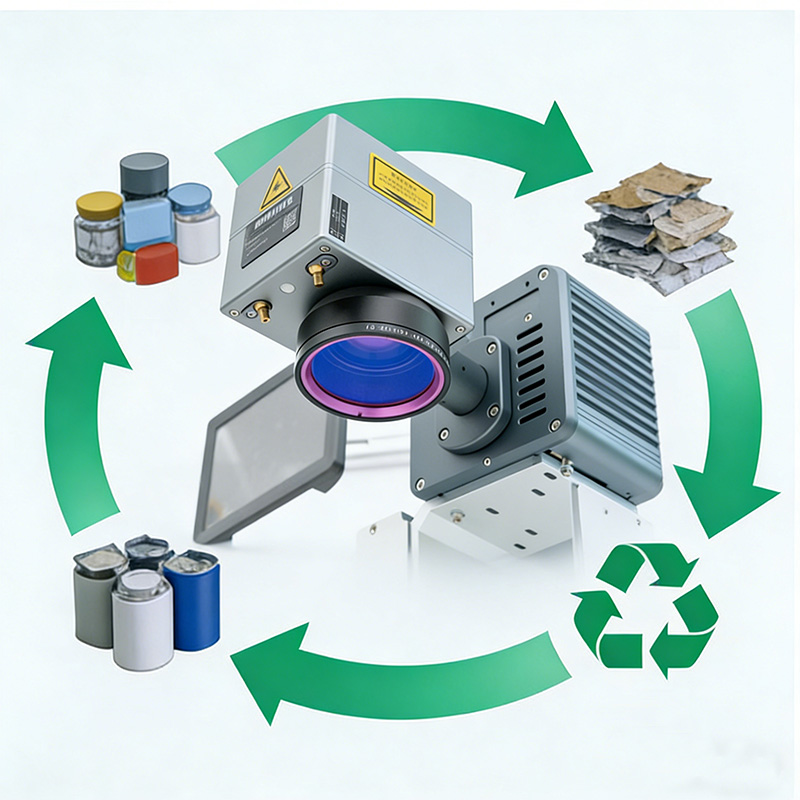
Green environmental protection has also become a standard feature. The new generation of laser machines does not require frequent consumable replacement. For example, the service life of a fiber laser head can exceed 100,000 hours—calculated based on 8 hours of daily operation, it can be used for 34 years. Moreover, they are extremely energy-efficient, with energy consumption only 1/5 that of old machines. This means that the electricity previously used for one air conditioner can now power 5 machines simultaneously. Manufacturers such as Domino and Bot Precision stated that the carbon emissions of new machines in 2025 are 40% lower than those of last year's models, which is highly in line with the current "low-carbon production" requirements of factories. For enterprises, this not only saves electricity costs but also responds to environmental protection policies, achieving two goals at once.
 Hot News
2026-08-04
2026-04-02
2025-12-17
2025-12-12
2025-12-09

Based In China
Serving The World
Room401, Building B, Xulong Industrial Park, Road Xinye No.76, Huangpu District, Guangzhou, Guangdong, China
Copyright © 2025 by Inkminic Logo Technology (Guangzhou) Co., Ltd. Privacy Policy
 EN
EN