 EN
EN

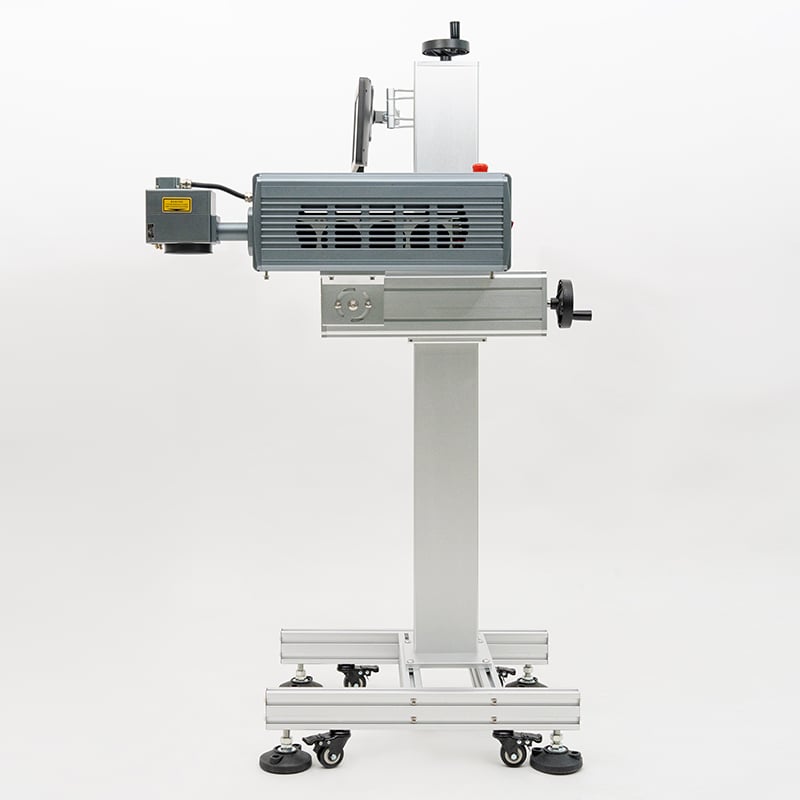
CO2 Laser Generation: Gas Excitation and 10.6 μm Photon Emission
Role of the CO–N–He Gas Mixture in Achieving Population Inversion
Population inversion, which is basically what makes lasers work, happens when there's this special kind of energy transfer between gases in just the right mix. When nitrogen molecules get hit by electricity, they pass their extra energy to carbon dioxide molecules during those little molecular bumps we call collisions. This boosts CO2 up to what scientists call the upper laser level, specifically the 00°1 state. Helium plays two important roles here. First, it helps CO2 molecules cool down faster from their lower energy state (that's the 10°0 level) so things don't get backed up or stuck. Second, helium actually carries heat away from where all this action is happening inside the laser tube. This keeps temperatures stable and means the whole system lasts longer before needing replacement. Most laser setups use around 10 to 20 percent CO2, another 10 to 20 percent nitrogen, and fill the rest with helium making up 60 to 80 percent of the mix. This combination works really well for getting good laser output while still lasting a long time in real world applications according to those industry standards set by folks at the International Electrotechnical Commission under their IEC 60825-1 guidelines.
Electrical Discharge Excitation and Stimulated Emission at 10.64 μm
When a high voltage DC or RF discharge passes through the gas mixture, it creates a bunch of energetic electrons. These electrons tend to bump nitrogen molecules up to their v=1 vibrational state which lasts quite a while. What happens next? Well, during those collisions between excited nitrogen and carbon dioxide molecules, energy gets passed along until we see CO2 populating the 00°1 energy level. As these CO2 molecules drop down to the 10°0 level, they release photons right around 10.64 micrometers. This specific wavelength isn't random at all but comes straight from how the molecule's vibrations and rotations interact. Inside the laser cavity, mirrors at both ends bounce these photons back and forth, which causes more emissions and builds up the light intensity. Most people working with these lasers notice that the 10.6 micrometer line stands out among the rest in the 9.2 to 10.8 micrometer range. Why? Because under normal operating conditions, this particular wavelength has the highest gain coefficient. That makes it super efficient for things like industrial marking work, especially when dealing with organic materials that really soak up light at this wavelength.
Beam Delivery and Precision Focusing in CO2 Laser Marking Machines
Galvanometer Scanning Systems vs. Fixed Optics: Speed, Accuracy, and Application Fit
Galvanometer systems rely on mirrors controlled by servos to steer laser beams over work surfaces at speeds above 10 meters per second. This allows fast marking of intricate designs and dense DataMatrix codes without touching the material. The system can repeat positions within 0.01 mm, which makes it great for tiny markings needed in electronics manufacturing, implantable medical devices, and delicate film packaging applications. Fixed optics take a different approach altogether. These machines actually move the object under a static laser beam instead, providing better mechanical stability for tougher jobs like deep engraving on cast metals or creating big signs. Galvanometers definitely win when speed and versatility matter most, but fixed optics tend to maintain better focus depth on surfaces that aren't perfectly flat or stable due to temperature changes. That's why many manufacturers still prefer fixed optics for applications where exact positioning matters more than how quickly something gets done.
F-Theta Lens Design and Spot Size Optimization for 10.6 μm Wavelength
The F-Theta lens plays a really important role in achieving even focus throughout the whole marking area when working with galvanometric CO2 laser systems. These specialized lenses fix issues with field curvature and distortion because they keep a straight relationship between how much the mirrors tilt and where the light focuses on the workpiece. This means the laser spot stays about the same size and strength whether it's right in the middle or at the edges of what needs marking. Built specifically for handling 10.6 micrometer infrared wavelengths, most modern versions have multiple layers made from either zinc selenide or gallium arsenide materials. They also come with special coatings that reduce unwanted reflections and heat-related distortions during operation. When everything works properly, these lenses can produce spots down to around 90 micrometers in diameter. That level of precision matters a lot for things like reading tiny 2D codes, intricate circuit diagrams, and text smaller than a millimeter without getting blurry spots or those annoying halo effects that ruin clarity.
Material Interaction: How CO2 Laser Marking Machines Modify Surfaces
Strong Infrared Absorption in Organic Materials (Polymers, Wood, Leather, Textiles)
CO2 lasers operating at 10.6 microns match up really well with the basic vibration patterns found in common organic compounds - specifically those C=O, O-H, and C-O bonds that are everywhere in carbon-based stuff. That's why these lasers get absorbed so strongly by materials. Take polymers for instance: acrylic, ABS plastic, and polypropylene will soak up between 60% to almost all of the incoming laser energy at this wavelength. And when it comes to natural materials, things get even better. Wood, leather, and cotton fabrics actually absorb more than 80% because they contain lots of cellulose and proteins. What happens next is pretty amazing. The laser creates intense heat right where it hits the material, sometimes pushing temps past 3,000 degrees Celsius within just a few thousandths of a second. But here's the clever part: most of that heat stays within a very thin layer, usually only about 0.1 to 0.5 millimeters deep. This means manufacturers can change how surfaces look or behave chemically without applying any physical pressure. The result? Clean, lasting markings on delicate parts that would normally be damaged by traditional methods.
Thermal Processing Modes: Engraving, Annealing, Foaming, and Color Change
CO2 laser marking machines achieve diverse visual and functional outcomes by modulating power density, pulse duration, and scan speed—activating distinct thermal mechanisms:
| Mode | Energy Threshold | Physical Effect | Example Applications |
|---|---|---|---|
| Engraving | High (≥100W) | Vaporizes material to create micro-cavities | Serial numbers on acrylic |
| Annealing | Medium (50–80W) | Oxidizes subsurface layers for color change | Medical device markings |
| Foaming | Low–Medium (30–60W) | Generates gas bubbles in polymers | Raised logos on rubber |
| Color Change | Precise (10–40W) | Alters molecular pigmentation | Branding on coated textiles |
Engraving works by removing material through sublimation, which creates those tactile depths we often see in products, sometimes reaching up to about 1 mm deep. Then there's annealing, where controlled oxidation happens just below the surface. This technique is pretty common when working with materials like stainless steel or titanium, especially for creating marks that resist corrosion while standing out visually. Foaming processes expand polymer matrices, resulting in these light colored, raised features that feel great under our fingers and provide excellent tactile feedback. When it comes to color changes, manufacturers rely on photochemical alterations of dyes or fillers within materials. This approach leaves behind permanent branding on things like fabrics and engineered plastics without actually removing any material from the surface. All these different methods share one thing in common they all work with the same 10.6 micrometer photon source. What makes them special though is how each material responds differently to heat thresholds. That's why this system remains so versatile across various industries where precision matters most, from medical device manufacturing to aerospace components production.
FAQ Section
What is population inversion in a CO2 laser?
Population inversion is a state where more particles exist in an excited state than in lower energy states. In a CO2 laser, this is achieved through energy transfer involving a CO-N-He gas mixture, facilitating efficient laser activity.
Why is the 10.6 micrometer wavelength significant in CO2 Lasers?
The 10.6 micrometer wavelength is significant because it has the highest gain coefficient, making it extremely efficient for industrial applications, especially those involving organic materials that absorb light at this wavelength.
How do galvanometer scanning systems differ from fixed optics in CO2 laser marking machines?
Galvanometer scanning systems use controlled mirrors to steer laser beams for fast and intricate markings. In contrast, fixed optics move the object under a static beam, offering better stability for engraving tasks.
What materials can highly absorb CO2 laser energy?
Materials like polymers (e.g., acrylic, ABS plastic), wood, leather, and textiles have high absorption rates for CO2 laser energy due to their organic compound structures, which align with the laser's wavelength.
What are the thermal processing modes available in CO2 laser marking machines?
The main thermal processing modes include engraving, annealing, foaming, and color change, each offering distinctive visual and functional results based on power density and thermal mechanisms.
Table of Contents
- CO2 Laser Generation: Gas Excitation and 10.6 μm Photon Emission
- Beam Delivery and Precision Focusing in CO2 Laser Marking Machines
- Material Interaction: How CO2 Laser Marking Machines Modify Surfaces
-
FAQ Section
- What is population inversion in a CO2 laser?
- Why is the 10.6 micrometer wavelength significant in CO2 Lasers?
- How do galvanometer scanning systems differ from fixed optics in CO2 laser marking machines?
- What materials can highly absorb CO2 laser energy?
- What are the thermal processing modes available in CO2 laser marking machines?