 EN
EN

The Significance of Print Clarity
In the dynamic landscape of industrial production and supply chain management, a clear, sharp, and durable mark is more than just a label—it is the signature of quality and authenticity. Handheld inkjet printers have become indispensable tools for manufacturers, logistics providers, and independent business owners who require on-the-spot marking flexibility. However, achieving professional-grade clarity consistently is not merely about owning high-quality hardware; it is a sophisticated interplay of environmental conditions, ink management, and refined operational best practices. A blurred or faded mark can lead to rejected shipments, regulatory non-compliance issues, and, most importantly, a diminished perception of brand integrity in the eyes of the consumer. Ensuring the highest standards of print clarity is a fundamental requirement for any enterprise that values professional excellence and long-term brand success.
Mastering Substrate Interaction and Ink Selection
The foundation of print quality lies in understanding the specific interaction between the ink and the substrate being marked. Not all materials are created equal; porous surfaces like corrugated cardboard or wood absorb ink differently than non-porous materials like plastic, glass, or polished metal. Using an inappropriate ink type for a specific surface often results in bleeding, smearing, or poor adhesion. For high-clarity results, it is imperative to select specialized solvent-based inks for non-porous surfaces, ensuring quick drying and high contrast. Furthermore, ensuring the nozzle plate remains free from dried ink buildup is essential. By matching the ink chemistry to the specific surface requirements, operators can guarantee that every character printed—whether it be a batch code, expiration date, or complex barcode—remains crisp and readable from the moment it is applied to the product.
Optimal Operational Techniques for Consistent Results
Physical technique plays a decisive role in the final output quality of any handheld marking job. Even the most advanced printing system can struggle if the operator does not maintain proper handling standards throughout the day. The distance between the printhead and the surface, often referred to as the throw distance, must be kept consistent and as minimal as possible. If the printhead is held too far from the substrate, the tiny ink droplets may scatter or lose focus before impact, leading to blurred edges and poor legibility. Additionally, motion stability is absolutely key to success. Irregular, jerky movements can cause uneven character spacing and significant distortion. Consistent, smooth motion across the substrate ensures that the printing system can lay down ink droplets with uniform precision, preventing common issues like ghosting or fragmented characters that compromise the overall professional look of the mark.
Environmental Factors and Maintenance Protocols
An inkjet printer’s immediate environment significantly impacts its long-term performance and reliability. Dust, ambient humidity, and temperature fluctuations are the silent enemies of printhead integrity. Fine dust particles can clog tiny nozzles, leading to incomplete, streaky, or totally blank print lines that frustrate production teams. To maintain optimal performance, it is highly recommended to store the handheld device in a clean, controlled environment when not in active use. Simple yet regular maintenance protocols, such as using soft, lint-free cloths to gently clean the nozzle plate before each shift, can prevent common clogging issues before they escalate. Furthermore, ensuring the printer is shielded from extreme temperatures prevents the ink from changing its viscosity, which is a common technical cause of inconsistent print quality in varying workshop or warehouse conditions.
Technical Parameters and Setup Precision
Advanced handheld inkjet systems offer various software settings that allow operators to fine-tune the output based on specific production needs. Adjusting the print resolution—often measured in dots per inch—is vital for high-complexity codes such as two-dimensional data matrices or small text. While higher resolution produces sharper, more dense results, it also requires slower, more deliberate movement from the operator. Aligning the actual print speed with the selected resolution settings is a critical technical adjustment that separates amateur-looking results from truly professional outputs. Deeply understanding the internal software settings, such as dot size and ink firing frequency, enables users to optimize the printer for specific font types or complex graphic elements, ensuring that every mark meets the stringent requirements of modern global industry standards.
Inkminic and Engineering Reliability for Professional Marking
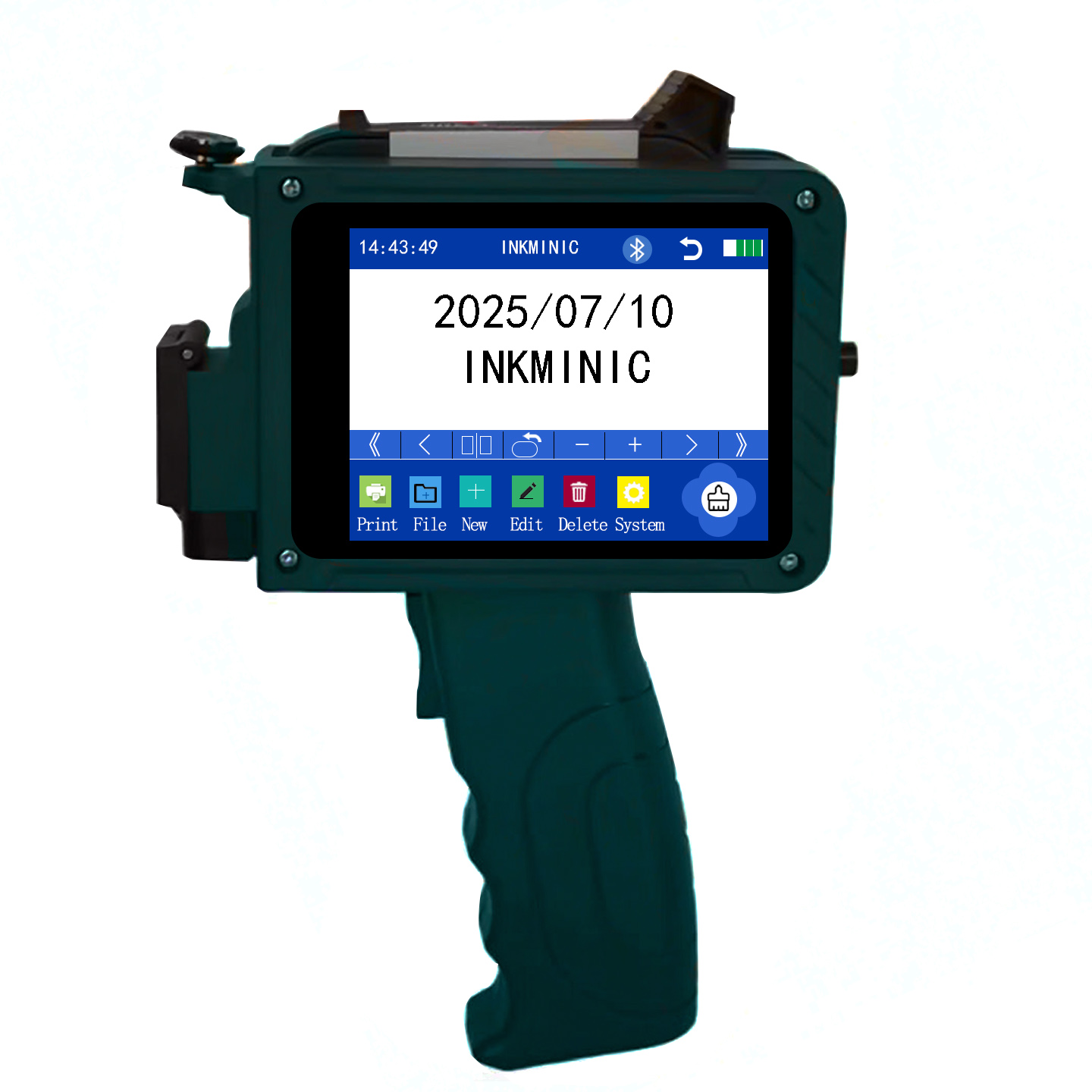
Inkminic serves as a dedicated partner for businesses seeking to elevate their production and marking capabilities through superior engineering and design. As a manufacturer deeply committed to high standards of quality control and continuous innovation, Inkminic understands that every single mark represents the reputation of the clients served. Handheld and industrial inkjet solutions from Inkminic are crafted with rigorous attention to printhead stability and overall ink efficiency, providing the reliability that professionals demand in high-pressure, fast-paced environments. With an extensive global supply chain and a firm commitment to customer-centric service, Inkminic provides not only high-performance hardware but also the technical expertise required to solve complex marking challenges across diverse industries. By choosing Inkminic, partners gain access to a robust ecosystem of support, ensuring that production lines maintain consistent, clear, and high-quality marking standards that bolster brand value worldwide.