Published: JUNE 30, 2026 | Author: INKMINIC Logo Technology (Guangzhou) Co., Ltd.
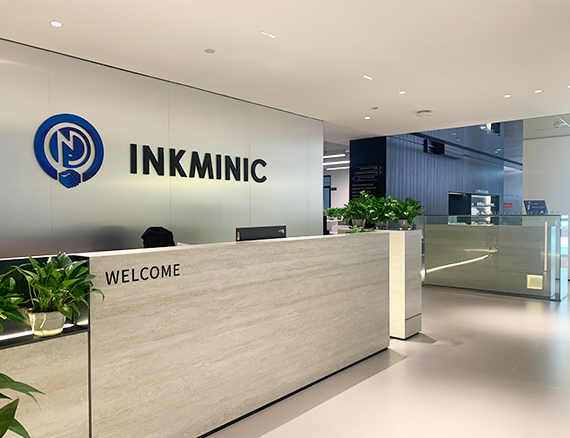
June 30, 2026, was as hot and humid as ever in Guangzhou. A customer from India—a representative of an Indian manufacturing company—walked into the INKMINIC showroom. He came just to "take a look." He ended up spending most of the day in the showroom, talking for hours at the meeting table, and finally placing an order and paying on the spot, then heading back to India with the goods and samples.
This article isn't about big theories. It's just a straight account of what happened that day. If you're also looking for a coding machine or consumables supplier, maybe you'll find something useful in it.
The customer walked in, and we didn't rush to pitch. We let him look around on his own.
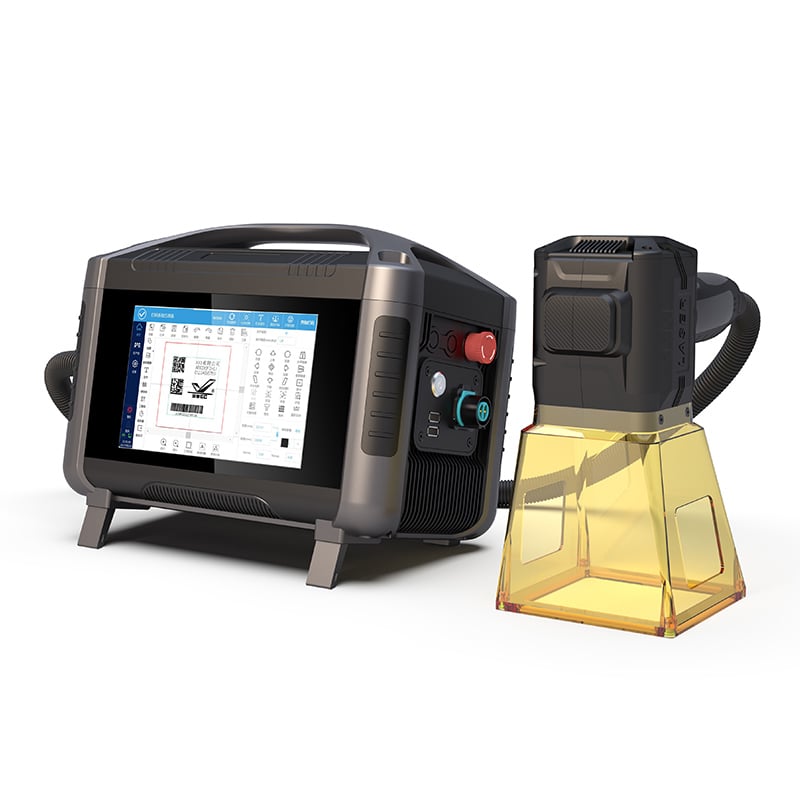
Our showroom displays quite a few brands: besides our own INKMINIC brand, there's Videojet, Linx, Domino, Citronix, Markem-Imaje, Leibinger, Hitachi, Fastjet, Langde, Anser, Loogle, Sojet, Meetjet, Dongning, Docod, HP, and Dakai. Machine types are complete too: TIJ (thermal inkjet), CIJ (continuous inkjet), TTO (thermal transfer overprinter), and Laser machines are all there.
The customer was a bit surprised at first. He said that when looking for suppliers in India, most either carry one brand or two or three. Not many put a dozen-plus brands together like us so he could compare on the spot.
Honestly, displaying this many brands isn't for show. We've been in this business long enough to know the customer's real situation: a factory often has several machines of different brands—some bought years ago, some newly added—and brand consistency is rare. If a supplier only knows one brand, the customer has to deal with multiple suppliers, order consumables separately, and track down different people when problems arise. It's a hassle.
The customer focused on CIJ machines in the showroom and asked detailed questions: printhead structure, ink circuit design, how easy it is to clean, how to change consumables. You could tell he knew his stuff—he wasn't just browsing.
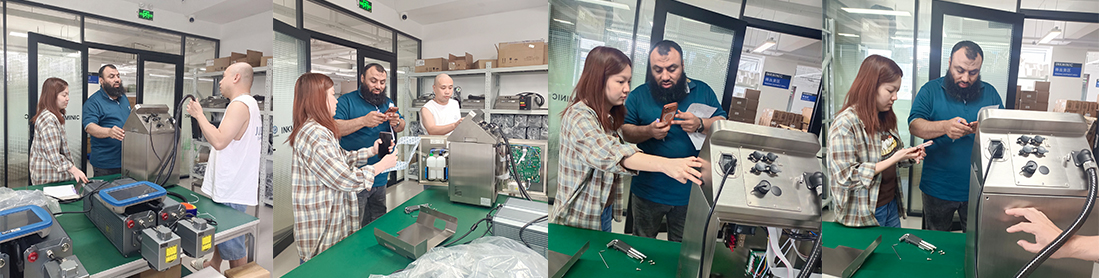
After the showroom tour, we sat down for a meeting. The customer stated his needs directly: they're interested in CIJ printers, but even more interested in ink and make-up fluid, especially chipped consumables.
This need is actually very practical. The consumables market in India is messy—cheap alternative inks are everywhere, but they come with problems: some clog the printhead within a week, some have wrong viscosity causing inconsistent print quality, some have incompatible chips that make the machine throw errors and stop. The customer had been burned before, so this time he cared a lot about chip compatibility.
Our technical colleague explained the consumables situation clearly on the spot:
Ink, make-up fluid, cleaning solution, ink cartridges, ribbons, printheads, filters—we have all of these;
For mainstream brands like Videojet and Linx, what we offer are alternative consumables matching OEM specs—viscosity, conductivity, drying time, adhesion, all according to OEM standards;
For chipped consumables, the chip is programmed for the consumable itself—not a cracked chip, not a workaround to bypass machine verification. Whatever ink you order, the chip reports that identity. The machine recognizes the consumable itself.
We also told the customer the truth: not every scenario is suitable for alternative consumables. Some production lines with extremely high print quality requirements, or machines still under warranty, are safer with OEM consumables. Which ones can use alternatives and which are better with OEM—we went through it one by one based on his machine models and usage scenarios. The customer found it reliable because nobody was guaranteeing him that "everything can be replaced."
Next came the discussion of volume and price. The customer came prepared, with a list of machine models, monthly output, substrate materials, line speeds, and consumable part numbers all listed out.
What we discussed wasn't complicated: CIJ machines plus a matching initial batch of ink and make-up fluid, negotiated as a package deal. Because machines and consumables were ordered together, the volume went up and there was room on price. After several rounds, both sides were satisfied. The customer confirmed the order on the spot, arranged payment, and we got the shipping documents ready.
The customer took some samples and materials back, saying he'd test them first, would continue to repurchase, and wanted to look at other product lines too, like TIJ cartridges and laser machines.
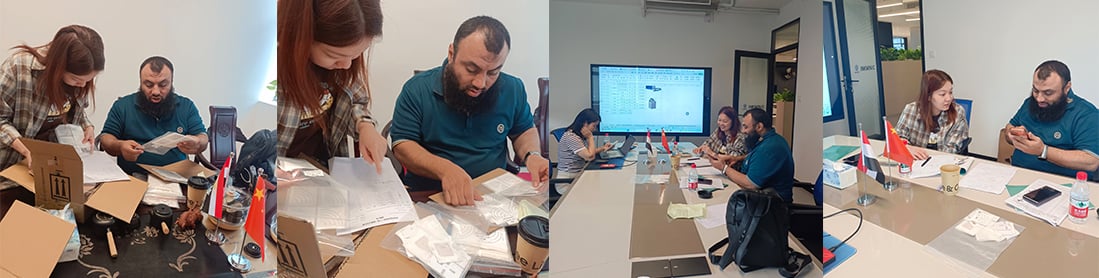
This order isn't big in dollar terms—just one customer's one purchase. But a few points are worth mentioning:
First, customers now want "one-stop," not "lowest price." A factory with several machines of different brands—if consumables can all be ordered from one place, what's saved is the hassle of procurement and inventory management. We display a dozen-plus brands because customers have this need.
Second, consumables are the long-term business. A coding machine sold is sold once, but ink and make-up fluid are used every month. When customers choose a supplier, they're not looking at how cheap your machines are—they're looking at whether consumables can be supplied consistently and whether quality is stable. This Indian customer clearly understands this.
Third, on the chip issue, you can't rely on "working around" it. OEMs have their reasons for consumable chip verification—quality control and after-sales protection are part of it. For those making alternative consumables, the right approach is to make the formulation and chip programming solid, so customers trust you because "this thing itself is fine," not because "it can fool the machine." That's exactly what we told the customer.
After the customer returned to India, the trial feedback was decent. Next, he plans to bring TIJ cartridges and laser machines into the evaluation scope for their secondary packaging lines.
For us, June 30 wasn't anything special—just another customer who went from "just looking" to "placing an order." But doing enough of these orders makes the path clear: broader brand coverage, more stable consumables, clearer communication—and customers will come back on their own.
The Indian market is big, price-sensitive, and customers are getting more knowledgeable. This customer chose INKMINIC. What we need to do next is make sure he feels that choice was right.
 Hot News
2026-06-30
2026-07-01
2026-10-16
2026-10-19
2026-10-19
2026-10-20

Based In China
Serving The World
Room401, Building B, Xulong Industrial Park, Road Xinye No.76, Huangpu District, Guangzhou, Guangdong, China
Copyright © 2025 by Inkminic Logo Technology (Guangzhou) Co., Ltd. Privacy Policy
 EN